Private Label Scented Candle Manufacturer in China | IGNITION



Soy Wax vs Coconut Wax: Which Candle Wax Is Better?
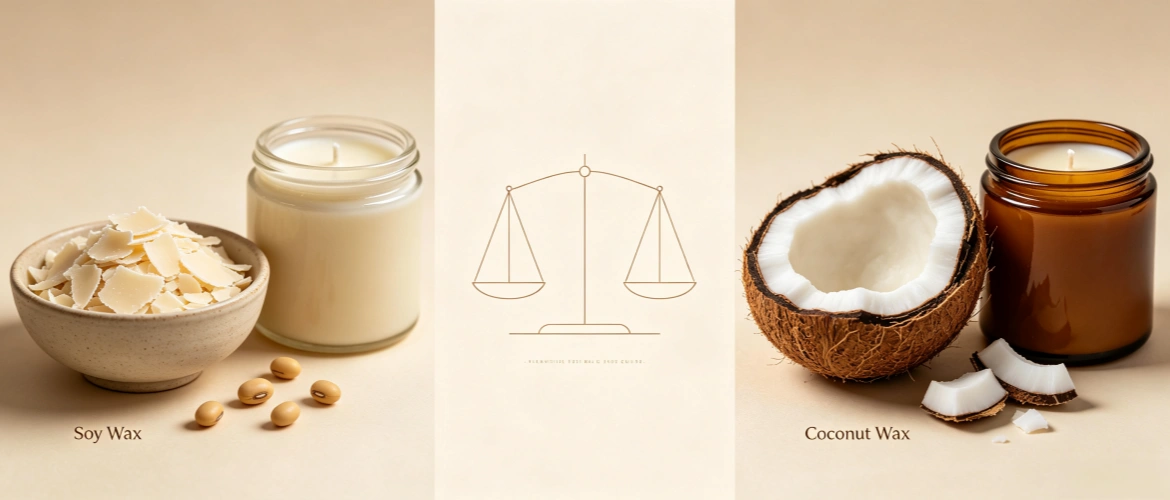
Choosing the right candle wax is one of the most important decisions for any candle brand. It affects product quality, scent performance, customer satisfaction, pricing, and even your brand image. Today, soy wax and coconut wax are two of the most popular natural options. Both offer clean-burning performance and appeal to eco-conscious consumers, but each has its own strengths.
Soy wax is affordable, easy to source, and burns slowly, making it ideal for large-scale production. Coconut wax offers a smoother appearance, stronger scent throw, and a more luxurious experience. The best choice depends on your brand positioning, target customers, and business goals.
In this guide, we’ll compare soy wax and coconut wax from four key perspectives: performance, fragrance, sustainability, and private label strategy. By the end, you’ll have a clearer idea of which wax fits your business best.
How Do Soy Wax and Coconut Wax Compare?
At first glance, soy wax and coconut wax seem very similar. Both come from renewable plant sources and produce cleaner burns than paraffin wax. However, once you look closer, you’ll notice important differences in texture, appearance, cost, and overall performance.
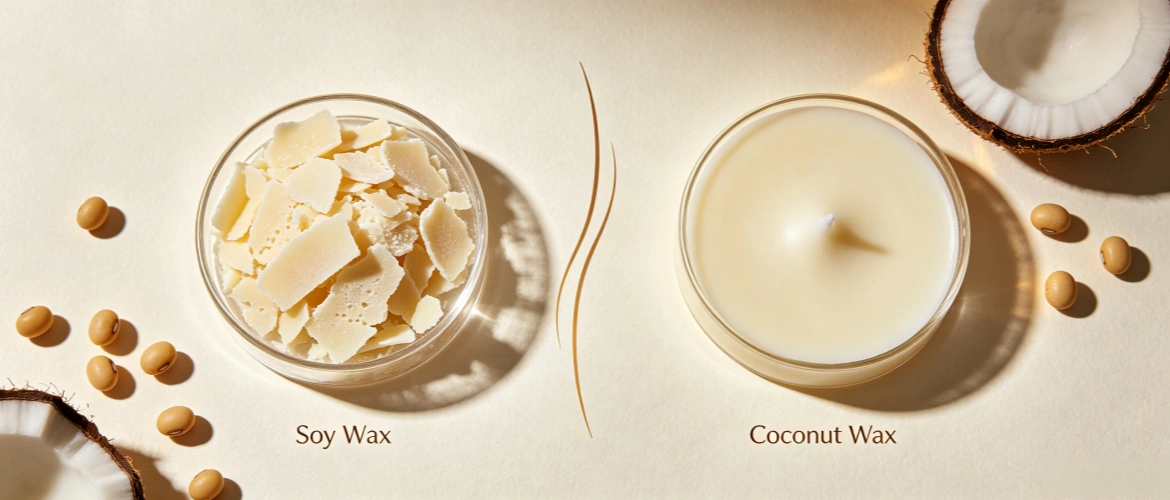
Before choosing a wax, I always look beyond the raw material itself. I consider how the wax performs during production, how customers perceive the finished product, and how well it supports a brand’s long-term positioning.
Soy Wax
Soy wax is made from hydrogenated soybean oil. It has become the industry standard for natural candles because it offers an excellent balance between quality and cost.
Key advantages include:
- Affordable pricing
- Stable supply chain
- Long burn time
- Good fragrance performance
- Easy manufacturing
For many new private label brands, soy wax is the safest place to start because it delivers reliable results without significantly increasing production costs.
Coconut Wax
Coconut wax comes from hydrogenated coconut oil. It has become increasingly popular in luxury candle collections because of its premium appearance and excellent fragrance performance.
Its main advantages include:
- Smooth, creamy texture
- Elegant surface finish
- Excellent hot and cold scent throw
- Clean, even burn
- Premium brand appeal
Although coconut wax costs more than soy wax, many high-end brands view the extra investment as worthwhile because customers often associate it with superior quality.
Quick Comparison
| Feature | Soy Wax | Coconut Wax |
|---|---|---|
| Source | Soybean Oil | Coconut Oil |
| Texture | Firm | Creamy |
| Appearance | Matte | Smooth & Glossy |
| Cost | Lower | Higher |
| Supply Availability | Excellent | Moderate |
| Luxury Positioning | Good | Excellent |
Which Wax Fits Your Brand?
| Brand Type | Recommended Wax |
|---|---|
| Entry-Level Brand | Soy Wax |
| Wholesale Business | Soy Wax |
| Premium Collection | Coconut Wax |
| Luxury Gift Brand | Coconut Wax |
| Boutique Retail | Coconut Wax |
Both waxes perform well, but they target different markets. Soy wax focuses on value and consistency, while coconut wax supports premium positioning and stronger brand differentiation.
Which Wax Offers Better Scent Throw and Burn Time?
Customers often judge candle quality by two things: how well it smells and how long it lasts. Therefore, fragrance performance and burn time should always be part of your wax selection process.
Soy wax generally provides a longer, slower burn, while coconut wax delivers a stronger scent throw and a smoother melting experience. Many manufacturers combine both waxes to achieve the best overall performance.
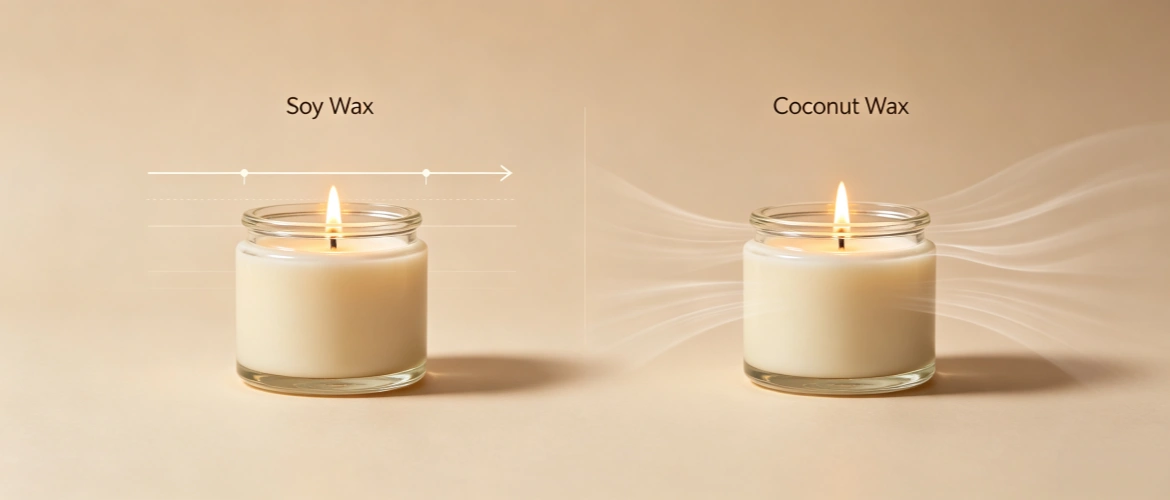
It’s important to remember that wax alone does not determine candle performance. Wick selection, fragrance load, curing time, and production techniques all play important roles.
Cold Throw
Cold throw refers to how strong a candle smells before lighting.
Soy wax provides a pleasant fragrance before burning, but coconut wax usually performs even better because its softer texture releases fragrance more easily.
Hot Throw
Hot throw describes the fragrance released while the candle burns.
This is one area where coconut wax often stands out. It melts evenly and allows fragrance oils to disperse consistently throughout the room.
Soy wax also performs well, especially with proper formulation, but the scent tends to build more gradually.
Burn Time
Many buyers associate long burn times with higher product value.
Soy wax usually burns more slowly because of its firmer texture and higher melting point.
Coconut wax melts more easily, so pure coconut candles may burn slightly faster. However, many commercial coconut waxes are blended with soy wax to improve burn time without sacrificing fragrance performance.
Performance Comparison
| Performance | Soy Wax | Coconut Wax |
|---|---|---|
| Cold Throw | Very Good | Excellent |
| Hot Throw | Good | Excellent |
| Burn Time | Excellent | Very Good |
| Melt Pool | Good | Excellent |
| Surface Finish | Good | Premium |
Why Soy-Coconut Blends Are So Popular
Instead of choosing one wax, many manufacturers now use soy-coconut blends.
These blends offer several advantages:
- Stronger scent throw
- Longer burn time
- Smooth surface appearance
- Better glass adhesion
- More competitive production costs than pure coconut wax
In many cases, a soy-coconut blend provides the best balance between performance, appearance, and profitability.
What Are the Sustainability Benefits of Each Wax?
Today’s consumers care about more than fragrance. They also pay attention to ingredients, sourcing, and environmental responsibility.
Fortunately, both soy wax and coconut wax are renewable and biodegradable, making them excellent alternatives to paraffin wax.
Soy wax benefits from a mature agricultural supply chain, while coconut wax offers an attractive sustainability story thanks to long-lasting coconut trees and lower pesticide use.
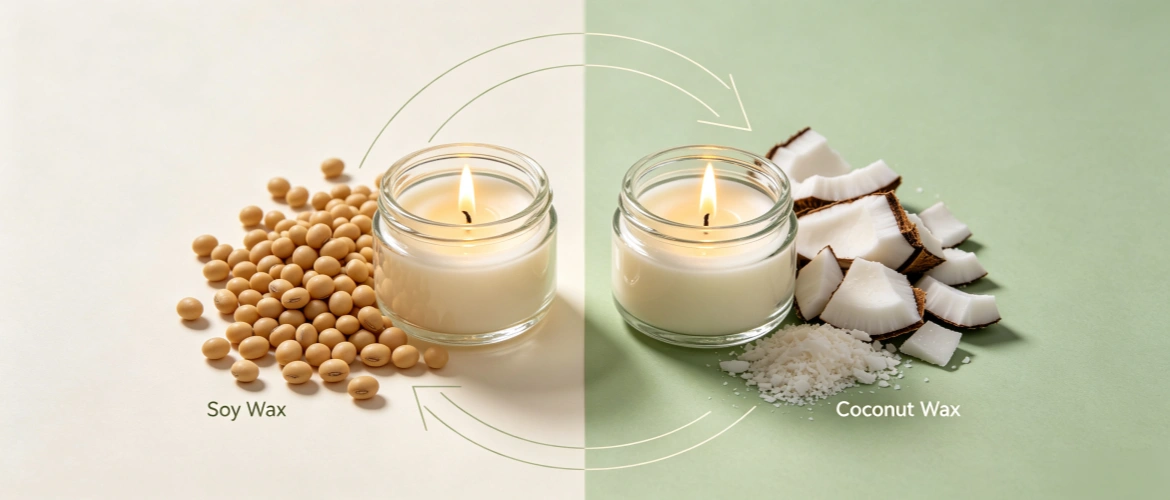
As sustainability becomes a stronger selling point, brands should understand both the advantages and limitations of each material.
Soy Wax Sustainability
Soy wax offers several environmental benefits:
- Renewable plant resource
- Biodegradable
- Low-emission burning
- Well-established supply chain
However, some soybean farming raises concerns about large-scale agriculture and land use. Choosing responsibly sourced soy wax can help address these concerns.
Coconut Wax Sustainability
Coconut wax also has strong environmental advantages.
Benefits include:
- Renewable raw material
- Long-producing coconut trees
- Lower pesticide use
- Minimal agricultural waste
Because coconut oil is primarily produced for the food industry, candle wax often utilizes existing agricultural resources rather than creating additional demand.
Sustainability Comparison
| Sustainability Factor | Soy Wax | Coconut Wax |
|---|---|---|
| Renewable | Yes | Yes |
| Biodegradable | Yes | Yes |
| Clean Burning | Excellent | Excellent |
| Eco-Friendly Image | High | Very High |
| Premium Sustainability Appeal | Good | Excellent |
What Modern Consumers Expect
Today’s buyers increasingly look for products that combine natural ingredients with responsible packaging.
Popular expectations include:
- Plant-based waxes
- Recyclable packaging
- Reusable candle jars
- Transparent sourcing
- Sustainable production
Brands that communicate these values clearly often build stronger customer trust and increase perceived product value.
Which Wax Is Best for Private Label Candle Brands?
Choosing the right wax affects much more than manufacturing. It influences pricing, branding, customer perception, and long-term business growth.
Soy wax works well for brands focused on affordability and large-scale production, while coconut wax supports premium collections with higher perceived value. Many successful private label brands combine both through soy-coconut blends.
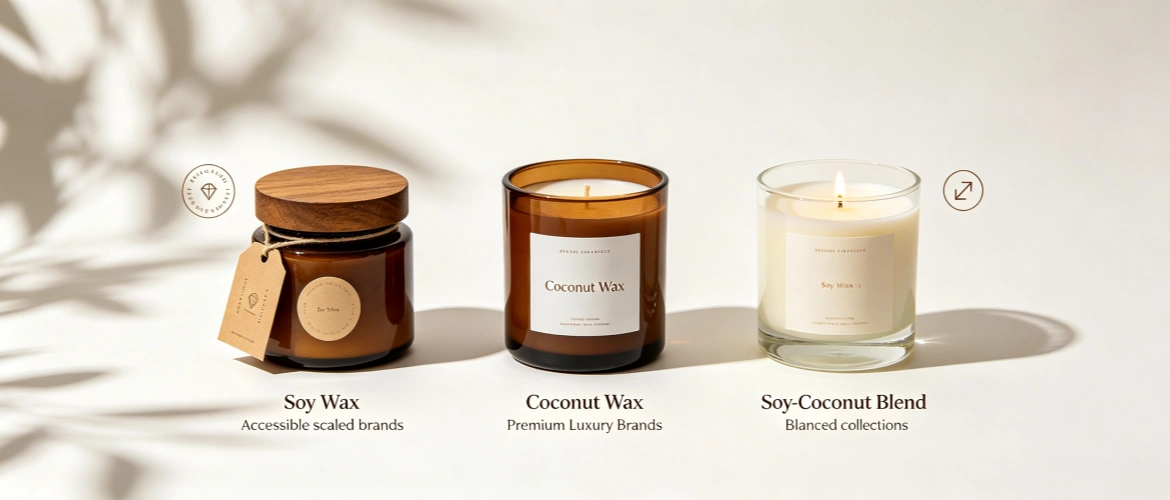
Every private label project has different priorities. Some brands compete on value, while others focus on luxury positioning. Your wax should support your overall business strategy instead of simply reducing production costs.
Choose Soy Wax If You Want
- Lower production costs
- Reliable supply
- Large wholesale orders
- Competitive pricing
- Faster production planning
Soy wax is an excellent choice for growing brands that need consistent quality and predictable manufacturing costs.
Choose Coconut Wax If You Want
- Luxury positioning
- Premium fragrance performance
- Elegant product appearance
- Boutique retail collections
- High-end gift products
Although coconut wax increases material costs, it also helps justify higher retail prices and creates a more premium customer experience.
Why Many Manufacturers Recommend Soy-Coconut Blends
More premium candle manufacturers now recommend blended wax instead of using only one type.
A soy-coconut blend combines the strengths of both materials by offering:
- Excellent scent throw
- Long burn time
- Smooth surface finish
- Premium appearance
- Better cost efficiency than pure coconut wax
Wax Selection Guide
| Business Goal | Recommended Wax |
|---|---|
| Budget-Friendly Collection | Soy Wax |
| Large Wholesale Orders | Soy Wax |
| Luxury Collection | Coconut Wax |
| Boutique Retail | Coconut Wax |
| Hotel Collection | Soy-Coconut Blend |
| Private Label Brand | Soy-Coconut Blend |
| Premium Wholesale | Soy-Coconut Blend |
From my experience working with private label candle brands, the best wax choice always depends on the overall business strategy. If your customers value affordability and consistency, soy wax remains an excellent option. If your brand focuses on luxury and premium home fragrance, coconut wax can help create stronger product differentiation. For many brands, a carefully formulated soy-coconut blend offers the ideal combination of performance, appearance, sustainability, and profitability.
Conclusion
Soy wax and coconut wax are both outstanding natural materials, but they serve different business goals. Soy wax offers affordability, reliable performance, and excellent scalability, making it ideal for wholesale and entry-level collections. Coconut wax delivers stronger fragrance, a smoother finish, and a more luxurious customer experience, making it a favorite among premium brands.
Rather than viewing one wax as better than the other, consider how each aligns with your brand positioning and target market. In many cases, a soy-coconut blend provides the perfect balance of quality, sustainability, cost efficiency, and premium appeal. By selecting the right wax for your products, you can create candles that not only perform well but also strengthen your brand and support long-term business growth.