Private Label Scented Candle Manufacturer in China | IGNITION



Sea Freight vs Air Freight for Candle Shipping?
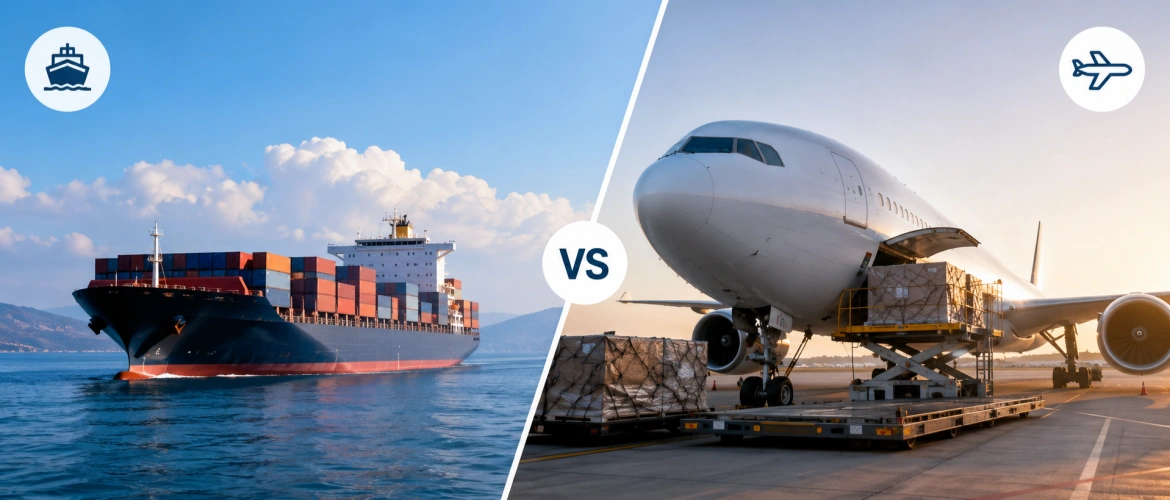
Choosing the wrong shipping method can increase costs, delay deliveries, or even damage your candles. For importers, wholesalers, and private label brands, transportation is not just about moving products—it directly affects inventory planning, customer satisfaction, and overall profitability.
Sea freight offers the lowest transportation cost and is ideal for large-volume orders with flexible delivery schedules. Air freight provides much faster delivery and better protection for urgent or high-value shipments. The best option depends on your budget, order size, and business priorities.
In this guide, we’ll compare sea freight and air freight from four important perspectives: transportation cost, transit time, product protection, and B2B purchasing strategy. By understanding the strengths of each option, you can choose the shipping method that best supports your business.
Which Shipping Method Offers Lower Transportation Costs?
For most candle businesses, transportation cost is one of the first factors to consider. Since candles are relatively heavy and often packed in glass containers, freight expenses can quickly become a significant part of the total product cost.
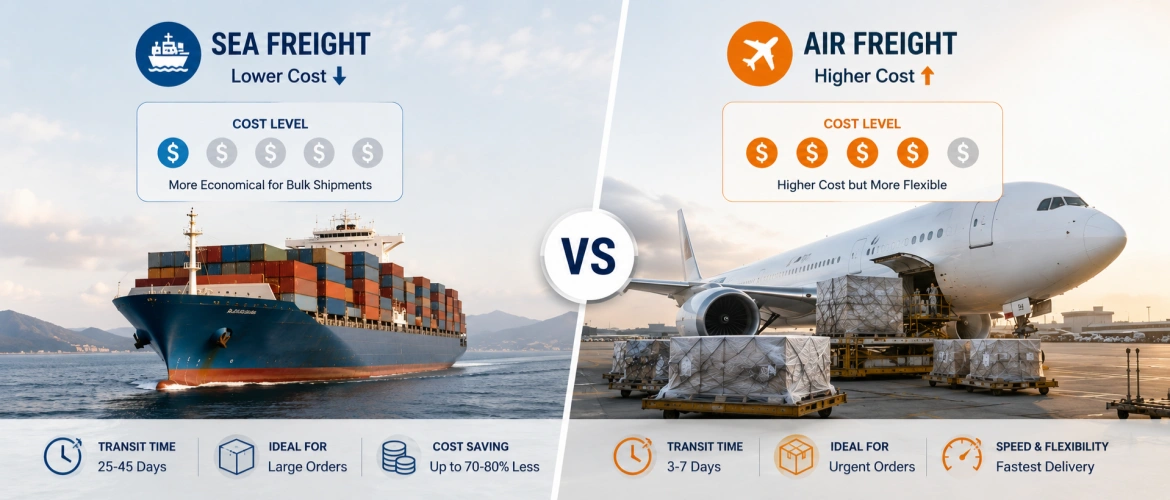
In most situations, sea freight is the more economical choice for bulk shipments. Although the transit time is longer, the savings become substantial as shipment volume increases.
Sea Freight: The Most Cost-Effective Option
Sea freight is designed for large shipments. Whether you ship pallets or full containers, the cost per kilogram remains much lower than air freight.
Its main advantages include:
- Lower transportation cost
- Better value for large orders
- Suitable for regular inventory replenishment
- Lower cost per unit
For wholesalers and distributors who can plan inventory several weeks in advance, sea freight usually provides the best return on investment.
Air Freight: Higher Cost, Greater Flexibility
Air freight costs significantly more, but it offers advantages that often justify the extra expense.
It is ideal for:
- Urgent replenishment
- Product launches
- Sample shipments
- High-value products
- Small-volume orders
Although transportation costs are higher, fast delivery can reduce inventory shortages and prevent missed sales opportunities.
Cost Comparison
| Cost Factor | Sea Freight | Air Freight |
|---|---|---|
| Transportation Cost | Low | High |
| Cost per Kilogram | Low | High |
| Best Order Size | Large | Small to Medium |
| Inventory Planning | Long-Term | Short-Term |
| Overall Cost Efficiency | Excellent | Moderate |
Looking Beyond Freight Rates
Sea freight usually requires stronger cartons, better pallet protection, and longer inventory planning. Air freight reduces storage time and speeds up cash flow, which can benefit growing businesses.
For large B2B orders, however, sea freight almost always delivers the lowest total transportation cost.
How Do Transit Times Compare Between Sea and Air?
Delivery speed can directly affect inventory management and customer satisfaction. Choosing the right shipping method often depends on how quickly products are needed.
Air freight typically delivers within 3–7 days, while sea freight usually requires 25–45 days depending on the destination. Businesses should balance delivery speed with transportation costs when selecting a shipping solution.
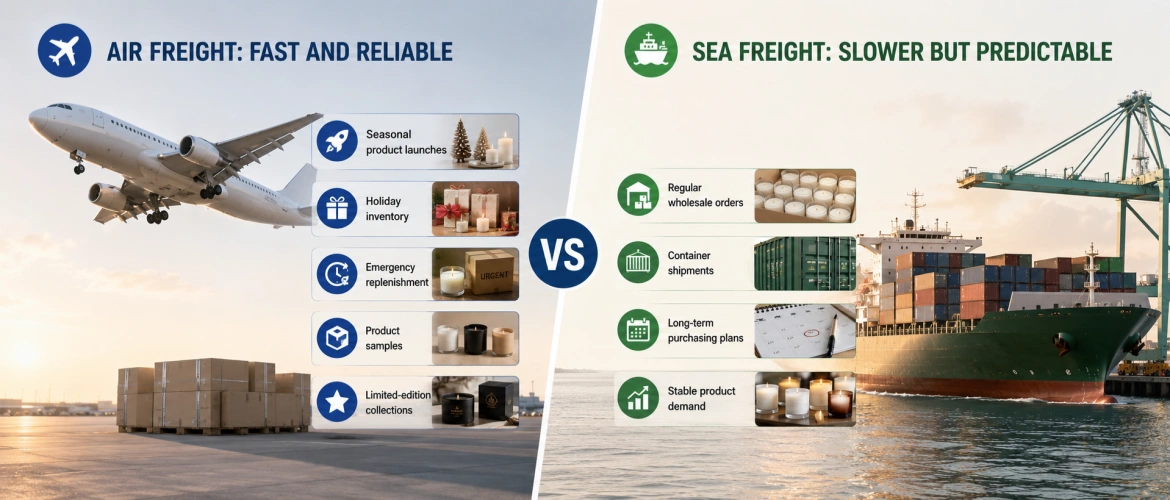
Fast delivery is valuable, but not every shipment requires it. Understanding when speed matters helps businesses avoid unnecessary shipping expenses.
Air Freight: Fast and Reliable
Air freight offers the shortest delivery time.
It works especially well for:
- Seasonal product launches
- Holiday inventory
- Emergency replenishment
- Product samples
- Limited-edition collections
When delivery deadlines are tight, air freight helps businesses avoid stock shortages and maintain customer satisfaction.
Sea Freight: Slower but Predictable
Sea freight requires more planning, but it remains highly reliable for scheduled inventory replenishment.
It is suitable for:
- Regular wholesale orders
- Container shipments
- Long-term purchasing plans
- Stable product demand
Businesses that forecast demand accurately can reduce logistics costs without sacrificing supply reliability.
Transit Time Comparison
| Shipping Method | Typical Delivery Time |
|---|---|
| Air Freight | 3–7 Days |
| Sea Freight | 25–45 Days |
Planning Makes the Difference
Many experienced importers combine production schedules with shipping timelines. Instead of waiting until inventory runs low, they place orders several weeks earlier and use sea freight for routine shipments.
This approach lowers transportation costs while maintaining a stable supply chain.
Which Option Better Protects Candles During Shipping?
Candles require careful handling because glass containers, fragrance oils, and natural waxes can all be affected during transportation.
Air freight generally exposes candles to fewer risks because of shorter transit times. However, proper packaging allows sea freight to deliver excellent protection even during long international shipments.
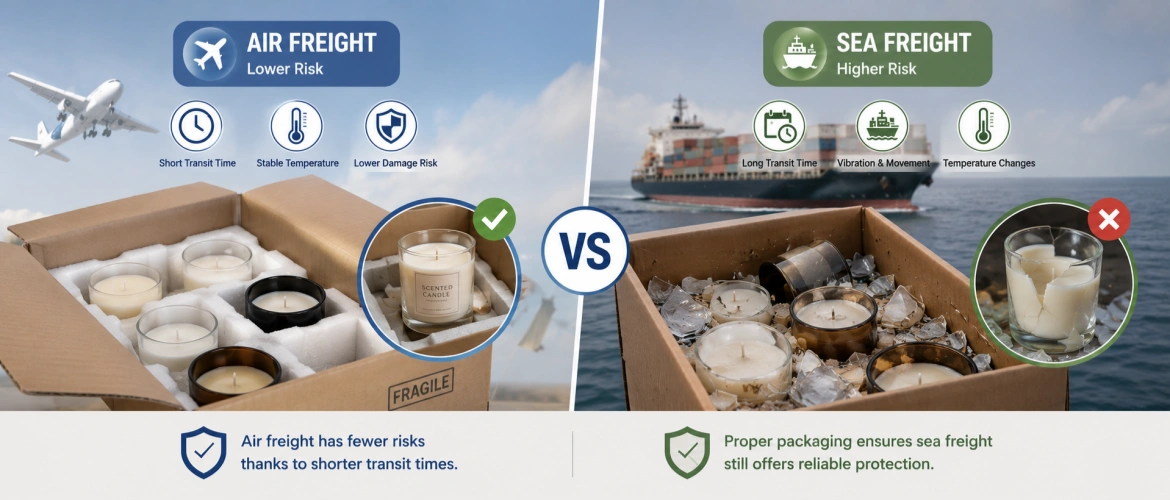
The shipping method matters, but packaging often has an even greater impact on product safety.
Risks During Sea Freight
Sea shipments experience longer transportation periods and changing environmental conditions.
Potential risks include:
- High temperatures
- Humidity
- Heavy stacking pressure
- Long handling processes
- Ocean movement
Without proper protection, these factors may increase the risk of cracked jars, damaged labels, or wax deformation.
Risks During Air Freight
Air freight reduces exposure to heat and humidity because products spend much less time in transit.
The primary concerns are:
- Frequent loading and unloading
- Airport handling
- Compression during cargo movement
Fortunately, these risks are easier to manage with appropriate protective packaging.
Packaging Recommendations
| Risk | Recommended Protection |
|---|---|
| Glass Breakage | Foam Inserts & Dividers |
| Heat Exposure | Thermal Insulation |
| Humidity | Desiccant Packs |
| Compression | Double-Wall Cartons |
| Label Damage | Waterproof Labels |
Good Packaging Protects Every Shipment
No shipping method can completely eliminate risk, but high-quality packaging greatly improves delivery success.
For international candle shipments, businesses should consider:
- Strong corrugated cartons
- Foam protection
- Proper palletizing
- Temperature-resistant packaging
- Quality sealing materials
A small investment in packaging often prevents expensive product claims later.
How Should B2B Buyers Choose the Right Shipping Method?
There is no single shipping solution that works for every order. The best choice depends on your delivery schedule, order volume, budget, and overall business strategy.
Sea freight is the preferred solution for bulk inventory and long-term purchasing plans. Air freight is better for urgent orders, product launches, and small shipments. Many successful brands combine both methods to maximize efficiency and control costs.
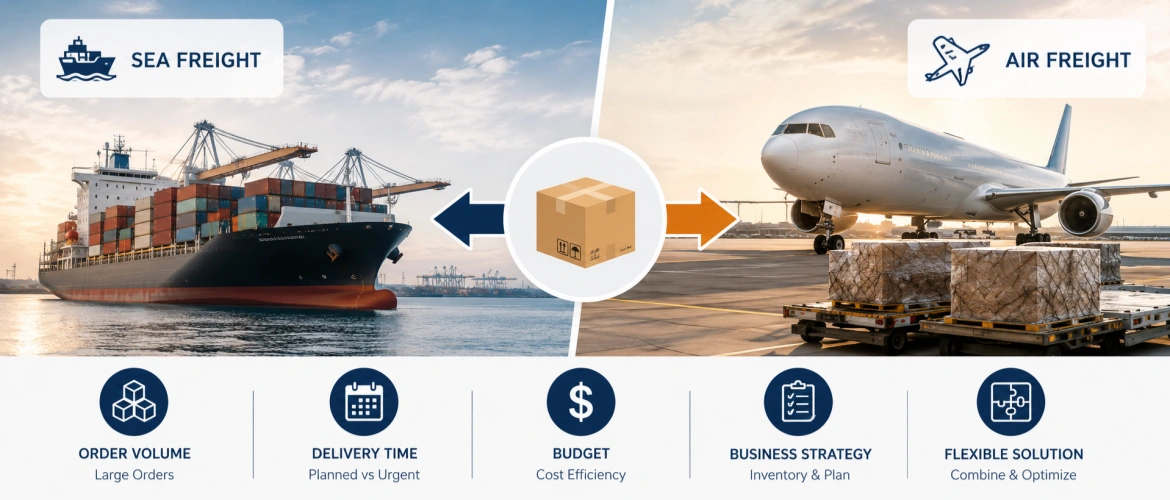
Rather than choosing only one transportation method, many B2B buyers build flexible logistics strategies that adapt to different situations.
Choose Sea Freight If You Need
- Large wholesale shipments
- Lower logistics costs
- Regular inventory replenishment
- Better cost efficiency
- Long-term purchasing plans
Sea freight supports stable supply chains and helps businesses maintain competitive pricing.
Choose Air Freight If You Need
- Fast delivery
- Emergency replenishment
- Product samples
- Seasonal launches
- High-value shipments
Air freight minimizes delays and helps businesses respond quickly to changing market demand.
Why Many Businesses Use Both
Many successful candle brands combine sea freight and air freight throughout the year.
A common strategy includes:
- Shipping core product lines by sea
- Sending urgent replenishment by air
- Using air freight for samples and new products
- Reserving sea freight for large production orders
This balanced approach reduces logistics costs while maintaining the flexibility to meet customer expectations.
Shipping Decision Guide
| Business Priority | Recommended Method |
|---|---|
| Lowest Transportation Cost | Sea Freight |
| Fastest Delivery | Air Freight |
| Large Wholesale Orders | Sea Freight |
| Product Samples | Air Freight |
| Holiday Replenishment | Air Freight |
| Regular Inventory | Sea Freight |
| Balanced Logistics Strategy | Combination of Both |
Conclusion
Sea freight and air freight each play an important role in international candle shipping. Sea freight offers outstanding cost efficiency for large orders and planned inventory, making it the preferred option for most wholesale businesses. Air freight delivers unmatched speed, making it ideal for urgent shipments, product launches, and samples.
Instead of viewing the two methods as competitors, many successful B2B candle brands use them together. They rely on sea freight to control long-term logistics costs and turn to air freight whenever speed becomes a competitive advantage. By matching your shipping method to your order size, delivery schedule, and business goals, you can reduce transportation expenses, protect your products, and build a more efficient global supply chain.