Private Label Scented Candle Manufacturer in China | IGNITION


Scented Candles vs Wax Melts: Which Should Your Brand Sell?
The home fragrance market continues to expand as consumers look for products that make their living spaces more comfortable, relaxing, and inviting. Among all fragrance products, scented candles remain a top seller, while wax melts have become increasingly popular thanks to their flameless design and strong scent performance.
For retailers, wholesalers, and private label brands, choosing between these two products is more than a product decision—it influences manufacturing costs, pricing strategy, customer experience, and long-term profitability.
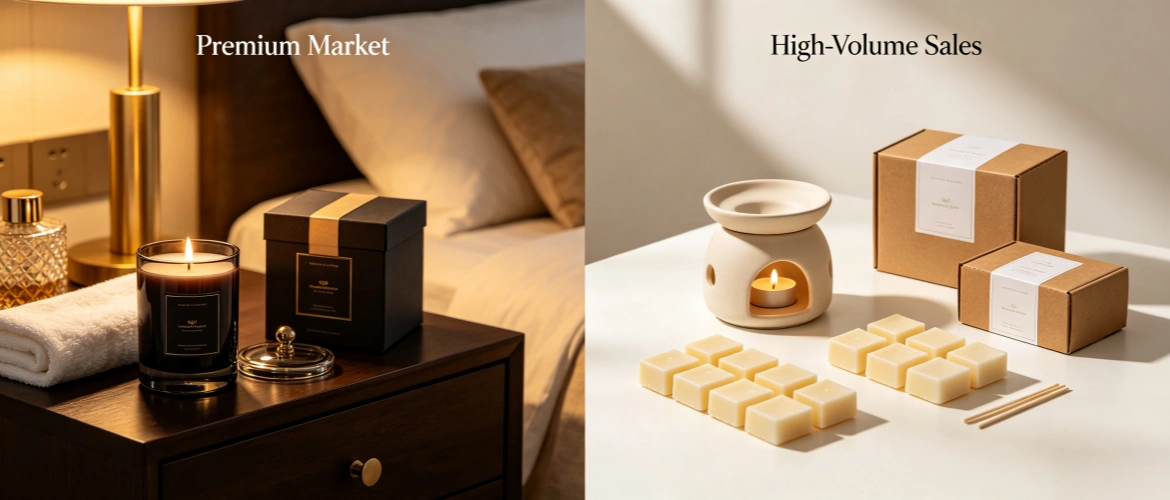
Scented candles create a premium lifestyle experience with strong gifting appeal, while wax melts offer lower production costs, excellent fragrance throw, and high repeat purchase potential. For many brands, combining both products is the most effective strategy.
In this guide, we’ll compare scented candles and wax melts from a B2B perspective, helping you decide which product best fits your brand and business goals.
What Are the Key Differences Between Candles and Wax Melts?
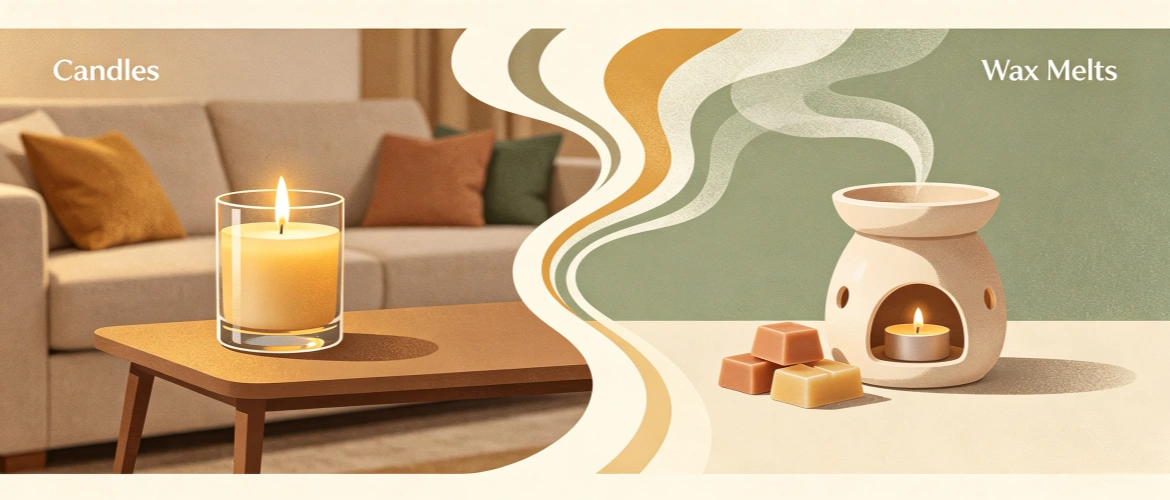
Although both products fill a room with fragrance, they work differently and satisfy different customer needs. Understanding these differences helps brands choose the right product mix and communicate product value more effectively.
How Scented Candles Work
Scented candles combine wax, fragrance oil, and a wick. Once lit, the flame melts the wax and gradually releases fragrance while creating a warm, relaxing atmosphere.
Many consumers choose candles because they offer more than fragrance. They also provide:
- Soft ambient lighting
- Elegant home décor
- Relaxing self-care moments
- A luxurious lifestyle experience
- Beautiful gift presentation
Because of these benefits, scented candles often become the centerpiece of a room instead of simply serving as an air freshener.
How Wax Melts Work
Wax melts contain scented wax but no wick. Users place them in an electric or tea-light wax warmer, allowing the fragrance to disperse without an open flame.
Wax melts appeal to customers because they offer:
- Flameless operation
- Strong fragrance throw
- Easy scent switching
- Lower replacement costs
- Convenient storage
Many home fragrance enthusiasts also enjoy mixing different wax melts to create their own custom scent combinations.
Side-by-SSide Comparison
| Feature | Scented Candles | Wax Melts |
|---|---|---|
| Heat Source | Wick and flame | Wax warmer |
| Flame | Yes | No |
| Decorative Value | Excellent | Moderate |
| Fragrance Throw | Strong | Very strong |
| Gift Appeal | High | Medium |
| Safety | Requires supervision | Flameless option |
| Packaging | Glass jar or vessel | Clamshell or pouch |
Overall, scented candles focus on experience and aesthetics, while wax melts emphasize convenience and fragrance performance. Instead of replacing one another, they complement different lifestyles and usage occasions.
Which Product Offers Greater Profit Potential for Brands?

Many businesses compare manufacturing costs before selecting a product line. However, production cost is only one piece of the puzzle. Retail pricing, shipping expenses, repeat purchases, and brand positioning all influence long-term profitability.
Scented Candles Support Premium Pricing
Luxury candles usually command higher retail prices because customers appreciate:
- Premium glass jars
- Elegant packaging
- Sophisticated fragrance blends
- Decorative value
- Gift-ready presentation
These features increase perceived value, allowing brands to achieve higher profit per unit.
Private label brands can further improve margins by offering:
- Custom candle jars
- Exclusive fragrance collections
- Luxury packaging
- Limited-edition seasonal products
Although candles cost more to manufacture and ship, they often generate higher average order values.
Wax Melts Reduce Costs and Encourage Repeat Sales
Wax melts eliminate several production components, including:
- Glass jars
- Wicks
- Wick holders
- Lids
As a result, manufacturers reduce material costs while simplifying production and shipping.
Wax melts work especially well for:
- Subscription boxes
- Budget-friendly product lines
- Fragrance sample collections
- Large wholesale orders
- Online marketplaces
Their affordable price also encourages customers to purchase multiple scents in one order, increasing overall sales volume.
Profitability Comparison
| Factor | Scented Candles | Wax Melts |
|---|---|---|
| Production Cost | Higher | Lower |
| Retail Price | Higher | Lower |
| Shipping Cost | Higher | Lower |
| Profit Per Unit | Higher | Moderate |
| Repeat Purchase Rate | High | Very High |
In short, candles generate higher profits per unit, while wax melts rely on lower costs and frequent repeat purchases. Together, they create a balanced and sustainable revenue model.
How Do Customer Preferences Vary Between the Two?
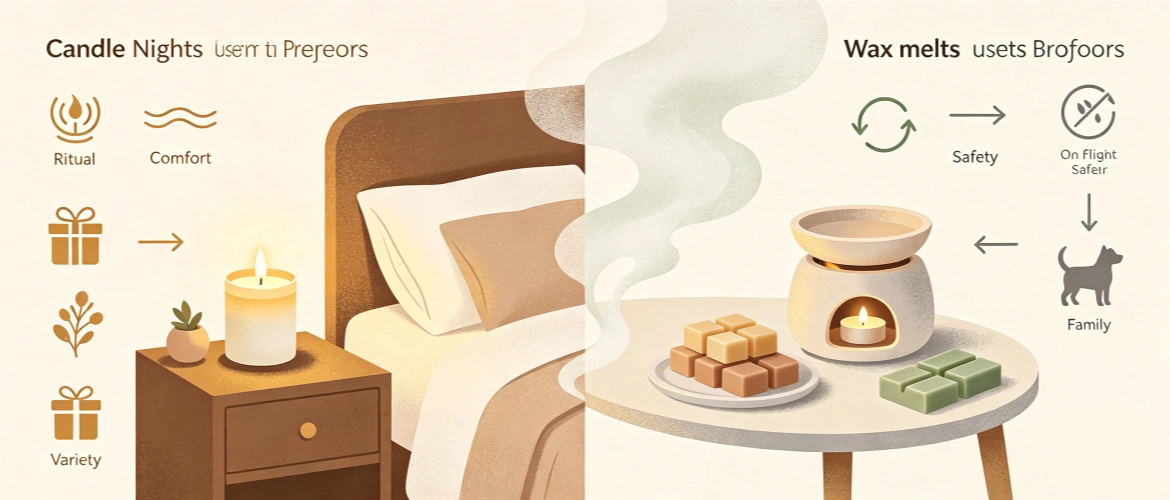
Consumer preferences continue to evolve. Understanding why customers choose one product over another helps brands develop collections that better match market demand.
Why Customers Choose Scented Candles
For many consumers, a candle is much more than a fragrance product. Lighting a candle creates a relaxing ritual and enhances the atmosphere of a home.
Customers often purchase candles for:
- Home decoration
- Self-care routines
- Stress relief
- Holiday gifts
- Luxury living experiences
The warm glow of a burning candle adds emotional value that wax melts cannot fully replicate.
Why Customers Choose Wax Melts
On the other hand, many buyers prioritize convenience and safety.
Wax melts attract customers who want:
- No open flame
- Strong scent performance
- Lower product cost
- Flexible fragrance combinations
- Family- and pet-friendly options
Since users can quickly switch scents without finishing an entire candle, wax melts also appeal to fragrance lovers who enjoy variety.
Different Customers, Different Needs
| Customer Type | Preferred Product |
|---|---|
| Luxury shoppers | Scented Candles |
| Gift buyers | Scented Candles |
| Budget-conscious consumers | Wax Melts |
| Families with children or pets | Wax Melts |
| Home fragrance enthusiasts | Both |
These differences show that each product serves a unique audience. Rather than competing directly, they satisfy different purchasing motivations.
Which Option Best Fits Your B2B Business Strategy?
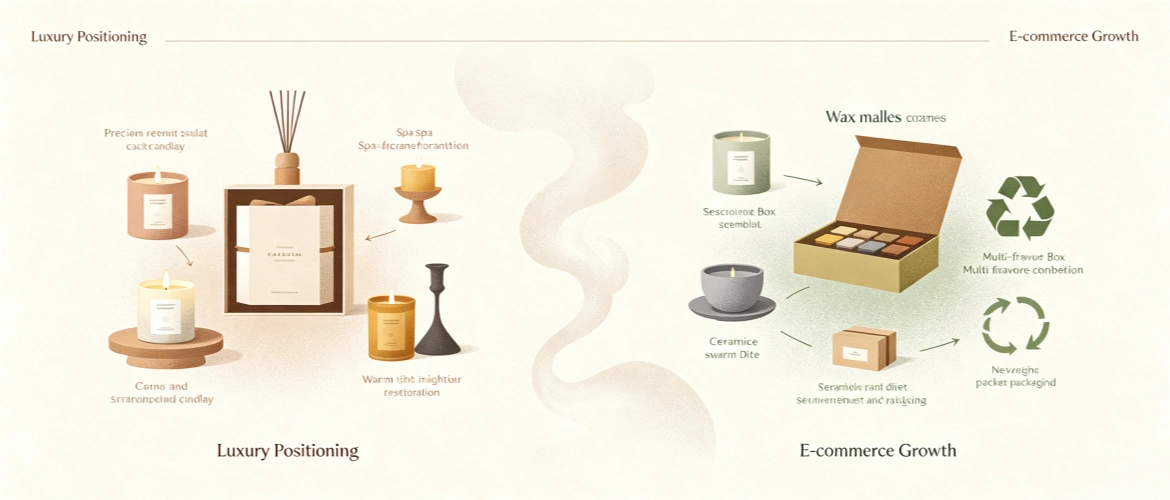
There is no universal answer. The right choice depends on your target customers, sales channels, pricing strategy, and brand positioning.
Choose Scented Candles If Your Brand Focuses On
If your business targets the premium market, scented candles are usually the better choice.
They are ideal for:
- Luxury home fragrance brands
- Boutique retailers
- Gift collections
- Hotel and spa products
- Interior décor brands
Because candles create a premium experience, they help brands establish stronger emotional connections with customers and justify higher prices.
Choose Wax Melts If Your Business Prioritizes
Wax melts may be the better option if your goals include:
- High-volume wholesale
- Online marketplaces
- Subscription boxes
- Entry-level product lines
- Frequent repeat purchases
Their lightweight design also lowers shipping costs, making them particularly suitable for e-commerce businesses.
Why Many Successful Brands Sell Both
Instead of choosing only one product, many leading home fragrance brands develop complete fragrance collections that include multiple product types.
A well-rounded product line may feature:
- Signature scented candles
- Matching wax melts
- Reed diffusers
- Room sprays
- Seasonal gift sets
This strategy creates more cross-selling opportunities, encourages repeat purchases, and allows customers to enjoy their favorite fragrances in different formats.
B2B Growth Opportunities
For manufacturers and private label suppliers, offering a wider range of services can create stronger long-term partnerships.
Popular B2B services include:
- Private label scented candles
- Private label wax melts
- Custom fragrance development
- Low MOQ production
- OEM & ODM manufacturing
- Sustainable wax options
- Custom packaging solutions
Providing these services enables retailers to launch exclusive collections while helping suppliers build long-term customer relationships.
Conclusion
Scented candles stand out for their premium image, decorative value, and strong gifting potential. They support higher retail prices and help brands build an emotional connection with customers. Wax melts, meanwhile, offer affordability, convenience, intense fragrance performance, and lower manufacturing and shipping costs, making them ideal for repeat purchases and large-volume sales.
For most B2B businesses, the best strategy is not choosing one over the other—it is offering both. A coordinated product range allows brands to reach more customer segments, increase cross-selling opportunities, and strengthen long-term profitability.
As consumer demand for home fragrance continues to grow, businesses that combine high-quality products with thoughtful branding, flexible customization, and reliable manufacturing will be well positioned for long-term success.