Private Label Scented Candle Manufacturer in China | IGNITION


Why Luxury Candles Carry a Premium Price?
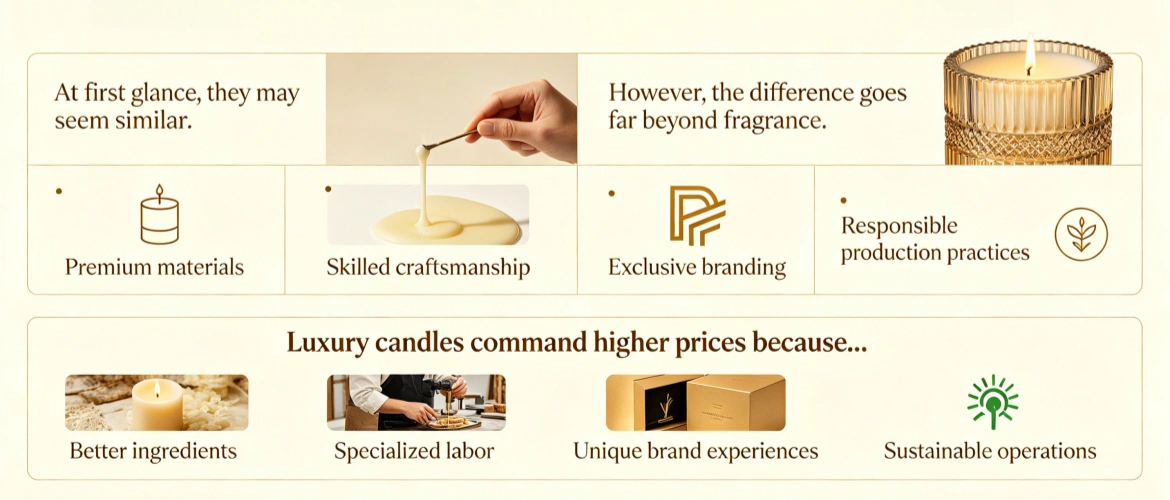
Have you ever looked at a luxury candle and wondered why it costs much more than a standard candle? At first glance, they may seem similar. However, the difference goes far beyond fragrance. A luxury candle combines premium materials, skilled craftsmanship, exclusive branding, and responsible production practices.
Luxury candles command higher prices because they use better ingredients, require specialized labor, offer unique brand experiences, and support sustainable operations.
Understanding these factors helps buyers evaluate value beyond the retail price.
High-Quality Ingredients – The Role of Soy Wax and Pure Essential Oils in Costs?
Luxury candles start with better raw materials. The wax, fragrance, and wick all influence performance, safety, and customer satisfaction.
Premium ingredients increase production costs, but they also improve burn quality, scent throw, and product reliability.
Why Premium Materials Cost More
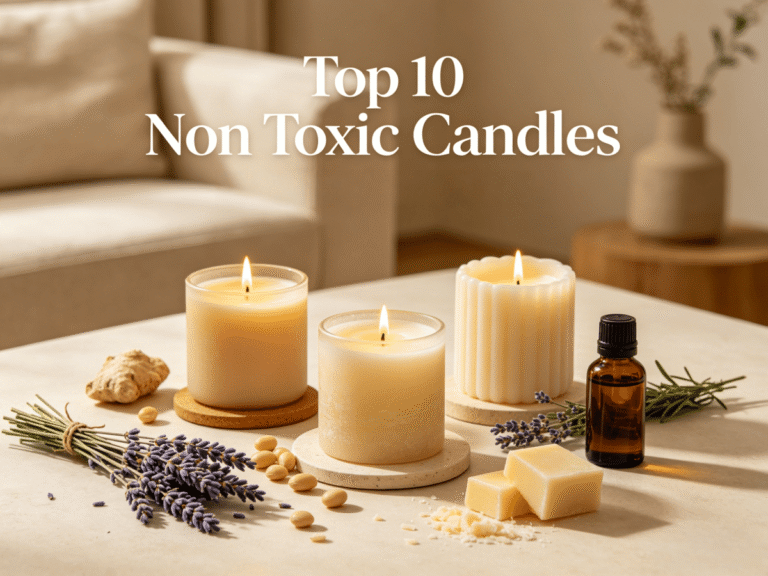
One of the biggest differences lies in the wax. Many mass-market candles use paraffin wax because it is inexpensive and easy to source. Luxury candles often use soy wax, coconut wax, or custom natural wax blends. These materials burn cleaner and last longer.
Fragrance is another major cost factor. Standard candles usually rely on basic synthetic scents. Luxury candles use high-grade fragrance oils, pure essential oils, or carefully developed blends. These ingredients create a richer and more natural aroma.
| Component | Standard Candle | Luxury Candle |
|---|---|---|
| Wax | Paraffin | Soy or Natural Blend |
| Fragrance | Synthetic Oils | Essential Oils & Premium Blends |
| Burn Time | Shorter | Longer |
| Smoke | Higher | Lower |
| Sustainability | Limited | Strong |
I often explain to clients that premium ingredients affect every part of the user experience. Better wax improves burning performance. Better oils create a more sophisticated scent. Together, they form the foundation of a luxury product.
In addition, premium ingredients require stricter sourcing standards. High-quality soy wax and natural fragrance materials cost more because suppliers must maintain consistency and purity. These materials also require proper storage and handling. As a result, manufacturers invest more resources before production even begins.
Artisan Craftsmanship – Handmade Processes and Meticulous Fragrance Blending?

Ingredients alone do not create a luxury candle. Skilled craftsmanship transforms those materials into a premium product.
Handmade production and expert fragrance development require time, experience, and careful attention to detail.
The Value of Skilled Production
Creating a luxury candle involves much more than pouring wax into a container. Every step affects the final result.
First, fragrance development requires testing. Perfumers and product developers may adjust formulas dozens of times before achieving the desired scent profile.
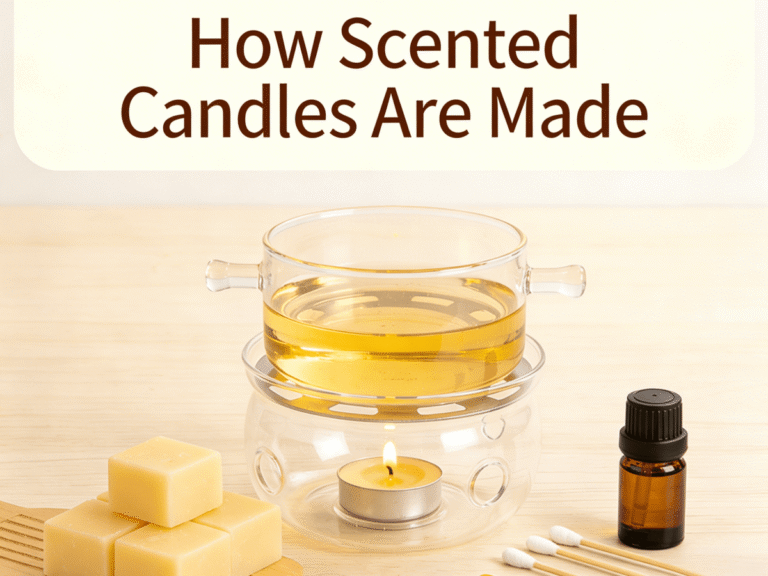
Next comes production. Temperature control is critical. If the wax becomes too hot, fragrance quality can decline. If it cools too quickly, the candle surface may crack or become uneven.
| Production Step | Purpose |
|---|---|
| Fragrance Testing | Balance scent notes |
| Temperature Control | Protect fragrance quality |
| Hand Pouring | Improve consistency |
| Cooling Inspection | Prevent defects |
| Burn Testing | Verify performance |
I have spent entire days refining a fragrance blend for hospitality clients. Small adjustments can dramatically change how a candle performs in a hotel lobby, spa, or retail environment.
Hand-poured candles also receive closer inspection. Skilled artisans check surface quality, wick placement, and fragrance consistency. This process reduces defects and helps maintain a premium standard. While automation can lower costs, it often cannot match the level of care found in small-batch production.
Exclusive Branding – How Custom Packaging and Signature Scents Elevate Value?

Luxury candles are not only fragrance products. They are also brand experiences.
Custom packaging and signature scents increase product value by creating exclusivity and stronger brand identity.
Beyond the Candle Itself
Many luxury brands invest heavily in presentation. The vessel, packaging, and fragrance all work together to communicate a story.
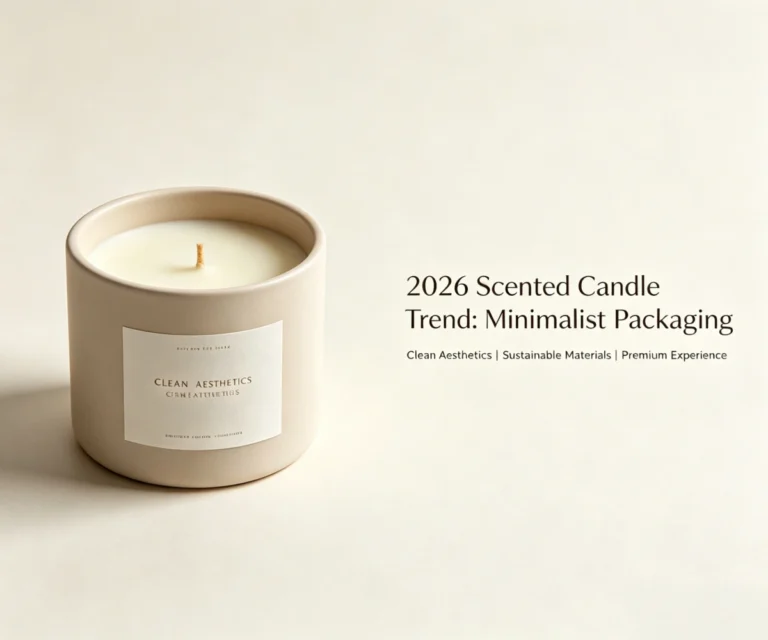
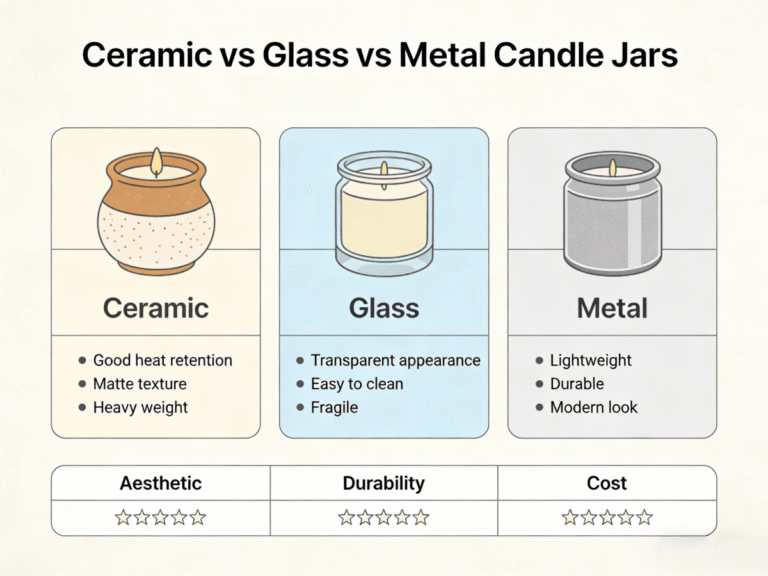
Custom glass containers, embossed boxes, foil stamping, and premium labels cost significantly more than standard packaging. Yet these details help products stand out in competitive markets.
Signature fragrances add another layer of exclusivity. Many businesses want customers to associate a specific scent with their brand.
| Branding Element | Standard Product | Luxury Product |
|---|---|---|
| Packaging | Generic | Custom Designed |
| Fragrance | Common Scents | Signature Scents |
| Brand Identity | Limited | Strong |
| Gift Appeal | Moderate | High |
I often work with hotels, wellness centers, and retailers that want exclusive fragrances. Developing a unique scent requires research, testing, and refinement. However, the result helps businesses create memorable customer experiences and stronger brand recognition.
Moreover, premium packaging often becomes part of the product’s value. Many consumers reuse luxury candle jars as decorative pieces after the candle is finished. This extends the life of the product and increases perceived value. For businesses, custom branding also creates stronger differentiation in crowded markets.
Logistics & Sustainability – How Shipping and Ethical Sourcing Affect Pricing?
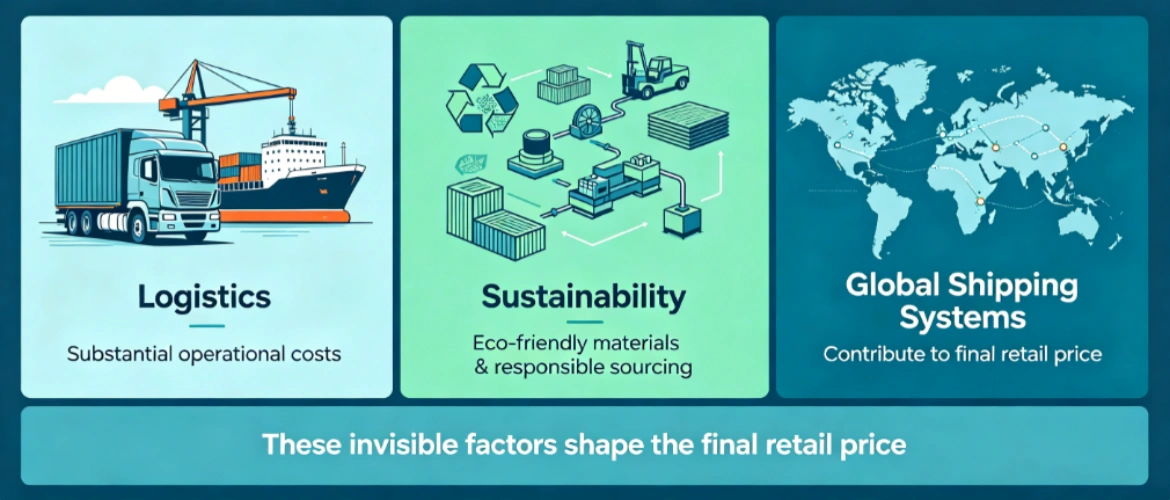
The final piece of the pricing puzzle often remains invisible to consumers. Logistics and sustainability create substantial operational costs.
Responsible sourcing, eco-friendly materials, and global shipping systems all contribute to the final retail price.
The Hidden Costs Behind Luxury Products
Luxury candles often use recyclable packaging, natural waxes, and ethically sourced ingredients. These choices support environmental responsibility, but they also increase costs.
Shipping presents another challenge. Candles are heavy, fragile, and temperature-sensitive. They require protective packaging and efficient logistics systems.
| Cost Factor | Impact |
|---|---|
| Eco-Friendly Materials | Higher Material Costs |
| Ethical Sourcing | Higher Procurement Costs |
| Protective Packaging | Higher Shipping Costs |
| International Logistics | Higher Operational Costs |
| Quality Storage | Better Product Protection |
As a supplier serving customers in more than 60 countries, I understand how complex global logistics can be. Proper warehousing, customs compliance, and transportation planning all require investment.
Sustainability also influences purchasing decisions. Many B2B buyers now prefer suppliers that use renewable materials and responsible sourcing practices. Meeting these expectations requires ongoing investment in supplier management, packaging innovation, and compliance standards.
At the same time, reliable logistics protect product quality. Climate-controlled storage, efficient inventory systems, and secure transportation help ensure candles arrive in excellent condition. These systems increase operating costs, but they also support customer satisfaction and long-term trust.
Conclusion
Luxury candles cost more because they combine superior ingredients, expert craftsmanship, exclusive branding, and sustainable operations. Buyers are not simply paying for a candle. They are investing in quality, experience, consistency, and long-term value.