Scented Candle Supplier



Wooden Wick vs Cotton Wick Scented Candle: What’s the Difference?
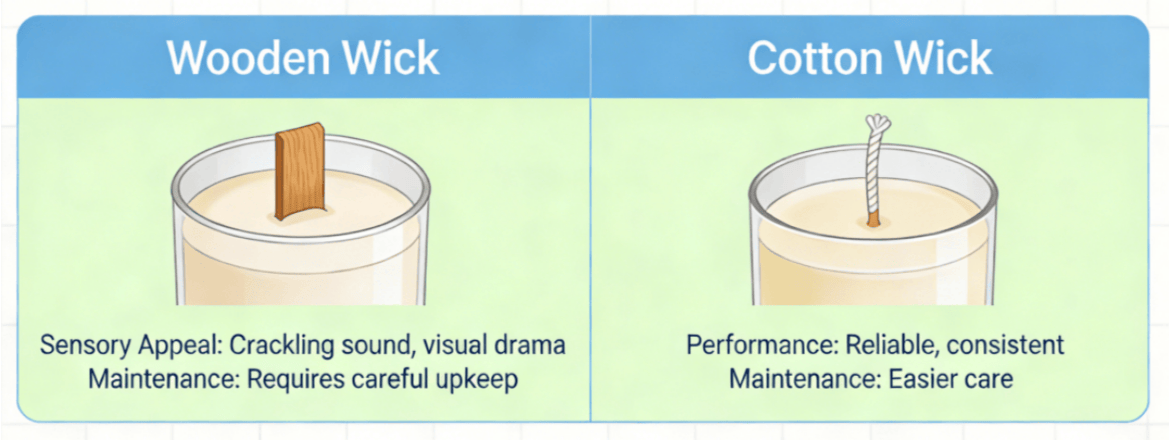
When choosing scented candles, the wick type significantly influences performance, aesthetics, and user experience. Understanding the Wooden Wick vs Cotton Wick comparison helps both consumers and businesses make informed decisions.
Wooden wicks offer sensory appeal with crackling sounds and visual drama but require careful maintenance, while cotton wicks provide reliable, consistent performance with easier care. The Wooden Wick vs Cotton Wick choice affects burn quality, scent diffusion, and overall satisfaction.
This comprehensive Wooden Wick vs Cotton Wick guide explores the key differences to help you select the right option for your needs.
How does a wooden wick change burn performance?
Wooden wicks create a distinctive burn experience that differs significantly from traditional cotton wicks. Their unique characteristics directly impact candle behavior and performance.
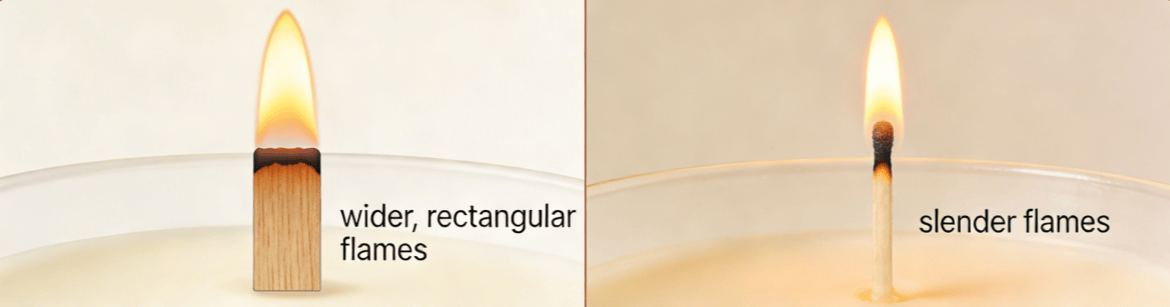
Wooden wicks produce wider, rectangular flames that burn hotter and create crackling sounds, affecting wax pool formation, burn time, and overall candle dynamics.
Key performance differences in Wooden Wick vs Cotton Wick
Understanding the Wooden Wick vs Cotton Wick performance gap is essential for proper selection and use.
| Characteristic | Wooden Wick Performance | Cotton Wick Performance |
|---|---|---|
| Flame Shape | Wide, rectangular, dancing | Tall, vertical, steady |
| Burn Sound | Crackling, fireplace-like | Silent |
| Heat Output | Higher (150-170°F typical) | Lower (130-150°F typical) |
| Melt Pool Formation | Faster, broader spread | Slower, more focused |
| Maintenance Needs | Frequent trimming required | Minimal trimming needed |
The sensory experience of wooden wicks
Wooden wicks offer unique sensory elements that differentiate them in the Wooden Wick vs Cotton Wick comparison. The crackling sound comes from trapped moisture and resins vaporizing, creating an auditory experience many users enjoy. The wider flame provides visual drama, making wooden wicks ideal for creating atmospheric settings.
Burn time considerations
Due to their higher heat output, wooden wicks often burn faster than cotton wicks. This can reduce overall candle lifespan if not properly managed through correct wick sizing and wax formulation.
Maintenance requirements
Wooden wicks need more attention than cotton wicks, developing “mushrooming” (carbon buildup) that requires regular trimming to prevent soot and ensure clean burning. This maintenance factor is a key differentiator in the Wooden Wick vs Cotton Wick decision.
What benefits do cotton wicks offer brands?
Cotton wicks remain the industry standard for their reliability and consistency. Understanding their advantages is crucial in the Wooden Wick vs Cotton Wick evaluation.
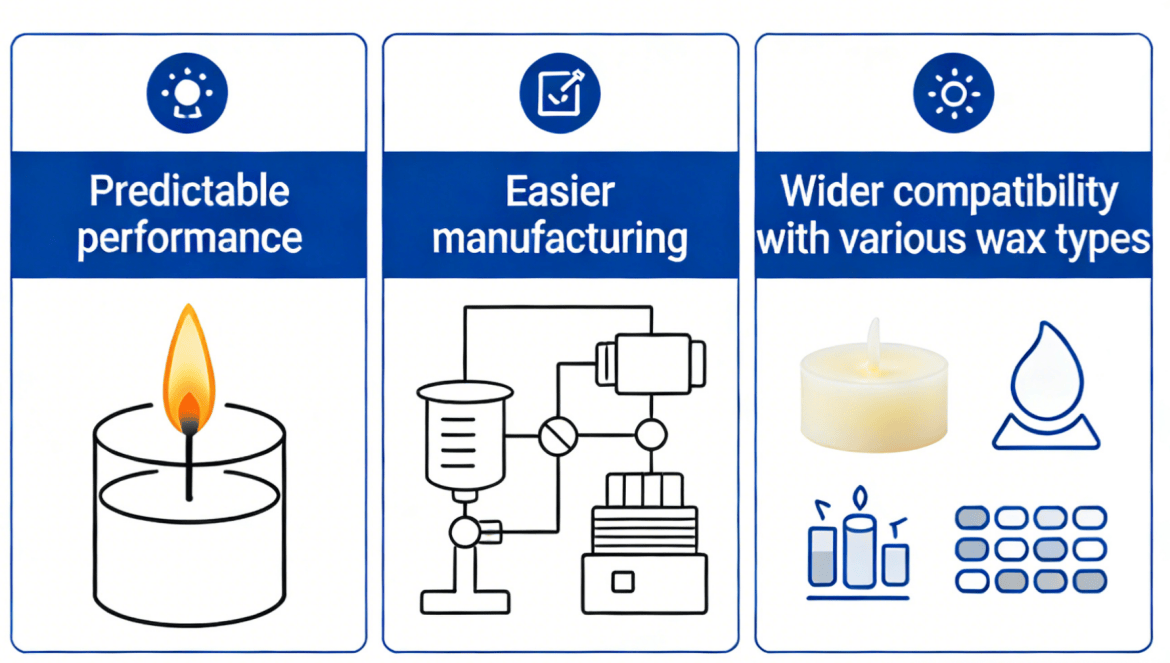
Cotton wicks provide predictable performance, easier manufacturing, and wider compatibility with various wax types, making them the safer, more reliable choice for consistent product quality.
Consistency and reliability advantages
Cotton wicks excel in predictable burn characteristics that brands can depend on.
| Advantage | Cotton Wick Benefit | Wooden Wick Consideration |
|---|---|---|
| Burn Rate Consistency | Very predictable | More variable |
| Manufacturing Ease | Standardized sizes, automated friendly | More manual, variable sizing |
| Wax Compatibility | Works with most formulations | More sensitive to wax type |
| Maintenance Simplicity | Low maintenance requirements | Higher maintenance needs |
Manufacturing and scalability benefits
Cotton wicks offer significant production advantages in the Wooden Wick vs Cotton Wick decision:
- Available in standardized sizes for consistent manufacturing
- Easier to braid and treat for specific performance characteristics
- Compatible with automated production equipment
- Lower per-unit production costs
Customer experience advantages
Cotton wicks require less maintenance, making them more user-friendly:
- Minimal trimming needed before each use
- Less prone to mushrooming and carbon buildup
- Consistent flame height throughout the candle’s life
- Reliable performance across different environments
Safety considerations
In the Wooden Wick vs Cotton Wick safety comparison, cotton wicks are generally more stable and safer. They’re less likely to produce excessive soot, create overly large flames, or require frequent adjustments, reducing liability concerns for brands.
Which wick type enhances scent throw better?
Wick choice directly impacts how fragrance oils vaporize and disperse, making the Wooden Wick vs Cotton Wick decision crucial for scent performance.
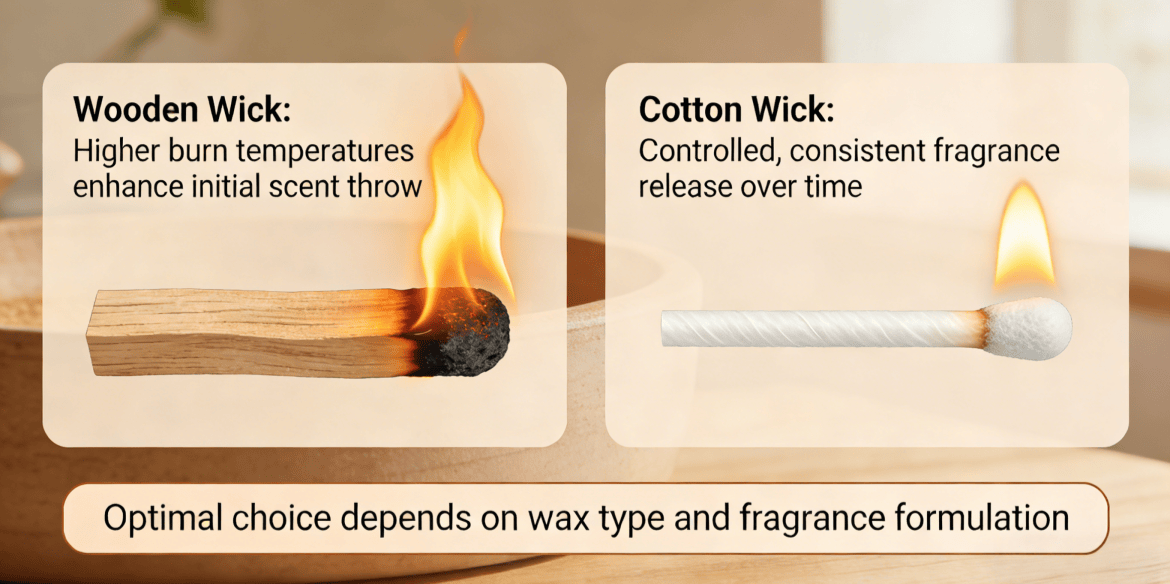
Wooden wicks can enhance initial scent throw through higher burn temperatures, while cotton wicks provide more controlled, consistent fragrance release over time. The optimal choice depends on wax type and fragrance formulation.
Temperature and scent release dynamics
The Wooden Wick vs Cotton Wick temperature difference significantly affects fragrance performance.
| Factor | Wooden Wick Impact | Cotton Wick Impact |
|---|---|---|
| Burn Temperature | Higher (150-170°F) | Lower (130-150°F) |
| Initial Scent Release | Faster, potentially stronger | More gradual, controlled |
| Scent Consistency | May vary as wick burns down | More consistent throughout |
| Fragrance Compatibility | Better for heavy, rich scents | Better for light, delicate scents |
Wax pool formation and scent distribution
Wooden wicks often create wider melt pools faster, which can help distribute scent more quickly throughout a space. However, this can also lead to fragrance oils burning off too rapidly if not properly formulated
Scent throw optimization
The best wick choice for scent throw requires testing with specific wax and fragrance combinations. There’s no universal “better” option in the Wooden Wick vs Cotton Wick comparison—only what works best for your particular formulation. Lighter, delicate fragrances often work better with cotton wicks’ gentler heat, while heavier, rich fragrances may benefit from wooden wicks’ higher temperatures.
Why does wick choice matter for B2B buyers?
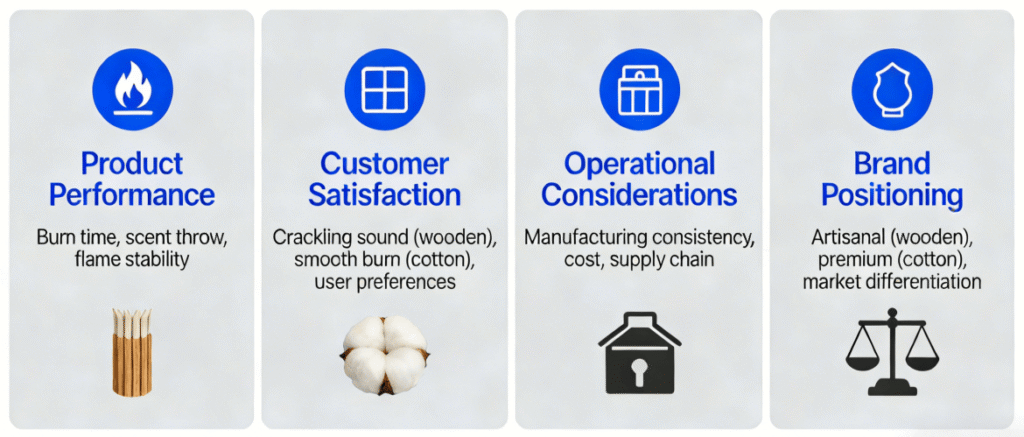
For businesses purchasing candles, the Wooden Wick vs Cotton Wick decision affects product performance, customer satisfaction, and operational considerations across multiple dimensions.
Wick selection impacts manufacturing consistency, customer experience, safety compliance, and brand positioning for B2B buyers, making the *Wooden Wick vs Cotton Wick* choice a strategic business decision.
Manufacturing and supply chain implications
The Wooden Wick vs Cotton Wick choice affects production efficiency and reliability.
| Consideration | Cotton Wick Advantage | Wooden Wick Consideration |
|---|---|---|
| Supply Chain Reliability | Widely available, consistent supply | More limited suppliers, potential variability |
| Production Speed | Faster, more easily automated | Slower, often requires more manual processes |
| Quality Control | Easier to standardize and control | More variables to monitor and manage |
| Cost Efficiency | Lower per-unit costs | Higher per-unit costs |
Customer experience and satisfaction factors
The Wooden Wick vs Cotton Wick decision directly affects how customers perceive and use products.
| Factor | Cotton Wick Performance | Wooden Wick Performance |
|---|---|---|
| Ease of Use | Low maintenance, familiar | Requires more care and instruction |
| Consistency | Predictable, reliable performance | Can be more variable |
| Unique Experience | Standard candle experience | Crackling sound, visual drama |
| Complaint Risk | Lower due to familiarity | Higher due to maintenance requirements |
Brand positioning and marketing
Wick choice can support different brand stories and positioning strategies:
- Cotton wicks convey reliability, tradition, and consistent quality
- Wooden wicks suggest craftsmanship, uniqueness, and premium experience
Safety and compliance considerations
The Wooden Wick vs Cotton Wick decision affects safety testing and regulatory compliance:
- Cotton wicks have established safety standards and testing protocols
- Wooden wicks may require additional testing and compliance verification
Operational implications for businesses
For hospitality, retail, and other B2B applications:
- Cotton wicks require less staff training and customer education
- Wooden wicks may need specific care instructions and maintenance protocols
- Replacement and maintenance costs differ between the two options
Strategic decision framework
Ultimately, the Wooden Wick vs Cotton Wick choice should align with:
- Your brand identity and target market positioning
- Production capabilities and cost structure
- Customer expectations and usage patterns
- Safety and compliance requirements
There’s no one-size-fits-all answer in the Wooden Wick vs Cotton Wick decision—only the right choice for your specific business needs and objectives.
Conclusion
The Wooden Wick vs Cotton Wick comparison reveals distinct advantages and trade-offs. Wooden wicks provide unique sensory experiences with crackling sounds and dramatic flames but require more care, while cotton wicks deliver reliable, consistent performance with easier maintenance. Understanding these differences helps both consumers and businesses make optimal choices based on their priorities for aesthetics, performance, and practical considerations. The Wooden Wick vs Cotton Wick decision ultimately depends on your specific needs, preferences, and intended use cases.