Scented Candle Supplier



Why Can’t I Smell My Scented Candle? Common Reasons Explained
You light a scented candle expecting a beautiful fragrance, but you can’t detect any scent. This common frustration has specific causes that explain Why Can’t I Smell My Scented Candle and how to fix the problem.
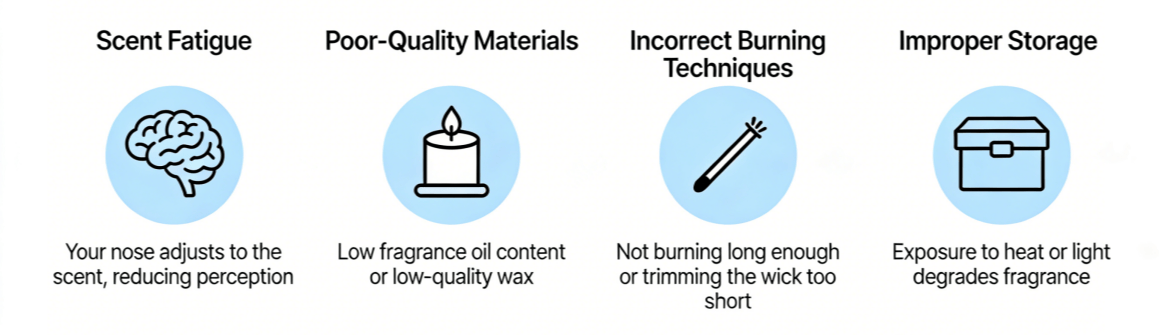
Scented candles may lack fragrance due to scent fatigue, poor-quality materials, incorrect burning techniques, or improper storage. These factors prevent fragrance oils from properly vaporizing and dispersing into your space.
Understanding the reasons Why Can’t I Smell My Scented Candle helps you choose better products and use them more effectively. Let’s examine the most common causes and their solutions.
Suffering from Scent Fatigue in Closed Spaces?
Scent fatigue happens when continuous exposure to a fragrance makes your nose stop registering it. This biological adaptation explains why a perfectly good candle might seem scentless to you but strong to someone new entering the space.
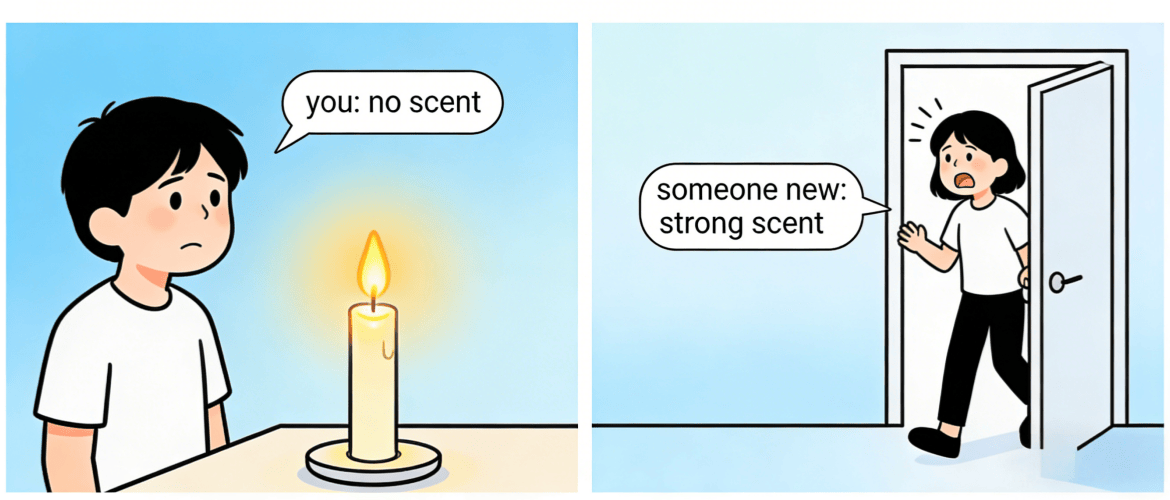
The science behind scent fatigue
Your olfactory receptors are designed to detect new smells as a survival mechanism. When a scent remains constant, your brain eventually filters it out to focus on potential new threats or opportunities. This isn’t a candle problem – it’s your body working normally.
How to combat scent fatigue
You can overcome scent fatigue with these simple strategies that address Why Can’t I Smell My Scented Candle:
| Situation | Solution | Result |
|---|---|---|
| Working in one room | Take 15-minute breaks elsewhere | Resets your olfactory senses |
| Testing candle strength | Have someone new enter the room | Confirms the candle is working |
| Long-term scent exposure | Rotate candle scents regularly | Prevents adaptation to one fragrance |
| Large spaces | Use multiple candles strategically | Creates scent layers that prevent fatigue |
The ventilation balance
While completely sealed rooms can intensify scent initially, they accelerate scent fatigue. Slight air circulation helps distribute fragrance more evenly and prevents the stagnant conditions that cause rapid olfactory adaptation.
Business implications
For hotels and spas, understanding scent fatigue is crucial. Rotating scents in different areas or times of day ensures guests consistently notice the carefully curated ambiance rather than becoming desensitized.
Using Low-Fragrance or Poor-Quality Waxes?
The type of wax and fragrance load significantly impacts scent throw. Some materials simply can’t hold or release fragrance effectively.
Low-quality waxes or insufficient fragrance oil concentrations result in weak scent throw. Premium natural waxes like soy hold more fragrance and release it more effectively than paraffin blends or low-quality alternatives.
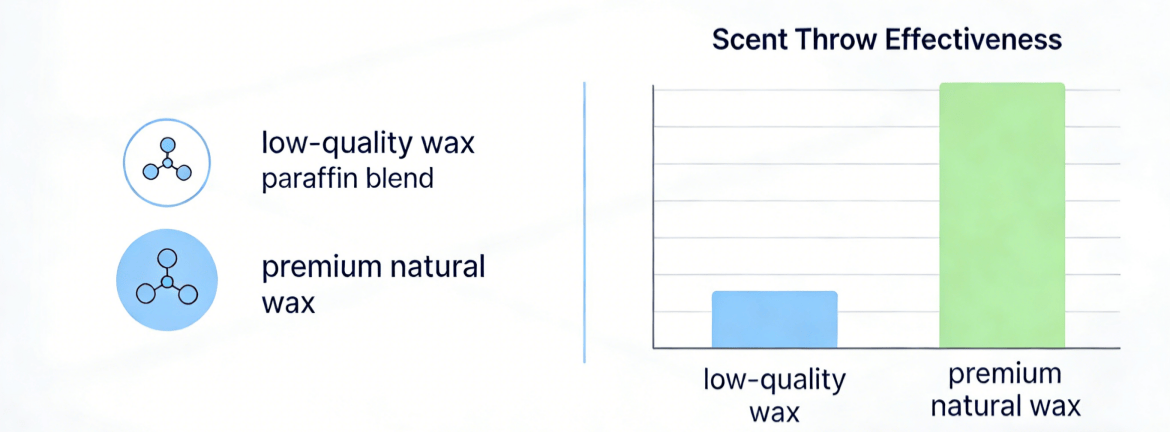
Wax type comparison for fragrance retention
Different waxes have varying capacities for holding and releasing fragrance oils. Understanding these differences helps explain Why Can’t I Smell My Scented Candle when using certain products.
| Wax Type | Fragrance Load Capacity | Scent Throw Quality | Best Use |
|---|---|---|---|
| Soy Wax | 8-12% (High) | Clean, strong, even release | Premium candles, consistent performance |
| Paraffin Wax | 6-8% (Medium) | Strong initially, fades faster | Budget candles, strong initial impact |
| Coconut Wax | 10-12% (Very High) | Excellent, clean throw | Luxury candles, clean burning |
| Beeswax | 3-5% (Low) | Subtle, natural honey scent | Natural, hypoallergenic options |
| Low-Quality Blends | Varies widely | Inconsistent, weak results | Mass-market, cost-focused products |
Fragrance oil quality matters
The quality of fragrance oils significantly impacts scent throw. Premium candles use higher concentrations of quality oils, while budget options may use diluted or synthetic fragrances that don’t vaporize effectively.
Identifying quality issues
How to recognize if wax quality:
| Symptom | Likely Cause | Solution |
|---|---|---|
| Strong cold throw, weak when lit | Poor wax-fragrance binding | Choose different wax type |
| Scent fades after 30 minutes | Low fragrance load | Higher quality candle |
| Only smells when directly above | Poor wax composition | Better quality materials needed |
| Different scent than described | Low-quality fragrance oils | Reputable brand selection |
The price-quality relationship
While expensive doesn’t always mean better, extremely cheap candles often cut costs using low fragrance loads and poor-quality waxes that can’t properly hold or release scent molecules.
Burning Candles Incorrectly or Too Briefly?
How you burn your candle dramatically affects its scent throw. Even high-quality candles won’t perform well with poor burning techniques.
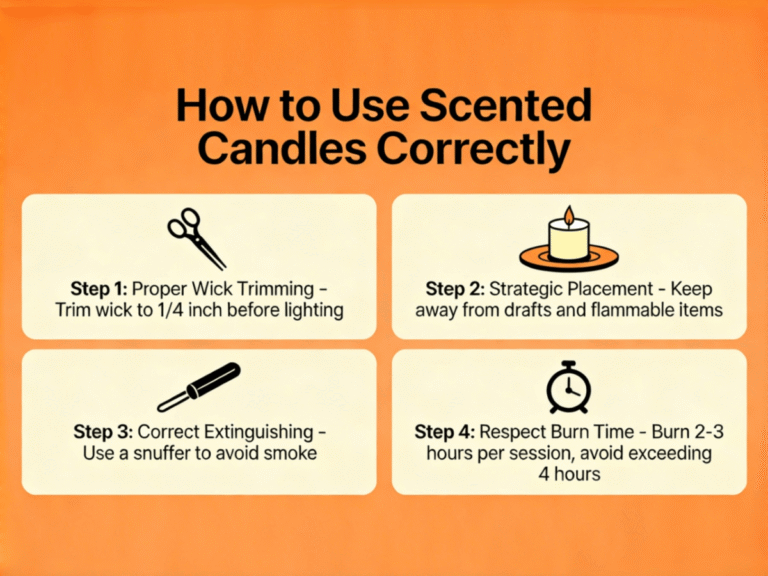
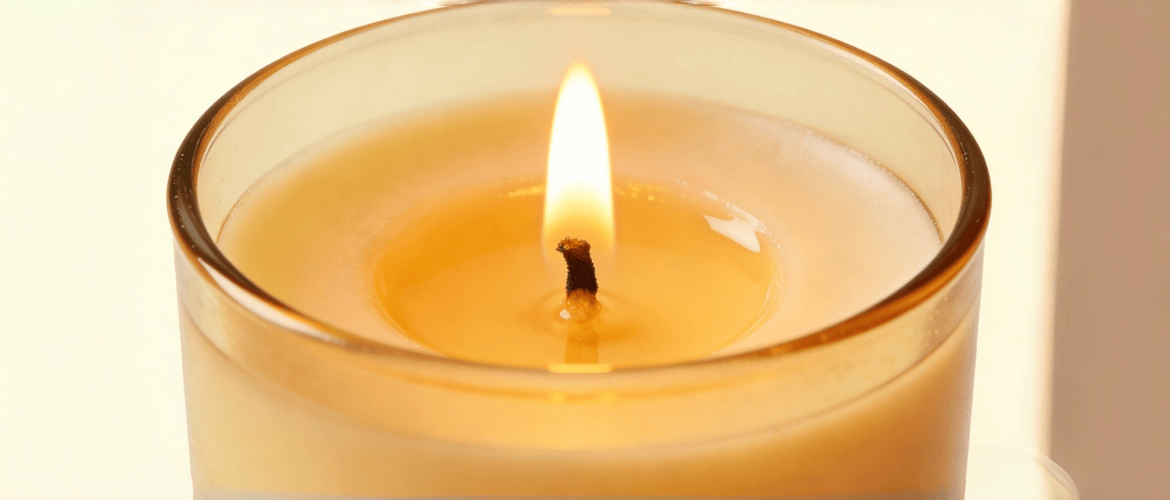
Incorrect burning prevents proper fragrance release. Key mistakes include insufficient burn time, wrong wick length, and inadequate wax pool formation, all of which trap fragrance in unmelted wax.
The first burn principle
The initial burn sets the candle’s “memory.” An inadequate first burn causes tunneling, where subsequent burns can’t access fragrance trapped in unused wax along the sides. This common error explains Why Can’t I Smell My Scented Candle even when using premium products.
Proper burn time guidelines
Follow these burn time recommendations for optimal scent:
| Candle Diameter | Minimum Burn Time | Ideal First Burn | Maximum Single Session |
|---|---|---|---|
| 2 inches | 2 hours | 2.5 hours | 4 hours |
| 3 inches | 3 hours | 3.5 hours | 4 hours |
| 4 inches | 4 hours | 4+ hours | 4 hours |
| 5+ inches | 4+ hours | Until full melt pool | 4 hours |
Common burning mistakes and fixes
Most scent throw problems relate to these correctable errors:
| Mistake | Consequence | Correction |
|---|---|---|
| Short burn sessions | Tunneling, weak scent | Burn 2+ hours minimum |
| Wrong wick length | Poor fragrance vaporization | Trim to ¼ inch before lighting |
| Drafty location | Uneven burning, soot | Use in still air environment |
| Deep candle jars | Poor oxygen flow for combustion | Trim wick more frequently |
The wax pool importance
A complete melt pool (liquid wax across the entire surface) is essential for proper scent throw. Fragrance oils vaporize from melted wax, not solid wax. An incomplete melt pool means much of your candle’s fragrance remains trapped and unused.
Room size considerations
A common mistake is using an inappropriately sized candle for the space. A small candle in a large room will never provide adequate scent coverage, no matter how perfectly it’s burned.
Storing Products Improperly Before Use?
How you store candles before using them significantly impacts their scent performance. Proper storage preserves fragrance integrity until you’re ready to enjoy it.
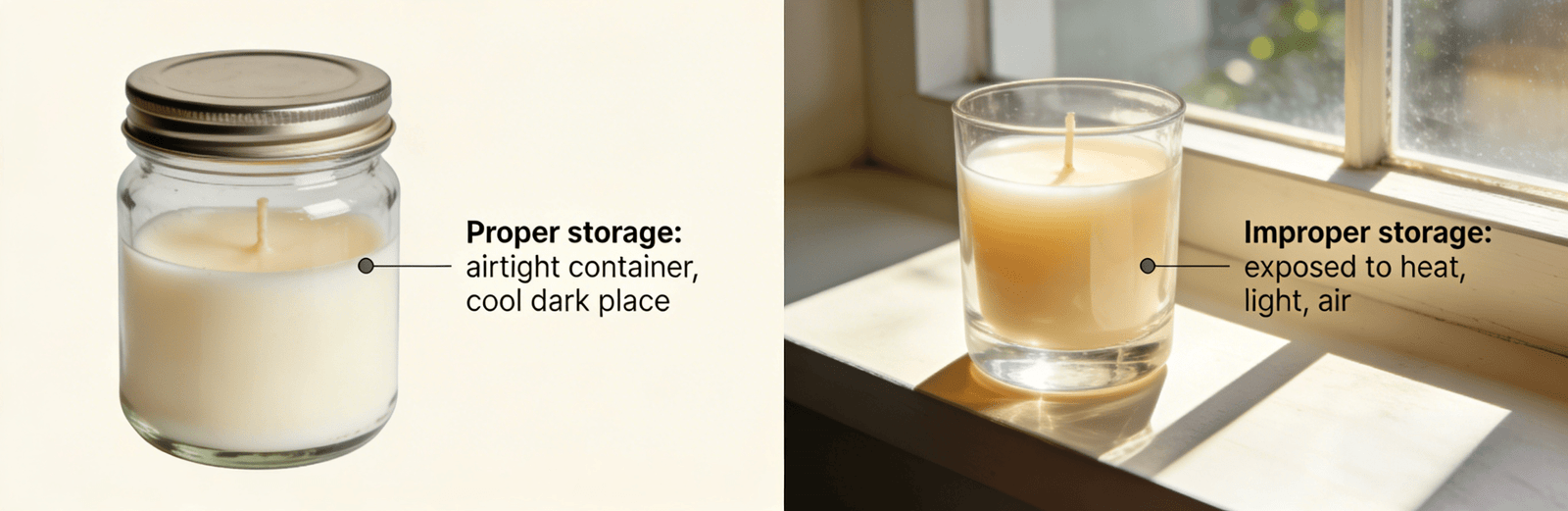
Improper storage causes fragrance degradation through evaporation, oxidation, and contamination. Heat, light, and air exposure are the primary factors that diminish scent quality before first use.
The enemies of candle fragrance
Three main elements damage stored candles:
| Storage Threat | Effect on Candles | Ideal Protection |
|---|---|---|
| Heat | Evaporates fragrance oils | Store below 75°F (24°C) |
| Light | Breaks down fragrance molecules | Dark location, opaque containers |
| Air Exposure | Oxidizes and degrades oils | Sealed containers, original packaging |
Proper storage conditions
Ideal candle storage involves controlling these environmental factors to prevent wondering Why Can’t I Smell My Scented Candle later:
| Storage Location | Suitability | Recommendations |
|---|---|---|
| Pantry/Closet | Excellent | Dark, cool, stable temperature |
| Basement | Good (if dry) | Watch for humidity control |
| Living Area | Fair | Away from windows, heat sources |
| Garage/Attic | Poor | Temperature extremes damage scents |
Storage duration guidelines
Even with perfect storage, candles have a shelf life. While they don’t exactly “expire,” fragrance quality diminishes over time, which may explain Why Can’t I Smell My Scented Candle that’s been stored too long.
| Candle Type | Optimal Use Period | Maximum Storage Time |
|---|---|---|
| Soy Wax Candles | 1-2 years | 3 years with proper storage |
| Paraffin Candles | 2-3 years | 5 years with proper storage |
| Natural Blends | 1-2 years | 3 years with proper storage |
| Citrus/Light Scents | 1 year | 2 years maximum |
Signs of storage damage
How to tell if poor storage affected your candle and explains Why Can’t I Smell My Scented Candle:
| Symptom | Indicates | Solution |
|---|---|---|
| Faded scent when unlit | Fragrance evaporation | Shorter storage, cooler location |
| Discolored wax | Light damage | Store in dark location |
| Oily residue on jar | Fragrance separation | Avoid temperature fluctuations |
| Weak hot throw | General degradation | Purchase fresher candles |
Business storage considerations
For retailers and hospitality businesses, proper candle storage is essential for product quality. First-in-first-out inventory systems ensure customers receive candles at their fragrance peak, preventing the question Why Can’t I Smell My Scented Candle from arising due to aged inventory.
Conclusion
If you’re asking Why Can’t I Smell My Scented Candle, the cause is likely one of these four issues: scent fatigue, poor-quality materials, incorrect burning techniques, or improper storage. Identifying the specific problem helps you choose solutions that restore your candle’s fragrance performance. Understanding these factors ensures you can enjoy the scent experience you expected from your scented candles.