Scented Candle Supplier



Soy vs. Paraffin: The Eco-Friendly Candle Guide
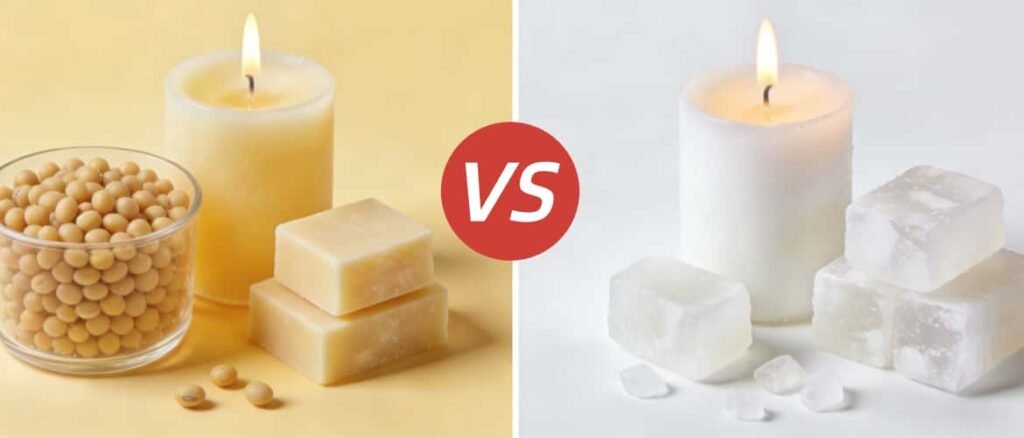
Soy wax stands as the superior eco-friendly choice for several key reasons. First, it is a renewable and biodegradable resource. Moreover, it burns significantly cleaner and lasts longer than paraffin wax. When thoughtfully paired with pure essential oils and a sustainable wick, soy wax ultimately creates a truly healthy and environmentally responsible candle experience.
Why Natural Soy Wax is Healthier and Cleaner
Soy wax burns cleaner and cooler than paraffin. It produces minimal soot, is non-toxic, and is made from a renewable resource. A high-quality soy candle will have a clear, steady flame and won’t blacken your walls or pollute your indoor air with harmful byproducts.
The Health and Performance Benefits of Soy Wax
Soy wax isn’t just a marketing term; it has tangible benefits that you can see and smell.
The Science of a Cleaner Burn
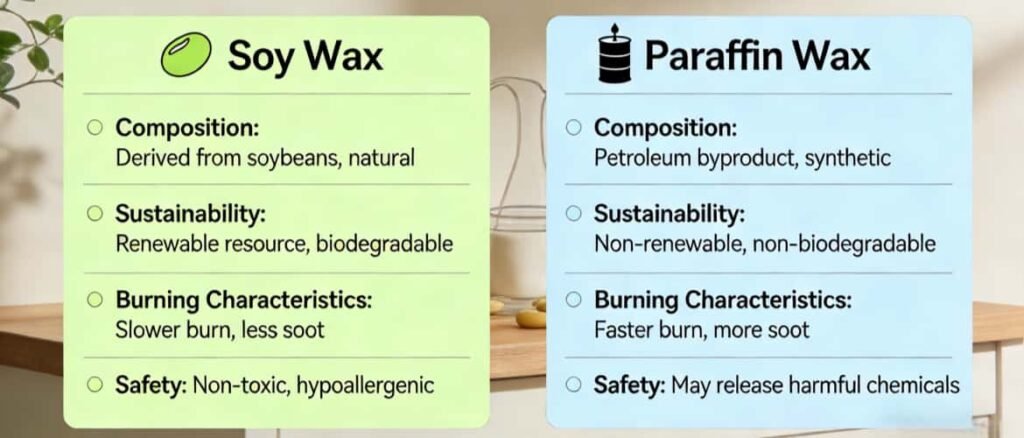
- Lower Burn Temperature: Soy wax has a lower melting point than paraffin, which directly impacts its performance. Because it melts at a cooler temperature, it burns at a slower, more controlled rate. As a result, a soy wax candle can last up to 50% longer than a comparable paraffin candle.
- Minimal Soot Production: The chemical structure of soy wax produces very little soot. You won’t see black smoke pouring from the flame, and you won’t find your walls or ceiling getting stained with carbon deposits over time.
- Non-Toxic: Soy wax is derived from plants. It does not release benzene or toluene—carcinogenic compounds that can be found in paraffin wax emissions.
The Performance Advantage
- Excellent Scent Throw: Because soy wax is less dense than paraffin, it can hold and release fragrance oils more effectively. This means you get a stronger, more authentic scent throw without needing an excessive amount of fragrance oil.
- Easy Cleanup: Spilled soy wax is biodegradable and can be cleaned up with soap and hot water. Paraffin wax, being a petroleum product, is much harder to remove from fabrics and surfaces.
Look for candles labeled “100% Soy Wax.” Some candles are “soy blends,” which mix soy with paraffin to cut costs. For the purest, healthiest burn, insist on 100% soy.
The Environmental Impact of Paraffin Wax
Paraffin wax is a petroleum derivative. Its production is linked to fossil fuel extraction, it is not biodegradable, and it burns less cleanly than natural alternatives. Choosing paraffin candles supports an industry that contributes to pollution and climate change.
The Lifecycle of a Paraffin Candle
Let’s trace the journey of paraffin wax from the ground to your home to understand its full environmental impact.
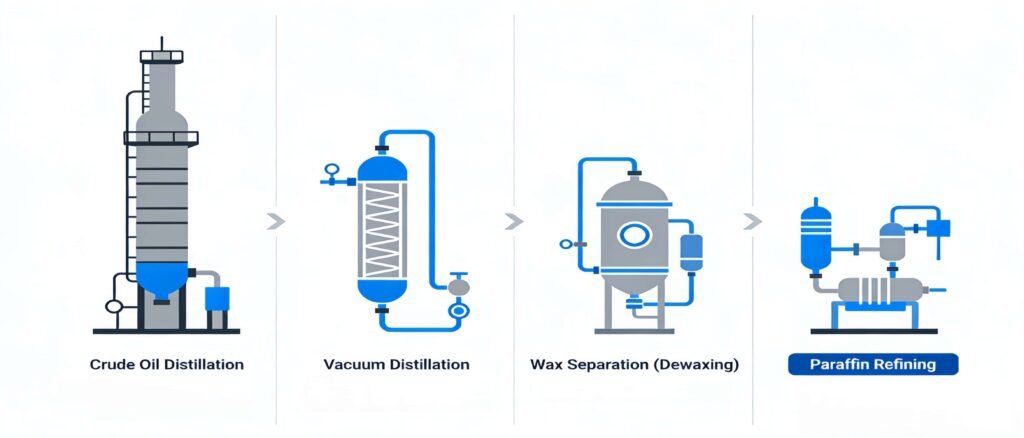
1. Sourcing: A Fossil Fuel Byproduct
Paraffin wax is not a naturally occurring substance. In fact, it is a byproduct of the crude oil refining process. Here’s how it’s made: after crude oil is refined into gasoline, diesel, and other fuels, the leftover sludge is then bleached and deodorized to create paraffin wax. Therefore, its very existence is fundamentally tied to the fossil fuel industry.
2. Production: Energy Intensive and Polluting
The process of refining and purifying paraffin wax is energy-intensive. It often involves chemical treatments and bleaching agents. The factories that produce it contribute to industrial pollution.
3. End-of-Life: Not Biodegradable
When a paraffin candle is finished, the leftover wax is essentially a plastic. It is not biodegradable. It will sit in a landfill for centuries, just like a plastic bottle. In contrast, soy wax is fully biodegradable and will break down naturally.
The “Greenwashing” Trap
Be wary of candles that are marketed as “natural” or “eco-friendly” but are made from paraffin. Some companies add a small amount of soy or other natural waxes and market the product as “natural blend.” Always check the label for “100% Soy Wax” or “100% Beeswax” to ensure you’re not being misled.
From a sustainability perspective, paraffin wax is a lose-lose proposition. It’s bad at the start (sourcing), bad in the middle (production and use), and bad at the end (disposal).
Essential Oils vs. Synthetic Fragrances
Essential oils are pure plant extracts that provide natural scent and aromatherapy benefits. Synthetic fragrances are complex chemical mixtures that can contain allergens and undisclosed ingredients like phthalates. For a truly clean and healthy candle, choose one scented with 100% essential oils.
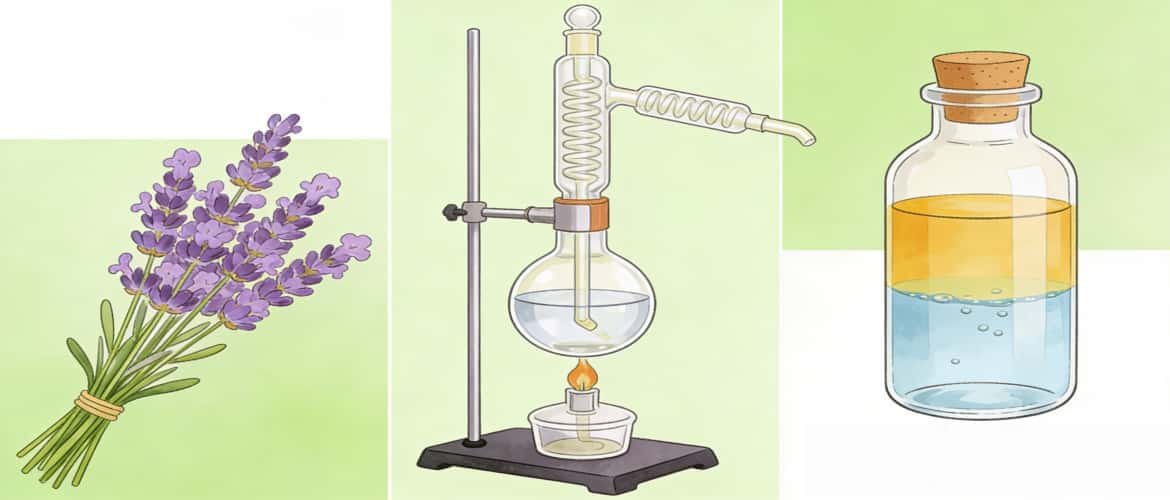
The Ingredient Transparency Gap
The difference between these two scent sources is the difference between eating a fresh orange and drinking an “orange-flavored” soda.
Essential Oils: Nature’s Perfume
- What They Are: Volatile aromatic compounds steam-distilled or cold-pressed from flowers, leaves, bark, roots, and other plant parts. Examples: Lavender from lavender flowers, Lemon from lemon peels.
- Benefits: They are 100% natural, biodegradable, and many have documented therapeutic properties (e.g., lavender for calm, peppermint for energy).
- Transparency: The ingredient list is simple: Lavandula angustifolia (Lavender) Oil.
Synthetic Fragrance Oils: A Chemical Cocktail
- What They Are: Man-made in a lab to mimic natural scents (or create entirely new ones, like “fresh linen” or “ocean breeze”). They are a proprietary blend of dozens, sometimes hundreds, of chemicals.
- The Risk: The formula is a trade secret, so manufacturers are not required to list the individual ingredients. This “fragrance loophole” can hide phthalates, allergens, and other potentially irritating or harmful chemicals.
- Transparency: The label simply says “Fragrance.” You have no idea what you’re burning.
How to Spot the Difference
- Look for Specificity: A good candle will say “Scented with Pure Lavender Essential Oil.” A vague candle will say “Lavender Scent” or just “Fragrance.”
- Price Point: High-quality essential oils are expensive. If a candle is very cheap and claims to be all-natural, it’s likely not using pure essential oils.
If you have sensitivities, asthma, or are concerned about indoor air quality, essential oil candles are the only truly safe choice. This is because they are far less likely to trigger headaches or cause allergic reactions compared to synthetic alternatives.
How to Choose Truly Sustainable Candles
To choose a truly sustainable candle, vet all four components: 1) 100% natural wax (soy, beeswax, coconut), 2) a natural, lead-free wick (cotton or wood), 3) 100% essential oils for scent, and 4) plastic-free, recyclable or compostable packaging.
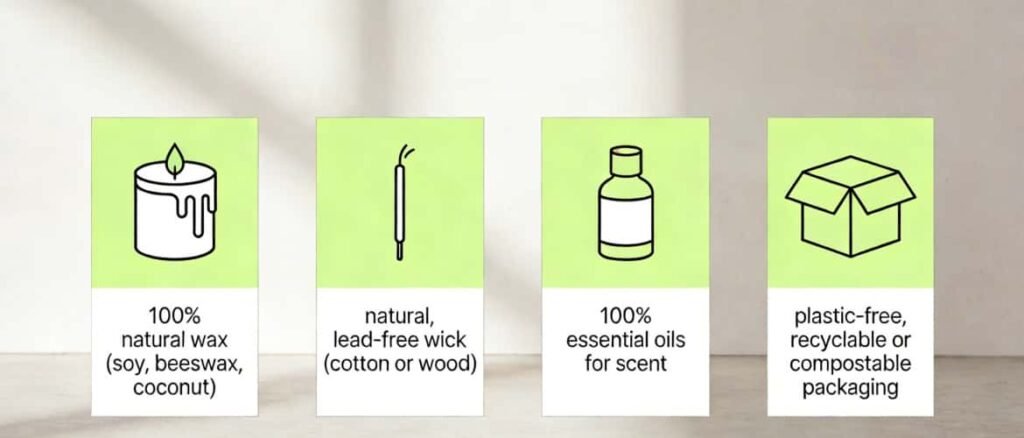
The Complete Sustainable Candle Checklist
Don’t just look at the wax. A candle is a system, and every part matters for its overall environmental impact.
The 4-Point Checklist for a Truly Eco-Friendly Candle
| Component | What to Look For | Red Flags to Avoid |
|---|---|---|
| The Wax | 100% Soy Wax, Beeswax, or Coconut Wax. These are renewable, biodegradable, and burn cleanly. | “Soy Blend,” “Vegetable Wax Blend” (often contains paraffin), or just “Wax.” |
| The Wick | 100% Cotton or Wood. Cotton wicks are natural and burn cleanly. Wood wicks provide a pleasant crackle and are also natural. | Cored wicks (wicks with a metal core). These often contain lead or other metals to keep them rigid. |
| The Scent | 100% Pure Essential Oils. The label will specify the oil, e.g., “Lavender Essential Oil.” | “Fragrance,” “Parfum,” or “Scented Oil.” These are synthetic and non-transparent. |
| The Packaging | Glass (recyclable), Metal (recyclable), or Compostable Paper/Cardboard. No plastic sleeves or lids. | Plastic packaging, excessive cardboard, or non-recyclable materials. |
Beyond the Candle: Supporting Ethical Brands
Once you’ve checked the product specs, consider the brand’s ethos.
- Transparency: Do they openly share their ingredient sources and manufacturing processes?
- Ethical Sourcing: Do they source their soy from non-GMO or organic farms? Do they support fair trade for their essential oils?
- Circularity: Do they have a jar return program or encourage you to reuse the container?
Conclusion
Making the switch to truly sustainable candles is a simple but powerful step toward a healthier home and a healthier planet. By choosing 100% soy wax candles scented with pure essential oils and featuring natural wicks, you are voting with your wallet for cleaner air, renewable resources, and full ingredient transparency. Use the checklist provided, and you can enjoy the warm glow of a candle with a clear conscience.