Scented Candle Supplier



Seasonal Scented Candle Guides for Spring, Summer, Fall, Winter
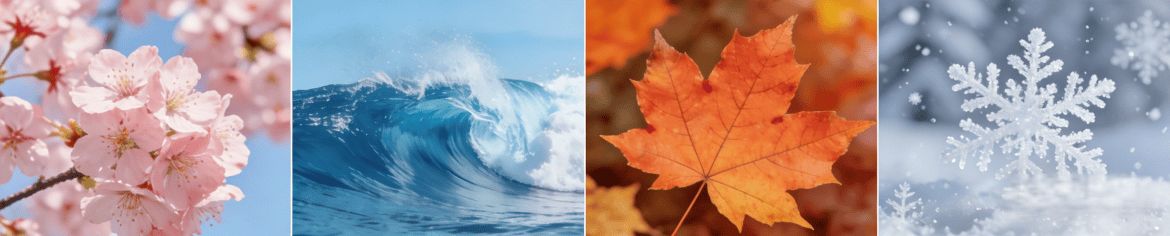
A seasonal scented candle uses notes that reflect nature’s changes. Spring is light and floral. Summer is bright and airy. Fall is warm and spicy. Winter is rich and cozy. Matching scent to season creates a more intentional and harmonious atmosphere at home.
Which candle scents work best for each season?
The best scents for a seasonal candle are tied to weather and activity. Spring needs clean, awakening notes. Summer works with juicy, refreshing blends. Fall calls for warm, comforting aromas. Winter welcomes deep, festive fragrances. Each season has a distinct scent personality that feels right.
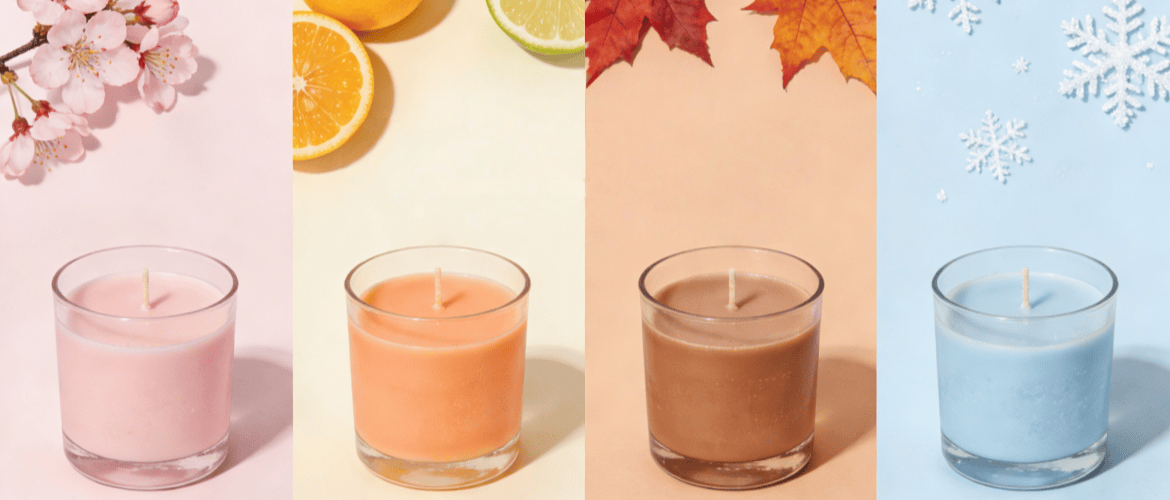
Understanding the scent character of each quarter
Our noses are influenced by temperature, light, and memory. What smells good changes as the months pass. Let’s explore the specific scent families that define each part of the year.
Spring: The scent of awakening and clarity
After winter, people desire freshness. A spring seasonal scented candle should smell like opening windows and new growth.
Top Spring Scent Notes:
- Floral: Hyacinth, Peony, Lilac, Freesia. These are early, delicate florals, not heavy perfumes.
- Green & Rainy: Fresh Cut Grass, Petrichor (rain on earth), Green Tea, Bamboo. This captures the clean smell of growth and spring showers.
- Citrus: Lemon, Bergamot, Yuzu. These are bright, clean, and uplifting, perfect for a seasonal refresh.
These scents feel optimistic and clean. They help clear away the stale, closed-in feeling of winter. They make any room feel more alive and open. For a true spring seasonal scented candle, I suggest a blend like “Rain-Kissed Petals” or “Lemon & Ginger Grass.”
Summer: The scent of light and escape
Summer is about warmth, long days, and relaxation. Scents should be easy-going, refreshing, or reminiscent of happy times outdoors.
Top Summer Scent Notes:
- Tropical & Fruity: Coconut, Mango, Pineapple, Blood Orange. These are sweet, juicy, and instantly suggest vacation.
- Coastal & Clean: Sea Salt, Ocean Air, Driftwood, Dune Grass. This is the crisp, breezy smell of the beach.
- Herbal & Minty: Mojito Mint, Basil, Lemongrass, Eucalyptus. These are cooling and revitalizing for hot days.
These fragrances are simple and cheerful. They are not complex or demanding. A “Tropical Breeze” or “Mojito Mint” seasonal scented candle brings an instant feeling of escape and ease to a room. It’s a quick way to lift the mood.
Fall: The scent of warmth and gathering
As temperatures drop, we seek comfort. We spend more time indoors. A fall seasonal scented candle should provide sensory warmth and nostalgia.
Top Fall Scent Notes:
- Spicy & Aromatic: Cinnamon Stick, Clove, Nutmeg, Cardamom Pod. These are the classic, warming spices of baking and the holidays.
- Woody & Earthy: Sandalwood, Cedar, Smoked Oak, Vetiver. This evokes the smell of fallen leaves, bonfires, and the forest.
- Gourmand & Comforting: Pumpkin, Baked Apple, Brown Sugar, Toasted Marshmallow. These are the edible, familiar smells of harvest and home.
These scents are inherently comforting and inviting. They create a sense of safety and tradition. A “Spiced Apple Cider” or “Autumn Woods” seasonal scented candle makes a home feel like a warm, welcoming sanctuary. It encourages people to slow down and enjoy the moment.
Winter: The scent of depth and celebration
Winter is cold and often dark. It’s also a time of festivity. Scents should provide warmth, a sense of luxury, or joyful celebration.
Top Winter Scent Notes:
- Evergreen & Balsamic: Pine, Balsam Fir, Juniper Berry, Frankincense. This is the iconic, clean scent of Christmas trees and winter forests.
- Sweet & Festive: Peppermint, Gingerbread, Eggnog, Spiced Orange. These are indulgent, happy, and celebratory.
- Rich & Ambered: Amber, Myrrh, Leather, Smoked Vanilla. These are deep, sophisticated, and perfect for long, cozy evenings by the fire.
These fragrances counteract the cold and darkness outside. They are either full of festive joy or offer profound, quiet comfort. A “Frosted Pine” or “Holiday Spice” seasonal scented candle defines the festive season. A richer “Amber & Embers” scent is ideal for a quiet, reflective night in January.
How do seasonal candles influence customer buying decisions
Seasonal candles create a powerful sense of timeliness and need. A “Summer Citrus” candle feels perfectly relevant in July. A “Holiday Evergreen” candle feels essential in December. This relevance speeds up the decision to buy and strongly encourages gift purchases.
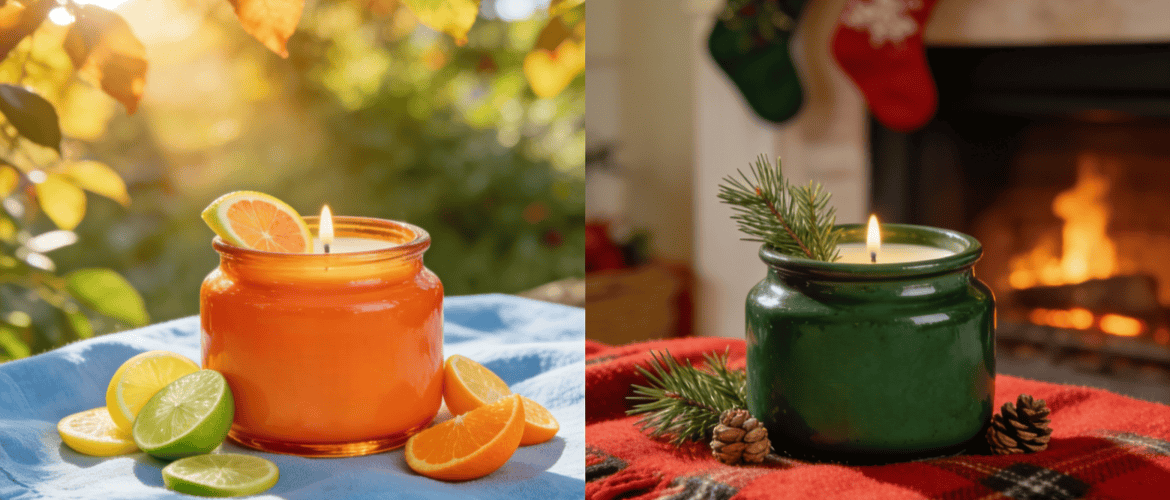
The psychology that drives seasonal purchases
Customer behavior follows patterns linked to time, tradition, and emotion. A well-designed seasonal scented candle campaign taps directly into these patterns.
The “Limited Time” Effect
Seasonal items are available for a set period. This creates a natural sense of scarcity. When a customer sees a “Limited Edition Fall Harvest” label, they know it won’t be around forever. This gentle pressure can convert a “maybe” into a “yes” much faster.
Connecting to Memory and Ritual
Scent is our strongest sense linked to memory. A “Pumpkin Spice” seasonal scented candle isn’t just a fragrance; it’s a direct line to memories of crisp fall days and family gatherings. A “Beach Coconut” scent evokes summer vacations. By offering these, you’re selling an emotional experience and the chance to create or continue a personal ritual. Customers are investing in a feeling for their home.
The Built-In Gift Cycle
Seasons are marked by holidays, and holidays mean gift-giving. Winter has Christmas. Spring has Mother’s Day. Fall has Thanksgiving. A beautifully packaged seasonal scented candle is a classic, appreciated gift. The calendar provides the occasion, so the customer doesn’t need to search for a reason to buy. For retailers, this means seasonal candles often see a much higher percentage of sales as gifts compared to year-round scents.
How seasons trigger different buying motives
| Season | Key Calendar Events | Primary Buying Motive | Common Use Case |
|---|---|---|---|
| Spring | Easter, Mother’s Day, Spring Cleaning | To refresh and renew the home atmosphere after winter. | Personal use, Mother’s Day gifts, hostess gifts. |
| Summer | Fourth of July, Vacation, Weddings | To create a light, airy, or vacation-like mood at home. | Personal use, outdoor entertaining, wedding favors. |
| Fall | Back-to-School, Thanksgiving, Halloween | To create coziness, warmth, and a festive spirit for gatherings. | Personal use, Thanksgiving hostess gifts, teacher gifts. |
| Winter | Christmas, Hanukkah, New Year’s | To celebrate, decorate, and create a warm, joyful sanctuary. | The peak gift-giving season for all recipients. |
The key takeaway is that customers buy based on emotion and occasion. A seasonal scented candle is a tool to achieve the desired mood for that specific time. Your product descriptions, displays, and marketing should all speak directly to that seasonal feeling.
What seasonal candle styles attract B2B buyers?
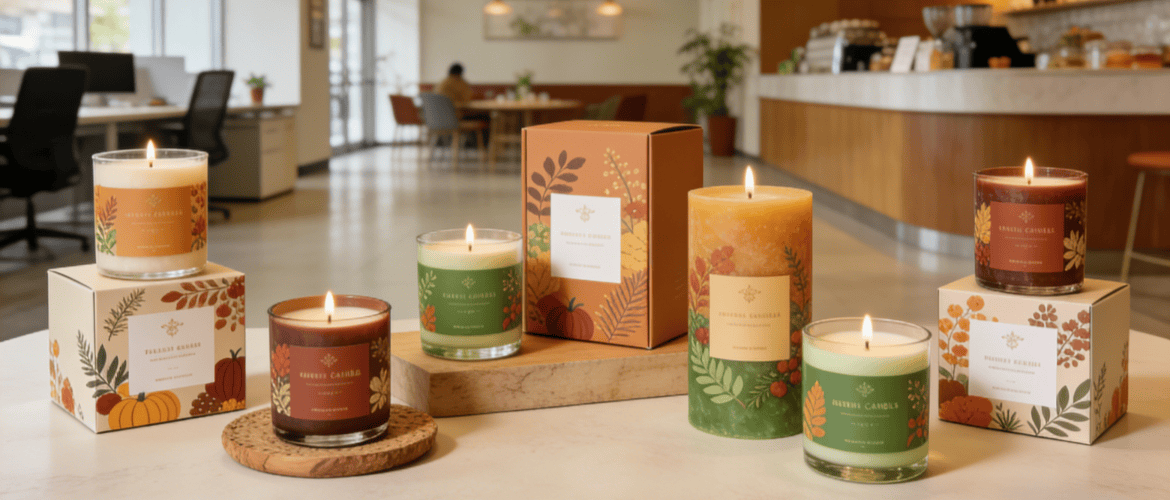
B2B buyers are drawn to seasonal candles that offer a cohesive story, versatile application, and professional packaging. They need scents that work well in shared commercial spaces and support their specific business goals for that time of year.
The B2B perspective on seasonal buying
A consumer might pick a “Pumpkin” candle because they love the smell. A hotel procurement manager needs a fall scent that is universally inviting in a large lobby, subtle enough for a guest room, and presented in a jar that fits their luxury aesthetic. The decision is highly strategic.
The Power of a Cohesive Collection
A B2B buyer typically doesn’t want one standalone “winter scent.” They want a curated winter collection. This could be 2-4 complementary scents that work together: a festive “Mulled Wine” for the bar area, a clean “Frosted Pine” for the lobby, and a comforting “Cashmere & Amber” for guest suites. This allows them to build a sophisticated, layered seasonal atmosphere throughout their property. When we propose seasonal scented candle options to B2B clients, we always frame them as small, thematic collections with suggested placements for each scent.
The Importance of “Crowd-Pleasing” Neutrality
Scents for commercial spaces must appeal to a wide audience. They should suggest the season without being overpowering or polarizing. An extremely sweet “Gingerbread House” scent might be too strong for a corporate office reception. A more refined “Spiced Teakwood & Clove” would be better—it conveys winter warmth in a sophisticated, adult way. B2B buyers prioritize fragrances that are recognizably seasonal but have a nuanced, high-quality character. They generally avoid overly literal gourmand or childish scents.
Packaging as an Extension of Their Brand
The vessel is critically important. A high-end spa doesn’t want a jar with a cartoon snowman. They want serene, minimalist packaging in seasonal tones (e.g., frosted glass, matte ceramic in deep blue or cream) that integrates seamlessly with their interior design. The packaging should feel like a decor element, not overt branded merchandise. For retail buyers, the packaging must be attractive for gifting and look good in photos for social media and online stores.
B2B needs across different industries
| B2B Sector | Their Seasonal Goal | Ideal Scent Profile | Key Packaging Requirement |
|---|---|---|---|
| Hotels & Resorts | Creating a memorable, signature seasonal experience for guests. | Warm, sophisticated, and universally appealing. Medium scent strength. | Luxury aesthetic, minimalist design, often unbranded or with a discreet logo. |
| Spas & Wellness Centers | Enhancing treatment ambiance with a calming, seasonal vibe. | Natural, clean, herbal, or woody. E.g., “Winter Forest” or “Spring Renewal.” | Soothing colors, natural materials (stoneware, matte glass), peaceful feel. |
| Retail Stores | Driving sales and creating enticing in-store ambiance during key shopping periods. | Bold, popular, and instantly recognizable seasonal favorites. | Highly giftable, excellent shelf-presence, clear and attractive seasonal branding. |
| Corporate Offices | Boosting employee morale and marking the season in a professional setting. | Subtle, fresh, and energizing. Avoids strong sweetness or spice. | Sleek, professional design. Often part of a wellness or subscription program. |
For the B2B market, a seasonal scented candle is a tool for branding and atmosphere creation. The most successful proposals are those that present a complete, thoughtful package: a cohesive scent story, appropriate and elegant packaging, and clear guidance on how the collection helps achieve the business’s seasonal objectives.
Why should brands offer seasonal scented candle collections?
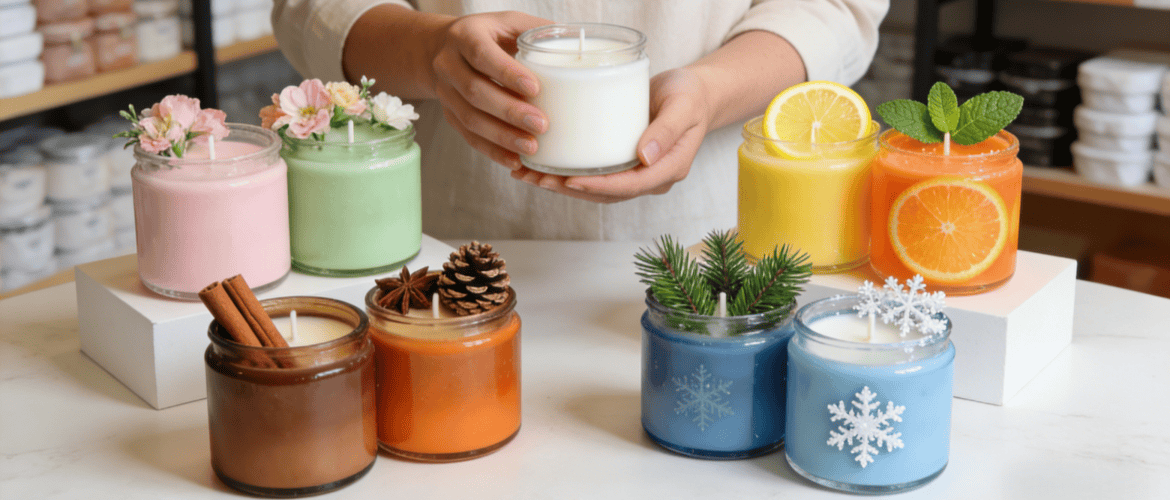
Brands should offer seasonal collections to create reliable sales cycles, maintain customer interest, manage inventory effectively, and establish themselves as a brand that understands and evolves with their customers’ lives throughout the year.
The business logic behind a seasonal calendar
Implementing a seasonal model shifts a brand from being reactive to proactive. It creates a framework for planning, production, marketing, and sales.
Creating Predictable Revenue Peaks
The calendar year has natural commercial rhythms, driven by holidays and changing weather. A well-planned seasonal scented candle collection allows you to capitalize on these peaks. You can align production schedules, marketing campaigns, and sales targets with your Spring, Summer, Fall, and Winter launches. This predictability is crucial for cash flow and business stability.
Generating Ongoing Freshness and Demand
In today’s market, both consumers and retailers constantly seek what’s new. A seasonal launch is an “event.” It gives you a valid reason to contact your email list, post on social media, and update your online store. It gives content creators and influencers something new to feature. Most importantly, it gives your loyal customers a reason to check back with your brand four times a year. This regular renewal of your lineup keeps your brand exciting and prevents it from becoming background noise.
Streamlining Inventory and Reducing Risk
Seasonal products have a defined beginning and end. This built-in timeline creates a natural urgency to purchase (“Get it before it’s gone!”) and a clear endpoint for selling through stock. Managing inventory is simpler when you know a collection will be phased out in 2-3 months. It significantly reduces the risk and cost of holding slow-moving, perennial inventory. You can cleanly discontinue scents that didn’t resonate and confidently introduce new ideas the following year.
Building a Deeper, More Relatable Brand
A brand that acknowledges and celebrates the passing seasons feels more dynamic and authentic. It shows you understand that your customer’s needs and moods change—that what brings comfort in February is different from what brings joy in August. This builds a stronger empathetic connection. You become part of their annual rhythm and rituals, not just a supplier of goods.
A practical seasonal roadmap for operations
| Business Area | Spring Action (Q2) | Summer Action (Q3) | Fall Action (Q4) | Winter Action (Q1) |
|---|---|---|---|---|
| Collection Theme | Renewal, Lightness | Escape, Refreshment | Comfort, Gathering | Celebration, Warmth |
| Core Marketing Message | “Refresh Your Space” | “Bring the Vacation Vibe Home” | “Welcome the Cozy Season” | “Celebrate & Give the Gift of Ambiance” |
| Optimal Launch Timing | Early March | Early June | Early September | Early November |
| Inventory Target | Sell through by end of May | Sell through by end of August | Sell through by mid-December | Sell through by end of January |
In essence, for a modern candle brand, a seasonal scented candle collection is not just an option—it’s a strategic imperative. It provides the essential rhythm, continuous engagement, and operational clarity needed to build a resilient, beloved business that grows alongside its customers, year after year.
Conclusion
A well-planned seasonal scented candle strategy aligns fragrance with natural cycles and customer emotion. It drives purposeful sales, meets the specific needs of B2B buyers, and builds a stronger, more relevant brand throughout the year.