Scented Candle Supplier



Essential Oil vs Fragrance Oil Scented Candles: What’s the Difference?
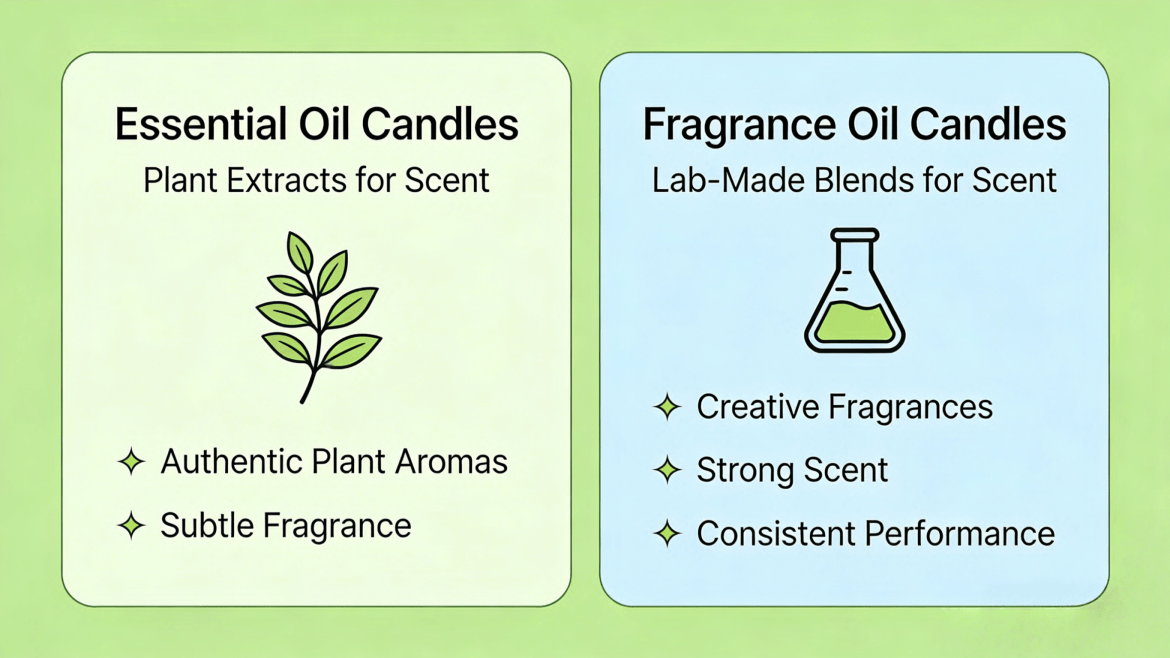
Essential oil candles use extracts from plants for scent. Fragrance oil candles use lab-made blends. Your choice depends on what you value more: authentic plant aromas and subtlety, or creative, strong, and consistent fragrance performance.
Let me explain the real differences to help you choose the right candle for your needs.
How do essential oils and fragrance oils differ?
People love candles for their smell. But most people do not know how the smell is created. This lack of knowledge is a problem. It leads to wrong expectations. A candle called “lavender” can smell very different based on its oil. I want to explain this basic fact clearly.
Essential oils are natural extracts taken from plants. Fragrance oils are man-made scent compounds created in labs. This difference in origin changes the candle’s smell, how it burns, its cost, and its quality.
Looking closely at the source of all scent
To understand a candle, you must know where its scent begins. The path from source to jar is not the same for these two oils. This path defines the final product you buy or sell.
Essential Oils: Capturing the plant’s true essence
An essential oil is the concentrated aromatic life of a plant. It is not a fatty oil. We capture the real smell of the plant itself.
How they are made: The most common way is steam distillation. At The Ignition Co., we pass steam through plant parts like flowers or leaves. The steam breaks open tiny cells that hold the scent. The steam carries the scent away. Then we cool everything down. The water and the essential oil separate. We collect the pure oil. For citrus fruits, we simply cold-press the peel. It is a physical process.
The true nature of essential oils:
- Origin: 100% from plants. Lavender oil is from lavender plants. Lemon oil is from lemon rinds.
- Complexity: One oil has many natural chemicals. This creates a deep, layered, real smell.
- Variation: The scent can change a little between harvests. Weather and soil affect the plant, so they affect the oil.
- Heat Sensitivity: The scent notes are delicate. The heat from the candle flame can make them fade faster.
Fragrance Oils: Building a scent from ideas
Fragrance oils are manufactured. Perfumers create them in laboratories. They build a specific smell from scratch using many aroma chemicals.
How they are made: A perfumer mixes synthetic scent chemicals. Sometimes they add natural parts too. They build the smell with top notes, middle notes, and base notes. The goal is a perfect, identical smell every single time.
The true nature of fragrance oils:
- Origin: Mainly synthetic aroma chemicals. They are designed, not grown.
- Consistency: A “Vanilla” fragrance oil will smell exactly the same in every batch. There is no change.
- Strength and Stability: They are made to be strong and stable in wax. The scent lasts a long time and fills a room well.
- Creative Freedom: They can make any smell imaginable. Like “Fresh Linen,” “Ocean Breeze,” or “Pumpkin Spice.” These are ideas, not single plants.
A clear comparison of the two
| Aspect | Essential Oils | Fragrance Oils |
|---|---|---|
| Source | Steam-distilled or pressed from plants. | Made from aroma chemicals in a lab. |
| Scent Feel | Natural, complex, authentic. Can vary slightly. | Designed, very consistent, precise. Never varies. |
| Scent Strength | Softer, more subtle when burning. A gentle presence. | Stronger, more powerful when burning. Makes a clear statement. |
| Scent Options | Limited to smells that exist in nature. | Almost unlimited. Can copy any smell or idea. |
| Cost | Higher. Farming plants needs many resources. | Lower. Making chemicals is efficient and scalable. |
Choosing an essential oil candle is like choosing fresh orange juice. It is the real, living essence of the fruit. Choosing a fragrance oil candle is like choosing orange soda. It gives a specific, reliable taste. One is not better than the other. They are just different.
Which candle type offers a more natural scent experience?
The word “natural” is used too much. It has lost its clear meaning. A buyer wanting a pure, plant-based experience can be tricked. I believe we need honesty. The scent experience is more than just a smell. It is about the story, the source, and the feeling of truth.
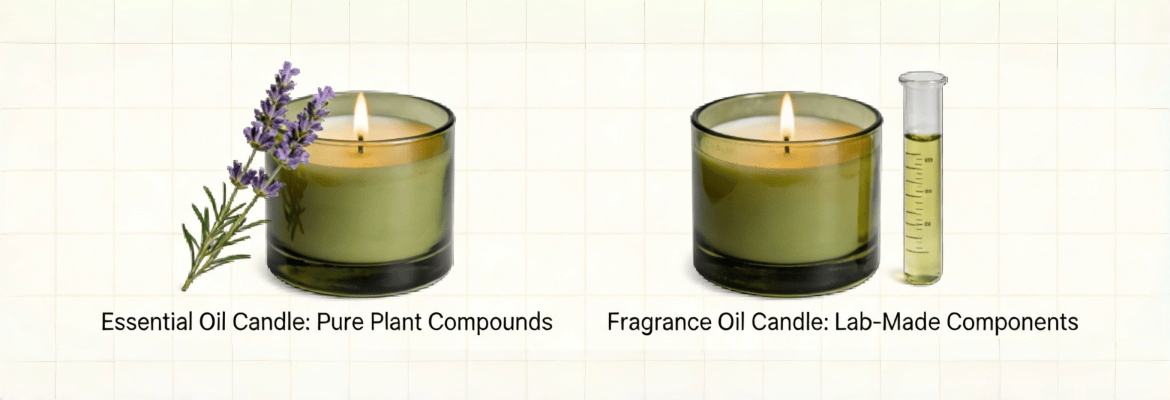
An essential oil scented candle gives a truly natural scent experience. The smell comes directly from plant compounds. A fragrance oil candle can copy nature but uses lab-made parts. For someone who values real plants, the essential oil scented candle is the clear choice.
Defining what “natural” really means
A natural scent experience has many layers. It is not just, “Does this smell like a forest?” It is, “Does this smell like the complete, real, imperfect forest?” Let’s look at the two experiences.
The authentic feel of essential oil scents
When you smell a good lavender essential oil scented candle, you smell many notes. You smell a full range of natural chemicals from the lavender plant. The scent has depth. It might have green, herbal, or slightly sharp notes next to the flower smell. It feels alive and real.
The good points of this choice:
- Authenticity: The smell truly represents the named plant.
- Full Honesty: You know you are breathing plant extract and wax. The list of parts is simple.
- Wellness Link: Many people feel calm or happy from these smells. This matches aromatherapy ideas.
- Lower Irritation: People sensitive to synthetic scents often handle pure essential oils better.
The real limits:
- Subtle Smell: The fragrance is often lighter. It is a soft background note.
- Limited Choices: You cannot make a “Blueberry Muffin” or “New Car” smell from only plants.
- Higher Price: It takes thousands of flower petals to make a little oil. This cost is in the final price.
The designed feel of fragrance oil scents
Fragrance oils are clever creations. A “Pine Forest” fragrance oil is the perfect idea of a forest. It is often stronger, sweeter, and cleaner than a real forest. The maker takes out the damp earth or rotting leaf smells. It is nature, made perfect for you.
The good points of this choice:
- Power and Lasting Smell: The scents are stronger and last longer in the wax. They fill a room well.
- Endless Variety and Stories: You can create any smell you imagine. This allows for strong branding and memory stories.
- Consistency and Good Value: The smell and performance are reliable. The candles often cost less for the buyer.
The real limits:
- Hidden Ingredients: The word “fragrance” on a label is a secret. It can hide many chemicals. Some people avoid this.
- Risk of “Fakeness”: Low-quality fragrance oils can smell obviously chemical or simple.
- No Built-in Therapy: They smell nice, but they do not have the natural plant compounds linked to wellness effects.
Your decision: What does “natural” mean for you? If it means 100% from plants, honest ingredients, and a soft link to nature, then an essential oil scented candle is your path. If “natural” is a feeling you want—like comfort, escape, or memory—and you want strong smell and creative choice, then a good quality fragrance oil candle can do that. You must define your meaning first.
What should B2B buyers consider when choosing oils?
B2B buyers must think about their brand story, target customers, budget, and business size. A luxury spa needs pure essential oils for trust. A big hotel chain may need the consistency and power of fragrance oils. This choice shapes buying, marketing, and the guest’s experience.

A practical plan for business choices
For businesses, candles are part of the brand and daily work. The oil type becomes part of your business plan. Let’s go through the key points for this choice.
Step 1: Match your core brand values
This is the most important step. Your candle must be a true picture of your brand’s promise.
- For Wellness, Spa, and Holistic Brands: If your brand is about purity, natural things, and feeling good, essential oils are a must. Your marketing story needs this truth. Clients pay more for a clean, therapeutic experience. Using synthetic fragrance oils would break their trust. You are selling a nature-based experience.
- For Lifestyle, Decor, and Gift Brands: If your brand is about style, mood, and nice things, good fragrance oils give great value. You can offer popular, mood-setting scents. These scents are strong, always the same, and match design trends. Your story is about creating a feeling.
- For Hotels and Resorts: Your choice depends on your hotel’s style. A rustic eco-lodge or a wellness resort should use essential oils. It makes their natural, real atmosphere better. A trendy boutique hotel might use a custom fragrance oil to make a special, memorable smell. This smell becomes part of the hotel’s brand.
Step 2: Know your customer’s needs
Who are your customers? What do they expect? What can their bodies handle?
- Serving Health-Focused Customers: This includes spas, yoga studios, and doctor offices. These customers often avoid synthetic scents. They do this because of headaches, allergies, or sensitivities. Essential oils are the safer, more trusted choice here. You can even sell special blends for focus or calm.
- Serving General Customers: This includes most stores and restaurants. Customers here usually want a nice, strong, pleasant smell. They often do not read the ingredient list. Fragrance oils let you meet this want well and for a good price.
Step 3: Look at the practical business facts
Ideas must work in the real world. You must think about size, cost, and getting the product.
| Business Factor | How Essential Oils Affect It | How Fragrance Oils Affect It |
|---|---|---|
| Cost Per Candle | High. Plants are farmed. Prices change with harvests and weather. | Low to Medium. Making chemicals is efficient. Prices are stable. |
| Scent Consistency | Can vary. Each harvest of a plant can smell a bit different. | Excellent. Every batch smells exactly the same. Your scent is fixed. |
| Order Size Needs | Can be high for rare oils. Getting them can be hard. | Usually flexible. Many sellers offer small test sizes. |
| Scent Performance | Lighter, more subtle. You may need more oil per candle for a noticeable smell. | Stronger, more powerful. The oils are made for high performance in candles. |
| Making Your Own Scent | Limited to mixing existing natural oils. | Very customizable. You can work with a perfumer to make a scent only your brand has. |
The B2B buyer’s list:
- Brand Match: Does this oil type show our brand’s true promise?
- Customer Fit: What does our target customer really want and expect from us?
- Budget Reality: Can we keep this cost at our needed amount, every year?
- Supply Dependability: Can we get a steady supply of steady quality?
- Marketing Story: What true, good story can we tell about our choice?
How does oil choice impact candle quality and branding?
The type of scent oil is a key decision. It is not a small detail. This choice changes the candle’s physical quality and the brand’s whole identity. I tell our clients at The Ignition Co. this is one of their most important choices. It sets the direction for everything.
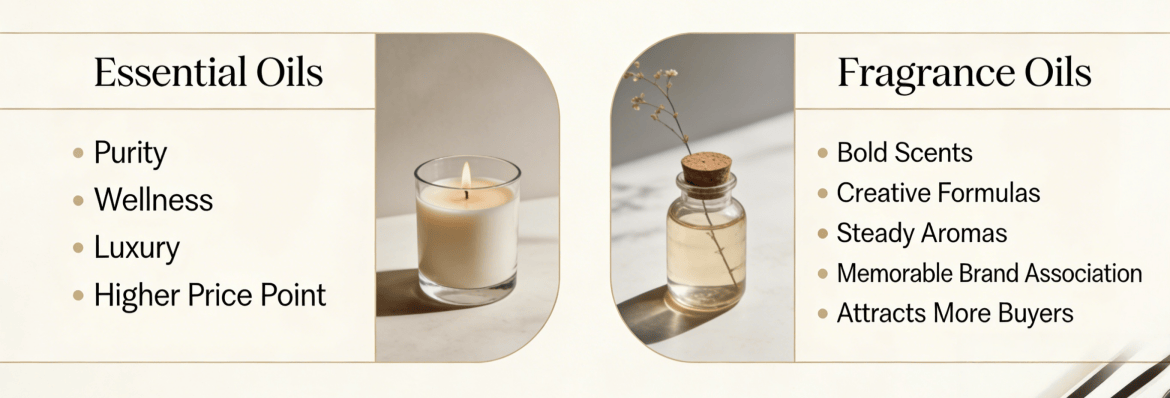
The oil choice shapes how people see quality and the brand. Essential oils mean purity, wellness, and luxury, often for a higher price. Fragrance oils allow for bold, creative, steady scents that help people remember the brand and attract more buyers.
The direct effect on the candle’s physical quality
“Quality” in a candle has several parts: how far the scent travels, how it burns, and how long it lasts. The oil type affects all three.
How oils affect scent “throw”
The “throw” is how well the scent fills a room. There is “cold throw” (smell from the unlit jar) and “hot throw” (smell when burning).
- Essential Oil Performance: The hot throw is often softer. The heat from the flame can change the delicate top notes of the natural oil. The cold throw can be beautifully complex but quiet. The quality here is in the smell’s truth and layers, not its raw power.
- Fragrance Oil Performance: These oils are made for performance. They usually have a great cold throw that pulls buyers in. They have a strong, steady hot throw that reliably scents a space. The quality here is in the strength, reliability, and power to fill a room.
How oils affect burn and safety
A candle must burn cleanly and safely. The oil changes this.
- Essential Oil Points: These are pure, light compounds. Putting them in wax needs skill. Using too much can cause a bad burn. It can lead to tunneling, soot, or even a safety problem. A well-made essential oil scented candle shows expert skill in balancing smell and safety.
- Fragrance Oil Benefits: These oils are professionally made for candles. Sellers test them for safety and wax match. This makes it easier for makers to get a clean, even, safe burn. The quality is in predictable, simple performance.
How oils affect how long the candle keeps its smell
How long will the candle smell fresh in the jar?
- Essential Oil Limits: Natural oils can break down over time. Citrus oils do this especially. A lemon essential oil scented candle might lose its bright top notes after half a year. The best time to use it is when it is new.
- Fragrance Oil Stability: These oils are much more stable. A candle can keep its full smell for years if stored right. This is key for storing stock and for buyers who collect candles.
The deep effect on branding and market place
Your oil choice sends a main message about your brand. It decides your marketing words, your price, and who will buy from you.
Building a brand with essential oils
If you choose essential oils, you are building a brand in the Wellness, Luxury, or Truth space.
- Your Brand Words: You will use words like pure, natural, therapeutic, authentic, plant-based, non-toxic, artisanal.
- Your Target Buyer: The health-aware, ingredient-smart buyer. The wellness seeker. The luxury buyer who values where things come from.
- Your Price: High. The cost of materials and the made story support a higher price.
- Your Jar and Label: Often simple, clean, and natural. Think apothecary jars, matte looks, labels with plant Latin names.
- A Real Brand: Companies like NEOM use essential oils as a core part of their luxury wellness image.
Building a brand with fragrance oils
If you choose fragrance oils, you are building a brand in the Lifestyle, Decor, or Nice Treat space.
- Your Brand Words: You will use words like inviting, captivating, story, long-lasting, signature scent, mood.
- Your Target Buyer: The gift buyer. The home decor fan. The person who wants a strong, nice feeling in a room.
- Your Price: Medium. This price is easy for gifts and buying for yourself.
- Your Jar and Label: Can be more decorative, colorful, and match home design trends.
- A Real Brand: Companies like Voluspa use fine fragrance oils to tell stories and make deep, steady scents.
The oil is the heart of the candle. It decides the feeling it gives. It decides the brand story it can tell. There is no single “best” choice. There is only the right choice for the exact product and brand you want to make. Choose with clear purpose.
Conclusion
Choosing between essential oil and fragrance oil candles defines the scent feeling and brand story. Pick the oil that truly matches your brand’s values and the experience you promise to give.