Scented Candle Supplier



Ceramic vs Glass vs Metal Candle Jars: Which Is Better?
Choosing the right candle container goes far beyond appearance. The jar directly influences safety, burn performance, shipping cost, brand positioning, and overall customer experience. Different materials communicate different values before the candle is even lit.
Ceramic jars highlight luxury and craftsmanship, glass delivers versatility and transparency, and metal tins provide portability and cost efficiency. The best option depends on your target market, pricing strategy, and distribution channel.
Let’s examine how each material performs across branding, functionality, and B2B applications.
How Do Ceramic Jars Enhance Premium Branding?
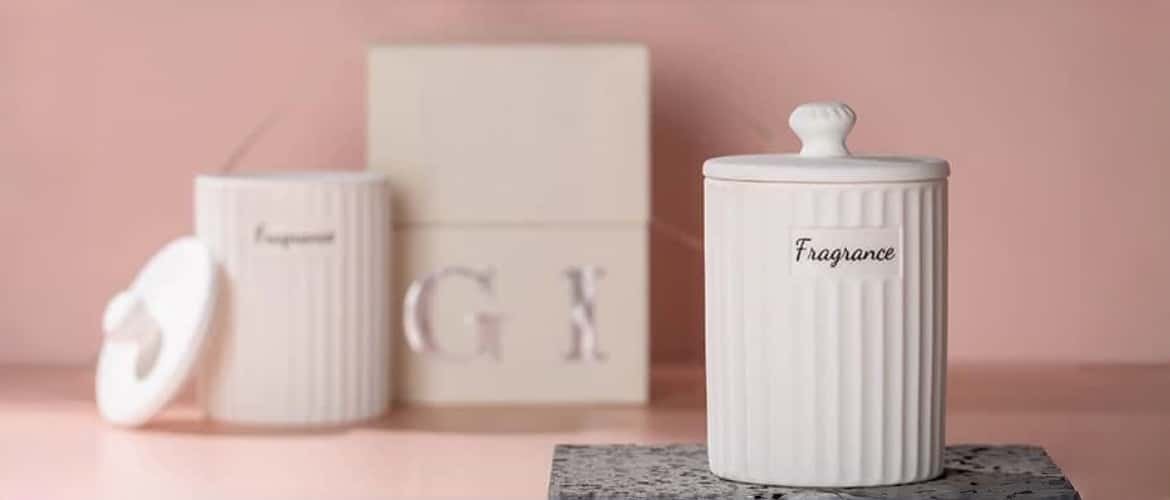
Ceramic containers naturally elevate a candle from a simple home fragrance item to a decorative lifestyle product. Their visual and tactile qualities support high-end positioning.
Ceramic jars strengthen premium branding through weight, texture, design flexibility, and long-term reusability.
Luxury Perception and Aesthetic Value
Ceramic conveys exclusivity through:
- Substantial weight and solid hand feel
- Matte, glossy, or textured glaze finishes
- Custom shapes and sculpted silhouettes
- Artistic detailing such as embossing or carving
These features allow brands to create distinctive, signature designs that stand out on boutique shelves.
Reusability and Brand Longevity
Customers frequently repurpose ceramic jars as:
- Planters
- Vanity organizers
- Desk storage containers
- Bathroom accessories
This extended use increases perceived value and keeps the brand visible in everyday spaces.
Thermal and Performance Benefits
Ceramic also performs well during burning:
- Even heat distribution
- Stable structure under high temperatures
- Reduced overheating in localized areas
These qualities support consistent performance when paired with proper wax and wick combinations.
Business Considerations
| Factor | Ceramic Performance |
|---|---|
| Branding Impact | Highest |
| Shipping Weight | Heavy |
| Breakage Risk | Moderate to High |
| Customization Level | Extensive |
| Production Cost | Higher |
Ceramic suits luxury boutiques, high-end hotels, spa brands, and premium gift collections where presentation and experience drive purchasing decisions.
What Advantages Do Glass Candle Jars Offer?
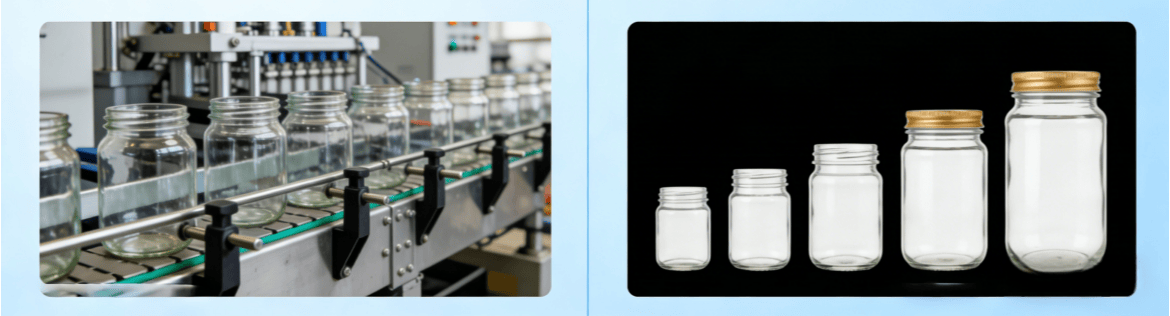
Glass remains the industry standard because it balances aesthetics, cost efficiency, and scalable production.
Glass jars offer product visibility, consistent quality, and operational flexibility across price segments.
Visual Transparency and Customer Confidence
Glass allows customers to:
- View wax color and texture
- Monitor burn progress
- See flame glow during use
This transparency builds trust and enhances the ambiance factor.
Available finishes include:
- Clear
- Frosted
- Amber
- Matte painted
- Metallic coated
This range supports both minimalist and luxury branding.
Operational Efficiency
Glass simplifies supply chain management:
- Widely available standard sizes
- Moderate minimum order quantities
- Faster production timelines than ceramic
- Compatibility with automated filling lines
These advantages make glass practical for both emerging brands and large-scale retailers.
Performance and Safety
Tempered glass provides:
- Strong heat resistance
- Neutral fragrance interaction
- Smooth interior for clean burns
- Reliable batch consistency
Proper thickness and quality control ensure safe performance.
Sustainability Potential
Glass supports sustainability goals through:
- Recycled content options
- High recyclability rates
- Easy cleaning for reuse
Ideal Markets for Glass
| Market Segment | Why Glass Works |
|---|---|
| Mass Retail | Cost-effective and familiar |
| Subscription Boxes | Standard sizing for packing |
| Hotel Amenities | Clean and professional look |
| Mid-Range Gift Sets | Balanced price and presentation |
Glass delivers the most versatile solution for businesses seeking broad market appeal.
Why Choose Metal Tins for Portability and Gifting?
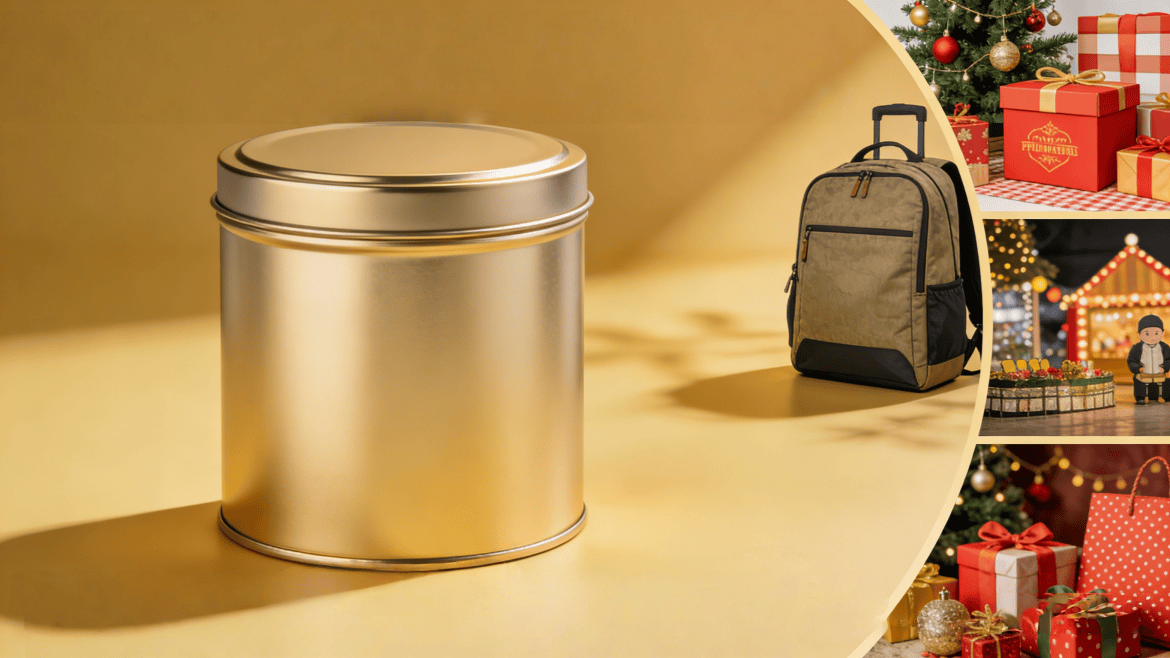
Metal tins solve practical challenges that glass and ceramic cannot address as efficiently.
Metal tins provide durability, lightweight transport, and strong cost control, making them ideal for travel, promotional use, and seasonal gifting.
Portability and Durability
Metal tins offer:
- Lightweight construction
- Impact resistance
- Compact stacking ability
- Secure lid closure
These qualities reduce breakage and lower shipping costs.
Cost Efficiency
Metal tins typically feature:
- Lower material cost per unit
- Reduced shipping expenses
- Simplified packaging requirements
- Faster manufacturing turnaround
They support competitive pricing or higher margin strategies.
Performance Characteristics
Metal distributes heat efficiently, which promotes even wax melting. However, the exterior can warm during burning, so proper sizing and testing remain important.
The opaque structure also protects fragrance oils from light exposure.
Branding Options
Metal tins allow:
- Full-color printing
- Embossed lids
- Seasonal graphic designs
- Limited edition collections
Although they project less luxury than ceramic, strong graphic design can create attractive, modern packaging.
Best-Fit Markets
| Market Segment | Why Tins Excel |
|---|---|
| Corporate Gifting | Printable and affordable |
| Travel Retail | Durable and compact |
| Promotional Events | Cost-effective bulk orders |
| Seasonal Campaigns | Quick production cycles |
Metal tins perform best when practicality and logistics take priority.
Which Jar Material Suits Different B2B Markets?
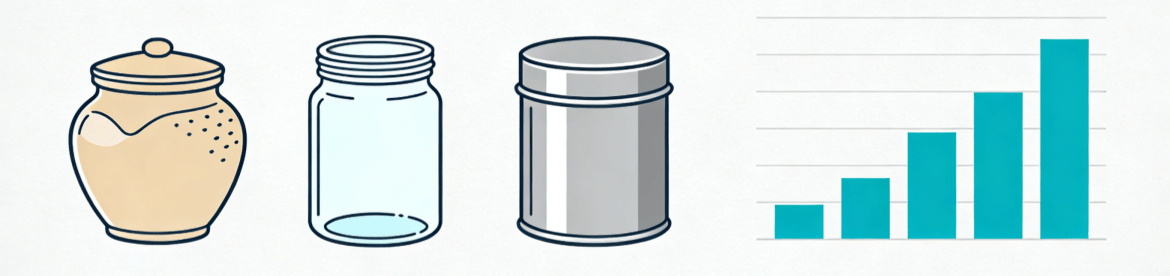
Each material aligns with specific market expectations, price tiers, and distribution strategies.
Market-Based Comparison
| B2B Market Type | Recommended Material | Core Advantage |
|---|---|---|
| Luxury Boutiques | Ceramic | Premium presence |
| Spa & Wellness | Ceramic or Frosted Glass | Calm aesthetic |
| Department Stores | Glass | Versatility |
| Corporate Gifts | Metal Tins or Glass | Custom branding |
| Subscription Services | Metal Tins | Shipping efficiency |
| Home Décor Retail | Glass or Ceramic | Shelf appeal |
Operational Comparison
| Factor | Ceramic | Glass | Metal Tins |
|---|---|---|---|
| Shipping Cost | High | Moderate | Low |
| Breakage Risk | Higher | Moderate | Low |
| Customization Depth | Extensive | Moderate | Graphic-focused |
| Lead Time | Longer | Medium | Shorter |
| Scalability | Limited | Strong | Strong |
Decision Framework for Buyers
When selecting a container, evaluate:
- Target retail price
- Brand identity and positioning
- Shipping and logistics costs
- Sustainability goals
- Production timeline
- End-user reuse potential
Luxury brands often prioritize ceramic for emotional impact. Large retailers typically choose glass for consistency and scale. Promotional businesses favor tins for durability and margin control.
Conclusion
No single material qualifies as universally superior. Ceramic strengthens luxury storytelling and long-term decorative value. Glass delivers flexibility, transparency, and operational balance. Metal tins maximize portability, affordability, and efficiency.
The best choice aligns container characteristics with market expectations, business strategy, and brand identity. A well-matched jar enhances customer satisfaction, supports profitability, and strengthens long-term brand growth.