Scented Candle Supplier



Can Scented Candles Help You Sleep Better?
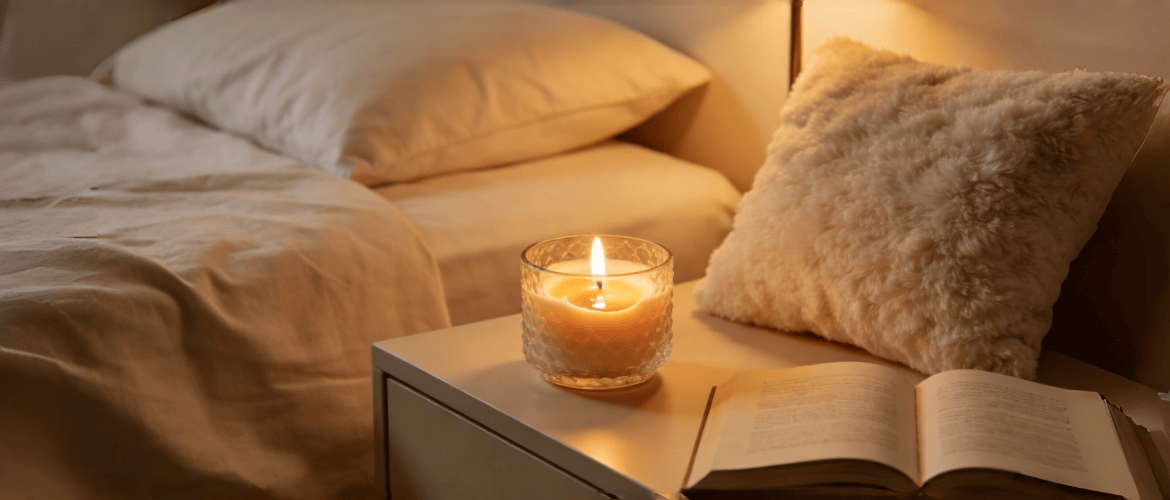
Scented candles can significantly improve sleep quality by leveraging the direct link between smell and the brain’s emotional center. A scented candle good for sleeping, such as one featuring lavender, chamomile, or sandalwood, works by lowering cortisol levels, slowing heart rate, and creating a powerful Pavlovian trigger for sleep. The key to success lies in choosing the right scents, using them safely, and integrating them into a consistent bedtime ritual.
Let’s explore the science behind this connection, identify the most effective fragrances, and build a practical, step-by-step bedtime routine.
Seeking Calming Scents to Wind Down at Night?
Calming scents like lavender, chamomile, and sandalwood are ideal for the pre-sleep wind-down. They work by reducing physiological arousal and creating a strong mental association between the scent and the state of relaxation, helping you transition smoothly into sleep.
The Psychology and Physiology of the Wind-Down
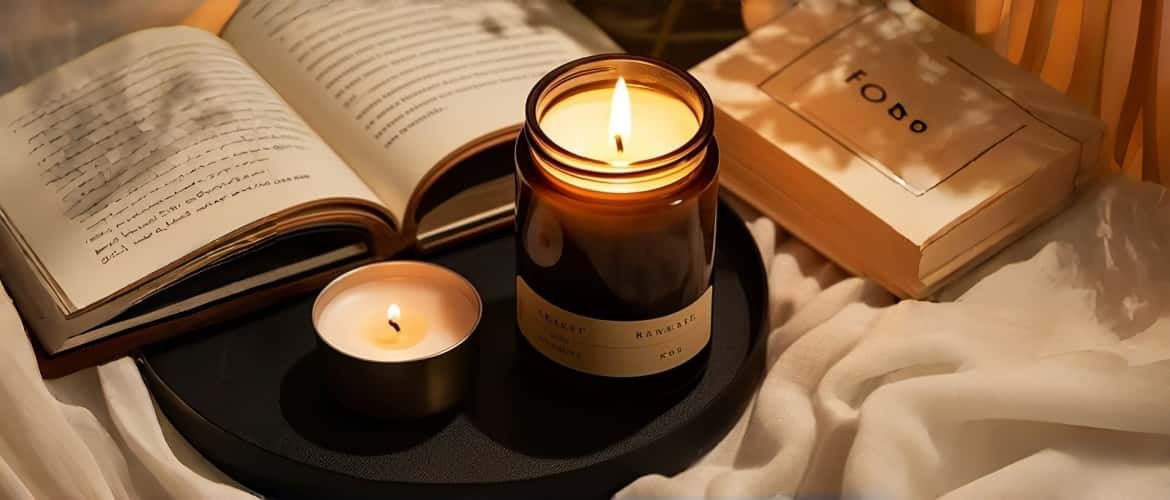
The hour before bed is not passive time; it’s an active process of de-arousal. Introducing calming scents during this window leverages both biology and psychology.
The “Olfactory Cue” and Sleep Conditioning
Your sense of smell has a unique superhighway to the brain’s limbic system, which controls emotion and memory. By consistently using the same calming scent during your wind-down routine, you create a powerful association.
- Conditioning: Over time, your brain learns: “When I smell this lavender scent, it’s time to relax and prepare for sleep.” The scent itself becomes a non-conscious trigger that initiates the relaxation response, a form of classical conditioning.
- Ritual Value: The act of lighting the candle—the deliberate motion, the soft click of the lighter, the appearance of the flame—becomes a mindful ritual. This series of actions signals a clear, ceremonial end to the active part of your day.
The Best Scents for the Wind-Down Hour
Choose fragrances that are known for their sedative or calming properties. Avoid invigorating scents like citrus, peppermint, or eucalyptus at night, as they can have a stimulating effect.
- Lavender: The gold standard. It has been shown to lower heart rate and blood pressure and is the most studied sleep scent.
- Chamomile: Evokes feelings of comfort and safety, much like a warm cup of herbal tea, which is a universal symbol of relaxation.
- Sandalwood: Provides a deep, grounding warmth that quiets mental chatter and is excellent for those who struggle with an overactive mind at night.
How to Implement the Scented Wind-Down
- Timing: Light your candle 60-90 minutes before you intend to fall asleep. This gives enough time for the scent to permeate the room and for your body to respond.
- Environment: Use it in the room where you are winding down (e.g., living room while reading, or bedroom while doing light stretches or journaling).
- Consistency: Use the same scent profile every night to strengthen the mental association. Switching scents frequently weakens the conditioning effect.
Combine the scent with other relaxing activities like reading a physical book, gentle stretching, or listening to soft, ambient music. This creates a multi-sensory sleep ritual that is even more powerful than scent alone.
Need Fragrances That Promote Relaxation and Rest?
Specific fragrances like lavender, bergamot, and frankincense have been shown in studies to lower cortisol levels, reduce anxiety, and promote alpha brain wave activity (associated with relaxation), directly creating a physiological state ideal for falling and staying asleep.
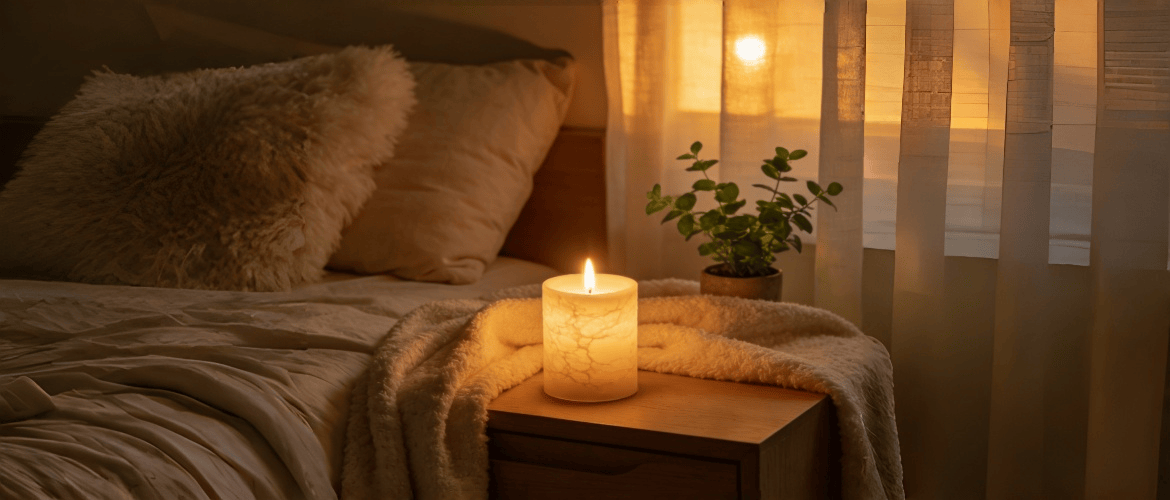
The Science of Relaxing Fragrances
The power of these scents isn’t just anecdotal; it’s rooted in biochemistry and neuroscience. Let’s look at how they work on a molecular level.
The Neurochemistry of Relaxing Scents
When you inhale fragrance molecules, they travel directly to the olfactory bulb. This direct pathway allows certain scents to have a rapid effect on your state of mind.
| Fragrance | Key Relaxing Component(s) | Physiological Effect |
|---|---|---|
| Lavender | Linalool, Linalyl acetate | Increases alpha brain wave activity (calm wakefulness), reduces cortisol. |
| Bergamot | Limonene, Linalyl acetate | Unique for being a citrus that is calming, not stimulating. Reduces anxiety. |
| Frankincense | Incensole acetate | Shown to activate ion channels in the brain linked to reduced anxiety and depression-like behavior. |
| Sandalwood | Alpha- and Beta-Santalol | Induces a sense of grounding and reduces mental chatter, promoting mental stillness. |
Beyond the Nose: The Full-Body Effect
The goal of these fragrances is to shift your body from a sympathetic state (fight-or-flight) to a parasympathetic state (rest-and-digest).
- Lowering Cortisol: Cortisol is the primary stress hormone. High levels at night keep you alert. Relaxing scents help lower cortisol production in the evening.
- Slowing Heart Rate: A calm nervous system leads to a slower, more regular heart rate, which is essential for entering the deeper stages of sleep (NREM sleep).
Choosing the Right Candle for Sleep:
Look for candles specifically formulated for relaxation. Check the ingredient list for these key notes. Avoid candles with synthetic, sharp, or overly sweet “candy-like” scents, as they can be agitating rather than calming. Opt for natural waxes like soy or beeswax, which burn cleaner.
Want to Create a Soothing Bedroom Environment?
A soothing bedroom environment is dark, cool, quiet, and smells calming. A scented candle provides the olfactory component of this sanctuary, but it must be used safely and in harmony with other elements like lighting and temperature.
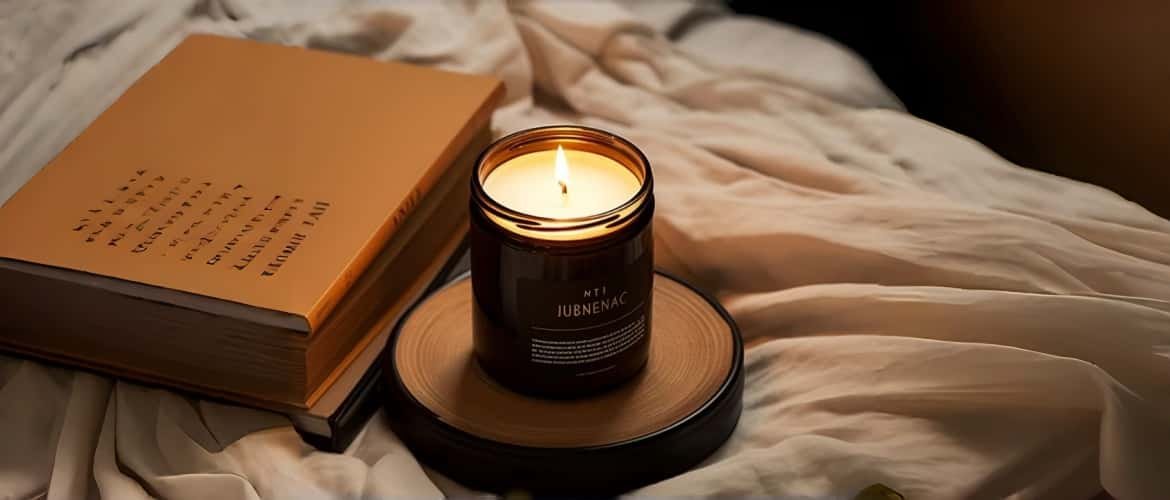
Building Your Sleep Sanctuary—The Multi-Sensory Approach
Think of your bedroom as a cocoon for sleep. Every sense should be catered to for relaxation. The candle is the centerpiece of the olfactory strategy.
The Pillars of a Sleep Sanctuary
- Sight (Lighting): This is where the candle’s flame plays a dual role.
- Eliminate Blue Light: Turn off TVs, phones, and tablets at least an hour before bed.
- Use Warm, Dim Light: The soft, warm, flickering light of a candle is far more relaxing than harsh overhead lights. It mimics the setting sun, signaling to your brain to produce melatonin.
- Smell (Scented Candle): The centerpiece of your olfactory strategy.
- Consistent Scent: Use the same relaxing scent every night to build a strong association.
- Subtle Strength: The scent should be noticeable but not overwhelming. It should invite you in, not assault your senses.
- Sound (Quiet/White Noise): A quiet room is ideal. If you need sound, use a white noise machine or a fan. The gentle sound of a crackling wood wick can also be soothing for some.
- Touch (Temperature & Comfort): Keep the room cool (around 65°F or 18°C). Ensure your bedding is comfortable and breathable.
SAFETY FIRST: Candle Use in the Bedroom
This is non-negotiable. While candles are wonderful for creating ambiance, they pose a fire risk if used improperly, especially when you are asleep.
- The Golden Rule: NEVER fall asleep with a candle burning.
- The Safe Routine: Light your candle 60-90 minutes before bed as part of your wind-down. Extinguish it completely before you get into bed or turn out the lights to sleep.
- Alternative for Overnight Scent: If you want a continuous scent throughout the night, consider a flameless option like a candle warmer (which melts the wax without a flame) or a high-quality reed diffuser placed safely away from the bed.
Combine the candle with a relaxing room spray. You can spray your pillows and linens with a lavender or chamomile linen spray after you extinguish the candle. This provides a lingering scent that is safe to sleep with and reinforces the olfactory cue.
Curious About the Science of Scent and Sleep?
Yes, there is solid science behind scent and sleep. The direct neural pathway from the nose to the limbic system allows fragrances to rapidly influence emotion and arousal. Specific compounds in relaxing scents have been shown to lower anxiety, reduce cortisol, and even improve sleep architecture (the structure of sleep cycles).
The Evidence-Based Pathways to Better Sleep
Let’s break down the key scientific findings that explain why and how scented candles can be an effective sleep aid.
The Direct Neural Pathway: Nose to Brain
- The Olfactory Bulb: When you inhale a scent molecule, it binds to receptors in your nose, sending a signal directly to the olfactory bulb.
- The Limbic System: This bulb is directly connected to the amygdala (emotion) and hippocampus (memory). This is why a smell can instantly trigger a powerful emotion or memory without any conscious thought. Relaxing scents use this pathway to directly induce a calm emotional state.
Documented Effects on Physiology
Research, particularly on lavender, is compelling and goes beyond simple self-reporting:
- Reduction in Anxiety and Cortisol: Multiple studies have shown that exposure to lavender aroma can significantly reduce anxiety scores and lower levels of the stress hormone cortisol, which is a known sleep disruptor.
- Improved Sleep Quality in Clinical Populations: Studies on patients with insomnia, heart disease, and postpartum depression have found that lavender aromatherapy can lead to improved sleep quality, longer sleep duration, and less nighttime waking.
The Placebo and Conditioning Effect
Even beyond the direct pharmacology, the psychological power of scent is powerful and valid.
- Conditioned Relaxation: If you consistently pair a specific scent with relaxation and sleep, your brain will learn the association. Over time, the scent itself will trigger a relaxation response, even without a strong pharmacological effect. This is a form of classical conditioning and is a perfectly valid mechanism for improving sleep.
The science supports a two-pronged approach:
- Pharmacological: Certain scents (like lavender) have a direct, mild sedative effect on the nervous system.
- Psychological: The ritual and association of the scent create a powerful psychological trigger for sleep.
This combination makes scented candles a safe, natural, and effective adjunct therapy for improving sleep hygiene.
Conclusion
Scented candles can be a valuable part of your sleep strategy. By choosing scientifically-backed relaxing fragrances like lavender and chamomile, using them safely as part of a consistent wind-down ritual, and creating a holistic sleep sanctuary, you can harness the power of scent to fall asleep faster, sleep more deeply, and wake up feeling more refreshed. The key is intentionality: use scent not just as decor, but as a deliberate tool to signal to your brain that it’s time for rest.