Scented Candle Supplier



How to Safely Ship Scented Candles?
How to Safely Ship Scented Candles requires careful attention and a smart strategy. Candles are fragile, temperature-sensitive, and often come in glass containers. Without proper protection, they can easily arrive damaged, melted, or broken—which disappoints customers and costs you money.
To ship candles safely, you need strong protective packaging, smart temperature management, a reliable shipping method, and complete export documentation. These elements work together to prevent breakage, melting, and delivery delays.
Let’s walk through the key steps to ensure your candles reach their destination in perfect condition, every time.
1. What Packaging Materials Protect Candles in Transit?
Your first line of defense is the packaging itself. The goal is to create a secure, stable environment that cushions the candle from impacts and prevents any movement inside the box.
Effective shipping protection uses a multi-layered approach. Start with a strong outer box, add generous cushioning material, and wrap each candle individually to prevent glass-on-glass contact and absorb shocks.
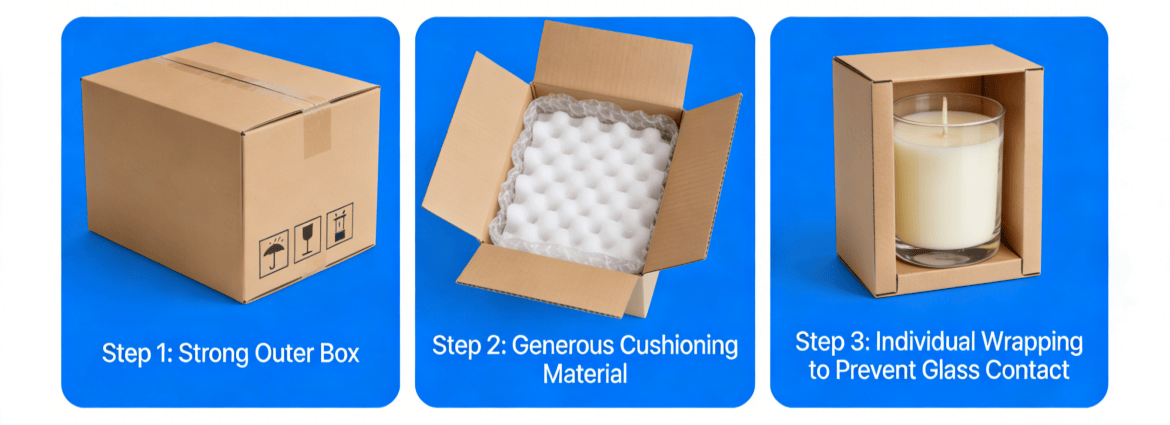
The Three-Layer Protection System
Think of your packaging in three distinct layers, each serving a vital purpose.
| Layer | Purpose | Recommended Materials |
|---|---|---|
| Outer Box (Containment) | Provides structural integrity and stacking strength. | Double-wall corrugated boxes for bulk; heavy-duty single-wall for parcels. |
| Internal Cushioning (Shock Absorption) | Fills empty space and absorbs impacts during handling. | Molded pulp inserts, custom foam, cardboard dividers, honeycomb paper, or high-density bubble wrap. |
| Product-Level Protection (Stabilization) | Secures the candle itself and its components. | Tight-fitting lids, shrink wrap, paper wick collars, and protective sleeves for glass jars. |
Choosing the Right Box
First, select a box that fits your candles snugly. An oversized box allows too much room for products to shift and collide, which dramatically increases the risk of breakage. For retail orders, a sturdy single-wall box is often sufficient. However, for wholesale shipments or particularly heavy items, you should always choose a double-wall corrugated box for superior strength.
Strategic Internal Packing
Next, focus on the interior. Never simply drop candles into a box. Instead, wrap each candle individually in 2-3 layers of bubble wrap, especially if it’s in a glass container. Then, place a 2-3 inch layer of cushioning material like crumpled kraft paper or biodegradable peanuts at the bottom of the box. Position the wrapped candles in the center, ensuring they don’t touch the box walls, and finally, fill every bit of remaining empty space with more cushioning. A good rule of thumb is the “shake test”—if you gently shake the sealed box and hear or feel movement inside, you need more cushioning.
Common Packaging Mistakes to Avoid
- Using a flimsy box: It can collapse under the weight of other packages.
- Skipping individual wrapping: Glass jars can scratch, chip, or crack against each other.
- Leaving too much empty space: Products will bounce around during transit.
- Inadequate sealing: A box that pops open is a guaranteed disaster. Always use the H-taping method (tape along the center and edges of all seams).
2. How Can Temperature Control Prevent Melting Issues?
Wax softens at relatively low temperatures. Soy and coconut waxes are especially vulnerable. Heat exposure during shipping can cause candles to sweat, develop uneven tops, or even partially melt, ruining their appearance and fragrance.
Proactive temperature management is crucial. You can prevent most melting issues by using insulated packaging, adjusting your shipping schedule for the seasons, and carefully monitoring the weather.
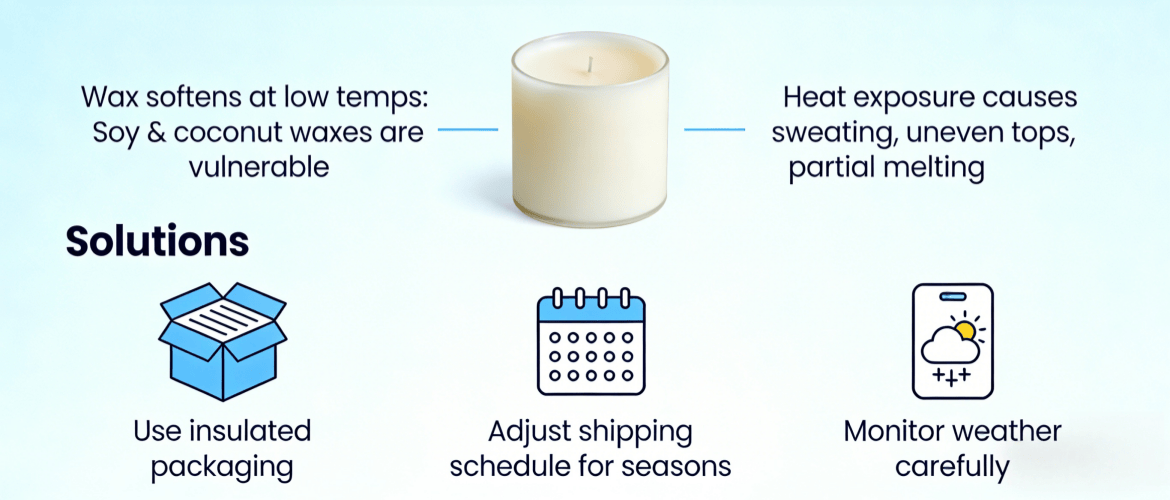
Know Your Wax’s Weak Point
Different waxes have different melting points, which dictates your shipping strategy.
| Wax Type | Approximate Melting Point | “Danger Zone” for Shipping |
|---|---|---|
| Soy Wax | 115-125°F (46-52°C) | Avoid shipping above 85°F (29°C) |
| Coconut Wax | 100-115°F (38-46°C) | Avoid shipping above 80°F (27°C) |
| Paraffin Wax | 120-160°F (49-71°C) | More heat-tolerant, but caution above 90°F (32°C) |
| Beeswax | 144-147°F (62-64°C) | Most heat-resistant. |
Practical Temperature Control Strategies
During warmer months, you need to take extra precautions. Here are your best options:
- Use Insulated Packaging: This is your first line of defense. Thermal mailer liners, reflective foil bubble wrap, or even expanded polystyrene (EPS) inserts can buffer against external heat for 12-24 hours.
- Upgrade Shipping Speed: The less time a package spends in a hot truck or warehouse, the better. During a heatwave, consider switching from standard ground shipping to an expedited 2-3 day service.
- Ship Early in the Week: Avoid dispatching orders on Thursday or Friday, as they may sit in an un-air-conditioned facility over the weekend.
- Monitor the Weather: Check the forecast for both your location and the destination. If a severe heatwave is predicted, it’s often wiser to delay shipment by a day or two.
Setting Customer Expectations
Clear communication is also a form of temperature control. Before shipping in hot weather, you can send a courtesy note to customers. Include clear “temperature warning” handling instructions with the shipment, asking them to bring the package indoors immediately. Having a transparent policy for heat-damaged goods also builds trust and manages expectations.
3. Which Shipping Methods Reduce Breakage Risks?
Your choice of carrier and shipping speed has a direct impact on how many packages arrive intact. Faster, more controlled delivery methods generally mean fewer hands touch your package and less time for something to go wrong.
For most candle businesses, ground shipping with a reputable national carrier (like UPS or FedEx) offers the best balance of careful handling, reliable tracking, and cost. Air shipping can introduce more handling points, while freight requires specialized palletizing.
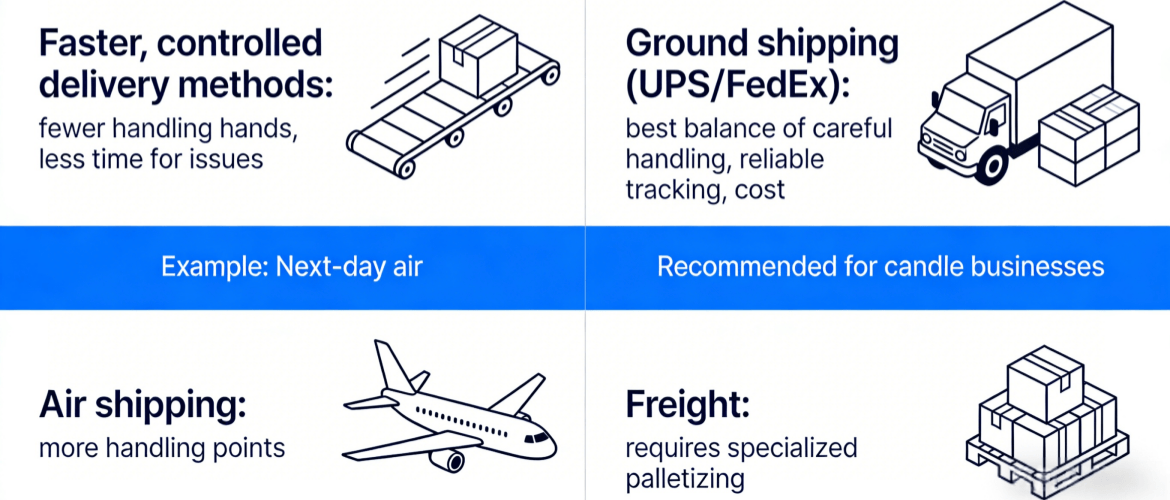
Comparing Carrier Speed and Risk
The table below outlines how shipping speed correlates with risk for your fragile candles:
| Shipping Method | Typical Transit Time | Risk Level | Best Use Case |
|---|---|---|---|
| Economy Ground (5–7 days) | Longest | Highest | Cool weather only; most cost-sensitive shipments. |
| Standard Ground (3–5 days) | Moderate | Moderate | Good for most retail orders year-round. |
| Expedited (2–3 days) | Fast | Lower | Recommended for hot weather, fragile items, or premium products. |
| Express/Air (1–2 days) | Fastest | Low (but higher handling) | Extreme heat, last-minute gifts, or high-value orders. |
The Power of Proper Labeling
Always mark your outer boxes clearly. While “Fragile” and “This Side Up” stickers don’t guarantee gentle treatment, they do serve two important purposes:
- They remind handlers to exercise more care.
- They provide essential documentation if you need to file a damage claim with the carrier, proving you identified the contents as fragile.
Shipping Wholesale and Bulk Orders
For large B2B orders, pallet shipping is the standard. To do this safely:
- Secure the Load: Use stretch wrap to tightly secure all boxes to a pallet.
- Protect the Corners: Add cardboard or foam corner protectors.
- Stack Evenly: Create a stable, uniform stack with no overhang.
- Label Clearly: Mark the entire pallet with fragile labels and ensure the delivery address is visible on multiple sides.
4. How Do Exporters Ensure Smooth International Delivery?
International shipping adds significant complexity: longer transit times, customs inspections, extreme climate variations, and diverse regulations. Success here requires meticulous preparation and the right partners.
Exporting candles successfully hinges on three pillars: fortress-like packaging, perfect and complete documentation, and partnerships with experienced logistics providers who understand fragile, temperature-sensitive goods.
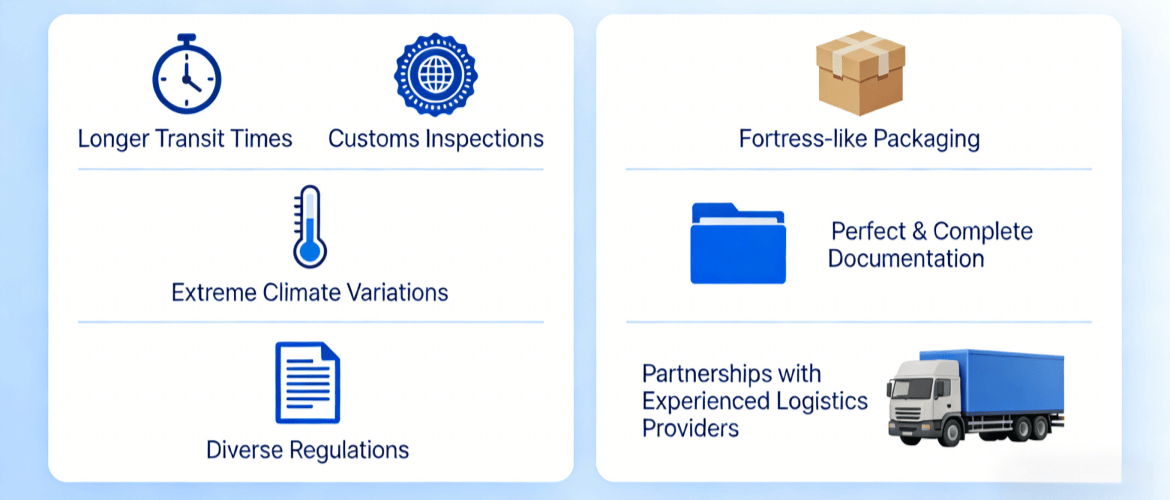
Fortifying Packaging for a Global Journey
International shipments face more handling and longer environmental exposure. You must enhance your standard packaging:
- Double-Boxing: Place the individually wrapped candle in its retail box, then place that inside a larger shipping box with ample cushioning between.
- Climate Defense: For sea freight or destinations with extreme climates, consider using insulated container liners or desiccant packs to control moisture.
- Security Seals: Use numbered security tape to deter tampering and make any interference obvious.
The Critical Role of Documentation
Incomplete or inaccurate paperwork is the number one cause of customs delays, which leave your candles sitting in potentially hot ports. Essential documents always include:
- Commercial Invoice: States the value, quantity, and detailed description of goods for customs assessment.
- Packing List: Itemizes every single item in the shipment, including weights and box dimensions.
- Material Safety Data Sheet (MSDS): Many countries require this for products containing fragrance oils, classifying them for transport.
Choosing and Working with Partners
Don’t try to navigate international logistics alone. Partner with:
- A Licensed Customs Broker: They will ensure your paperwork meets the specific regulations of the destination country, which can include restrictions on certain fragrance ingredients.
- A Freight Forwarder with Candle Experience: They can advise on the best shipping method (air vs. sea), help with palletizing, and arrange for temperature-controlled transport if needed.
Pre-Shipment Quality Control
Finally, conduct a rigorous pre-shipment check. Inspect every candle for secure wicks and lids, and perform a drop test on a sample package. Ensuring your products leave in perfect condition is the first and most important step in getting them to your international customer in perfect condition.
Conclusion
Safely shipping scented candles is a systematic process that demands attention to detail. You need to build a protective cocoon with the right packaging, make smart choices about when and how to ship based on temperature, select reliable carriers, and prepare meticulously for international journeys. While investing in quality materials and faster shipping may cost a little more upfront, it pays for itself many times over by slashing damage rates, protecting your brand’s reputation, and ensuring happy customers who receive a pristine product ready to enjoy.