Scented Candle Supplier



How to Package Scented Candles to Prevent Melting?
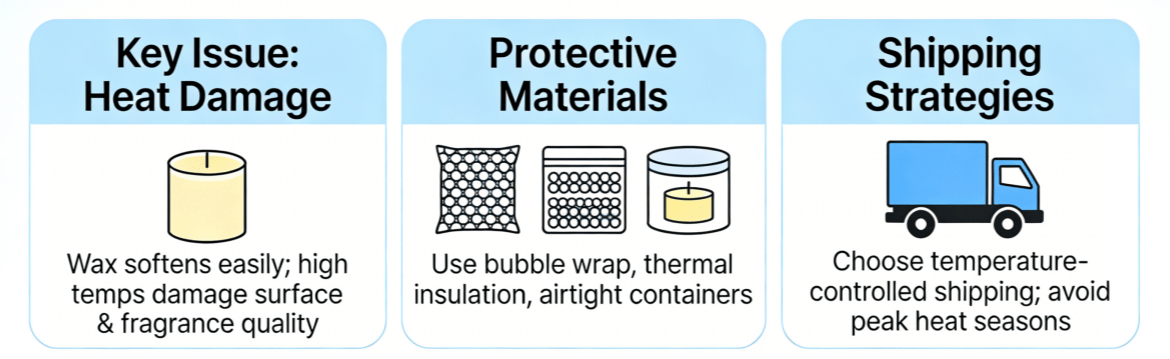
How to Package Scented Candles to Prevent Melting? effectively in warm conditions is crucial, as heat during transit can cause serious issues. Wax softens easily, and high temperatures can damage both the candle’s surface and its fragrance quality.
Proper packaging, insulation, and shipping strategies can significantly reduce the risk of candle melting during transit. Businesses must combine protective materials, temperature awareness, and secure packing techniques to protect product quality.
Understanding How to Package Scented Candles correctly can protect inventory, improve customer satisfaction, and reduce costly returns.
What packaging materials protect candles from heat?
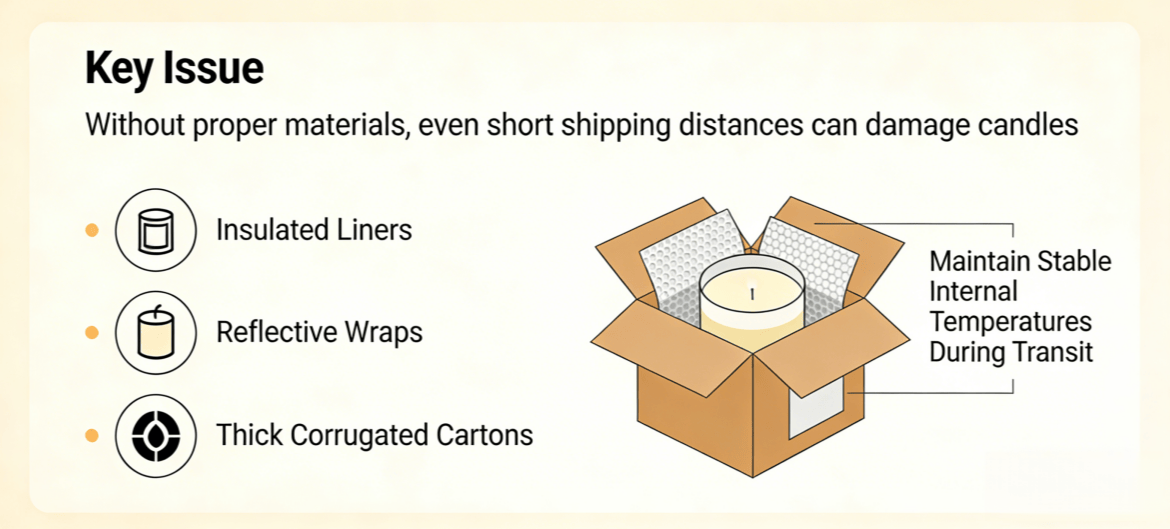
Heat protection begins with selecting the right packaging materials. Without proper materials, even short shipping distances can damage candles.
Heat-resistant packaging materials such as insulated liners, reflective wraps, and thick corrugated cartons help maintain stable internal temperatures during transit.
Core protective packaging materials
Different materials serve different protective purposes. Combining them creates stronger heat resistance.
| Material Type | Function | Benefit |
|---|---|---|
| Corrugated cardboard boxes | External protection | Reduces outside heat exposure |
| Reflective foil liners | Reflects heat | Prevents temperature buildup |
| Bubble wrap | Cushioning and insulation | Stabilizes temperature and prevents breakage |
| Honeycomb paper | Shock absorption | Eco-friendly protection |
| Foam inserts | Jar stabilization | Prevents container movement |
Why packaging layers matter
A single layer of packaging rarely protects candles during long shipping routes. I usually apply a multi-layer approach when preparing shipments.
Layer 1: Primary product protection
Each candle should have:
- A tight lid
- Protective shrink wrap
- Paper collar for the wick area
These elements prevent dust contamination and wax movement.
Layer 2: Individual cushioning
Wrap each candle jar with bubble wrap or kraft honeycomb paper. This layer also provides minor insulation against heat.
Layer 3: Internal box protection
Place candles inside molded pulp trays or cardboard dividers. This prevents jars from touching each other during transportation.
Layer 4: Outer insulation
Use insulated liners or foil thermal sheets inside the outer carton.
Packaging strategy comparison
| Packaging Method | Heat Protection Level | Cost Impact | Best Use |
|---|---|---|---|
| Basic cardboard box | Low | Low | Short distance shipping |
| Bubble wrap only | Medium | Low | Mild climate regions |
| Insulated liner + carton | High | Medium | Summer shipping |
| Foam inserts + insulation | Very High | Higher | Long-distance wholesale orders |
How can insulation reduce melting during transit?
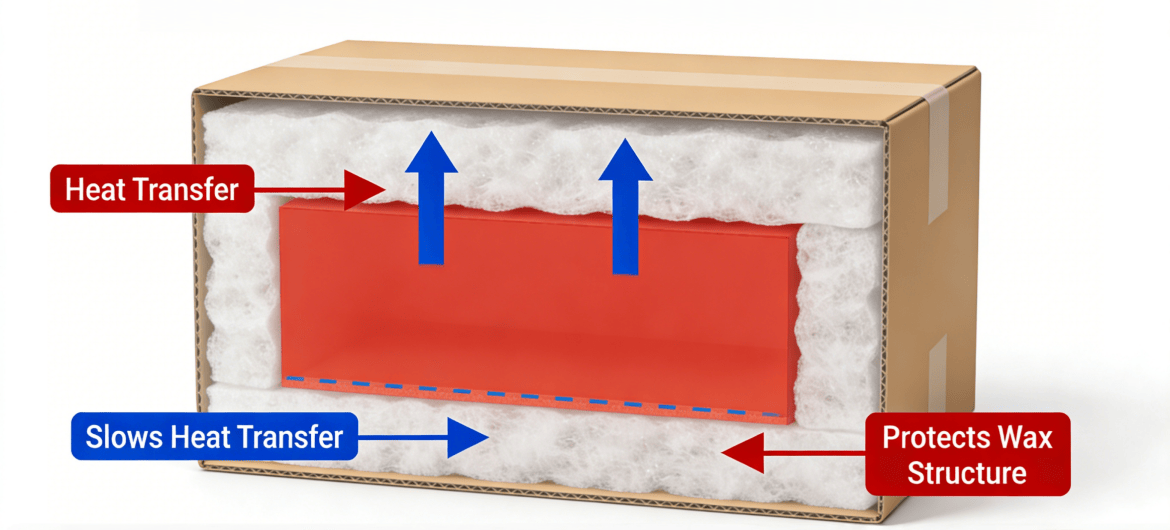
Insulation helps stabilize internal package temperatures. It slows heat transfer and protects the wax structure during long journeys.
How insulation works
Heat moves from outside the package toward the candle container. Insulation slows this transfer.
Three factors influence heat protection:
- Material thickness
- Reflective surfaces
- Air gaps within packaging
Together these elements maintain a cooler internal environment.
Common insulation solutions
| Insulation Type | Description | Best Application |
|---|---|---|
| Reflective foil bubble liners | Reflect heat away | Small parcel shipping |
| Thermal shipping bags | Multi-layer insulation | E-commerce orders |
| Foam panels | High insulation value | Bulk shipments |
| Double boxing | Air gap insulation | Long-distance transport |
Seasonal shipping adjustments
During hot months, I change my packaging strategy.
Summer shipping checklist
- Use thermal liners
- Avoid thin cartons
- Ship early in the week
- Avoid warehouse storage delays
These small steps reduce exposure to extreme heat.
Ice pack usage considerations
Some brands use gel ice packs to cool shipments. However, this approach requires careful handling.
Pros:
- Temporary cooling
- Effective for short transit routes
Cons:
- Condensation risk
- Limited cooling duration
- Added shipping weight
Because of these limitations, insulation usually works better than ice packs for candles.
Temperature risk comparison
| Shipping Condition | Melting Risk | Recommended Action |
|---|---|---|
| Mild weather (below 25°C / 77°F) | Low | Standard packaging |
| Warm weather (25–32°C / 77–90°F) | Moderate | Insulated liner |
| Hot weather (above 32°C / 90°F) | High | Insulation + fast shipping |
Insulation does not eliminate heat exposure completely. But it slows heat transfer enough to protect most candle shipments.
Which packing methods keep candle jars secure?
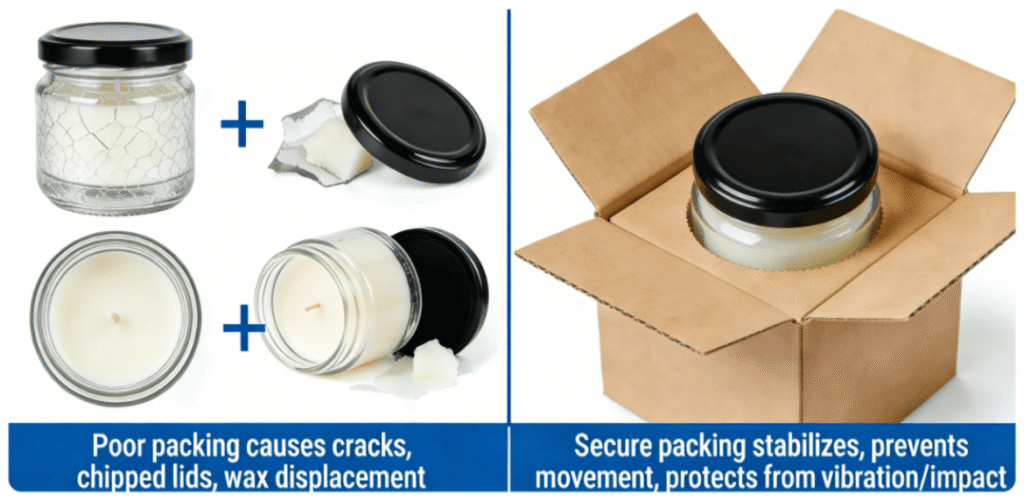
Glass jars are beautiful but fragile. Poor packing methods cause cracks, chipped lids, and wax displacement.
Secure packing methods stabilize candle jars, prevent movement, and protect containers from vibration and impact during transportation.
The importance of jar stabilization
When packages move during shipping, jars collide with each other or with the box walls. This movement increases breakage risk.
A secure packing method eliminates internal movement.
Common jar stabilization solutions
| Packing Method | Protection Level | Best For |
|---|---|---|
| Cardboard dividers | Medium | Retail multi-pack orders |
| Molded pulp inserts | High | Sustainable packaging |
| Foam inserts | Very High | Premium candle lines |
| Individual wrap + dividers | High | Fragile glass containers |
Correct packing steps
I typically follow a structured packing method.
Step 1: Wrap the candle
Use bubble wrap or honeycomb paper to cushion the glass jar.
Step 2: Insert stabilizers
Place the candle inside a divider or molded insert.
Step 3: Fill empty spaces
Add kraft paper or foam pieces to eliminate gaps.
Step 4: Seal securely
Use strong packing tape and reinforce carton corners.
Drop test strategy
Before large shipments, I test packaging durability.
Simple drop tests include:
- 60 cm vertical drop
- Side impact drop
- Corner impact drop
If the candle remains secure, the packaging is ready for transport.
Packing efficiency comparison
| Packing Method | Damage Risk | Labor Cost | Shipping Efficiency |
|---|---|---|---|
| Loose packing | High | Low | Poor |
| Divider packing | Medium | Medium | Good |
| Custom inserts | Low | Higher | Excellent |
Investing in better packing methods often saves money by reducing damage claims.
How can wholesalers ship candles safely in summer?
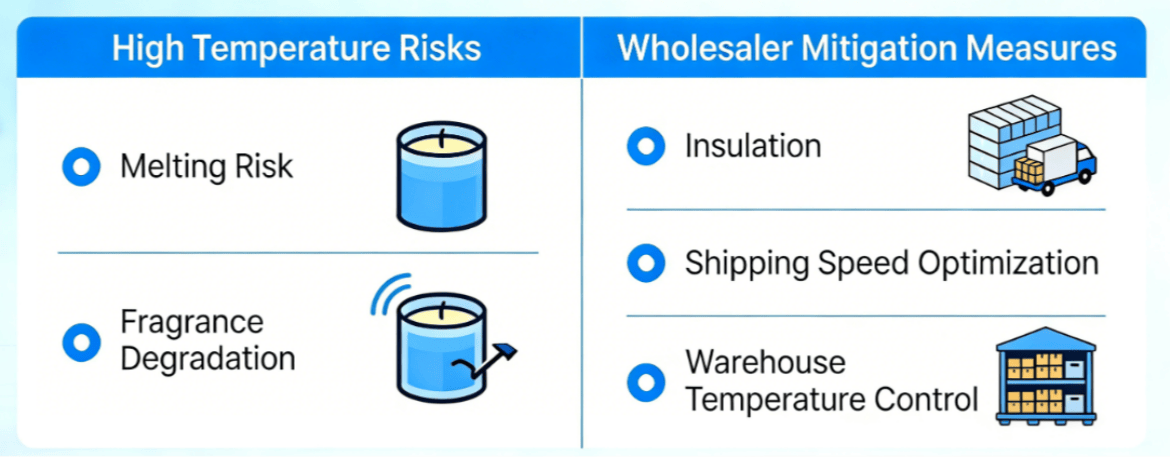
Summer shipping is one of the biggest challenges in the candle industry. High temperatures increase the risk of melting and fragrance degradation.
Wholesalers must combine insulation, shipping speed optimization, and warehouse temperature control to ship candles safely in hot seasons.
Summer shipping challenges
Hot climates create three major risks:
- Wax softening
- Fragrance oil sweating
- Container pressure changes
Without proper planning, these issues can affect large wholesale shipments.
Key summer shipping strategies
| Strategy | Benefit | Implementation |
|---|---|---|
| Faster shipping methods | Less heat exposure | Choose 2–3 day delivery |
| Insulated cartons | Temperature stability | Use thermal liners |
| Early week dispatch | Avoid weekend storage | Ship Monday–Wednesday |
| Climate-controlled storage | Protects inventory | Maintain cool warehouses |
Freight shipping for large orders
Wholesale shipments often travel by pallet or container.
For these shipments:
- Use pallet stretch wrap
- Add corner protectors
- Avoid stacking too high
- Use double-wall cartons
These methods stabilize cartons during transport.
Climate route planning
When shipping globally, route planning also matters.
Some regions expose cargo to extreme heat. I often evaluate:
- Transit duration
- Port storage times
- Seasonal weather patterns
Shorter routes reduce temperature exposure.
Summer shipping protection matrix
| Protection Level | Packaging Method | Shipping Method |
|---|---|---|
| Basic | Carton + wrap | Standard ground |
| Moderate | Carton + insulation | Expedited |
| High | Double box + insulation | Express shipping |
| Maximum | Foam inserts + insulation | Air freight |
For premium candles, the highest protection level may be necessary.
Lessons from large shipments
In my experience working with international clients, summer shipments require the most preparation. Small adjustments in packaging and shipping timing can significantly reduce damage.
Protecting candles during hot weather is not complicated, but it requires discipline and consistency.
Conclusion
Preventing candle melting during shipping requires insulation, strong packaging materials, stable packing methods, and smart summer shipping strategies to maintain product quality.