Scented Candle Supplier



Scented Candle Pricing Breakdown: What Affects Wholesale Cost?
Understanding why scented candles are priced as they are is essential for every retailer and brand owner. The price isn’t random—it reflects a series of specific choices about materials, production, and branding. Gaining clarity through a Scented Candle Pricing Breakdown helps you make smarter purchasing decisions, negotiate more effectively, and protect your profit margins.
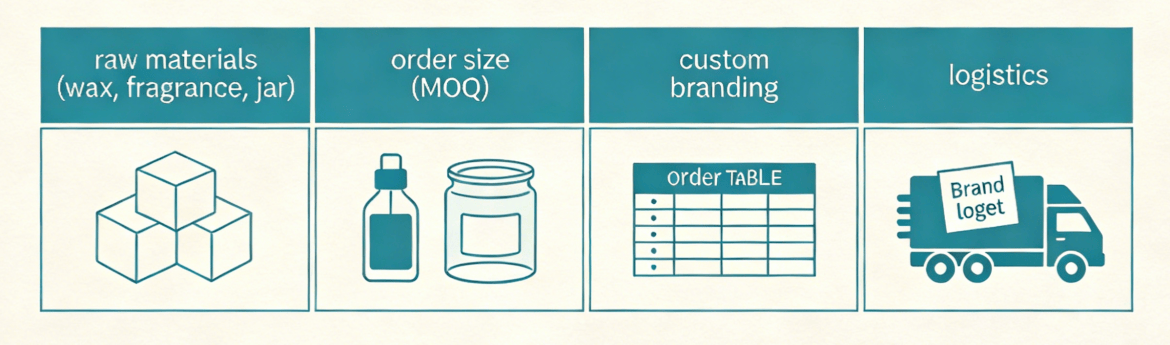
The wholesale price of a scented candle breaks down into four main areas: the cost of raw materials (wax, fragrance, jar), the impact of your order size (MOQ), the price of any custom branding, and the logistics of getting it to you.
Let’s look at each piece of the puzzle to see how it affects your final cost.
1. The Foundation: Raw Material Costs
The wax, fragrance, and container form the physical core of your candle. The quality and type of materials you choose have the biggest direct impact on your cost and the final product’s positioning.
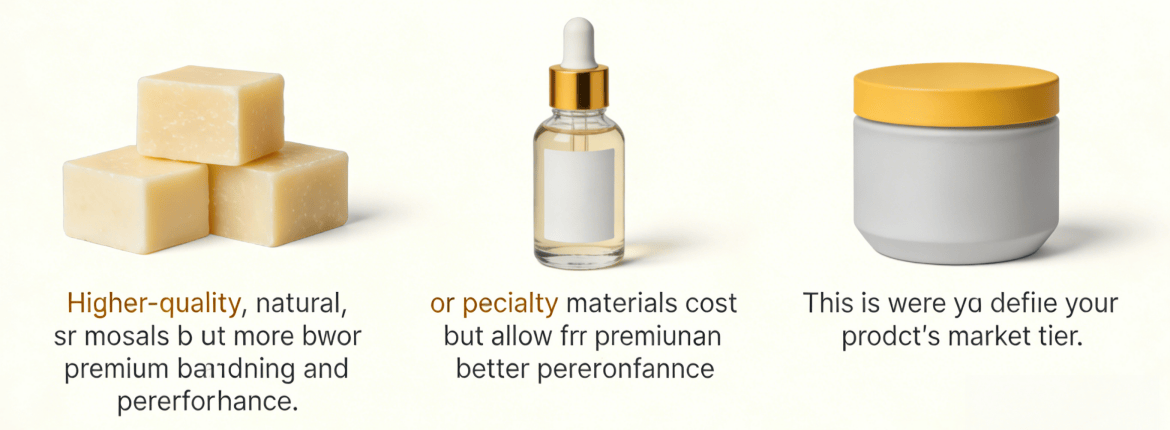
Higher-quality, natural, or specialty materials cost more but allow for premium branding and better performance. This is where you define your product’s market tier.
Wax: The Base of Your Candle
Your wax choice sets the stage for burn quality, scent throw, and brand story.
| Wax Type | Typical Cost | Key Characteristics |
|---|---|---|
| Paraffin | Lowest | Strong scent throw, widely available, but a petroleum byproduct. |
| Soy Wax | Medium | Natural, clean-burning, biodegradable. The current market standard. |
| Coconut Wax | Higher | Very clean burn, excellent scent throw, smooth appearance. |
| Beeswax | Highest | Natural, long-burning, with a subtle honey scent. |
Tip: Many brands now use soy-coconut blends for a balance of performance and cost.
Fragrance: The Soul of Your Candle
The scent oil is what customers actually experience. Its quality and concentration are critical.
- Synthetic vs. Natural Oils: Synthetic fragrance oils are cost-effective and consistent. Pure essential oils are more expensive and often have a softer scent throw.
- Fragrance Load: This is the percentage of oil in the wax. Standard is 6-8%. Premium candles may use 10% or more for a stronger, longer-lasting scent, which directly increases cost.
The Container: More Than Just a Vessel
The jar or tin holds everything together and is a major part of your product’s visual appeal.
- Material & Weight: A thin, plain glass jar is inexpensive. A thick, heavy-base jar with a luxury feel (like frosted or colored glass) costs significantly more. Ceramic vessels are the most expensive option.
- Custom Shapes: A standard, in-stock jar has no extra fee. Creating a custom mold for a unique shape has a high upfront cost and requires a large minimum order.
The Bottom Line: You can’t have a premium candle with budget materials. Your choices here dictate whether you’re competing in the value, standard, or luxury segment of the market.
2. The Power of Volume: How MOQ Lowers Your Cost
MOQ (Minimum Order Quantity) isn’t just a rule—it’s a key to unlocking better pricing. Suppliers have fixed costs to start production, and spreading those costs over more units makes each one cheaper.
Ordering a larger quantity is the most effective way to reduce your per-candle cost. It’s the principle of economies of scale in action.
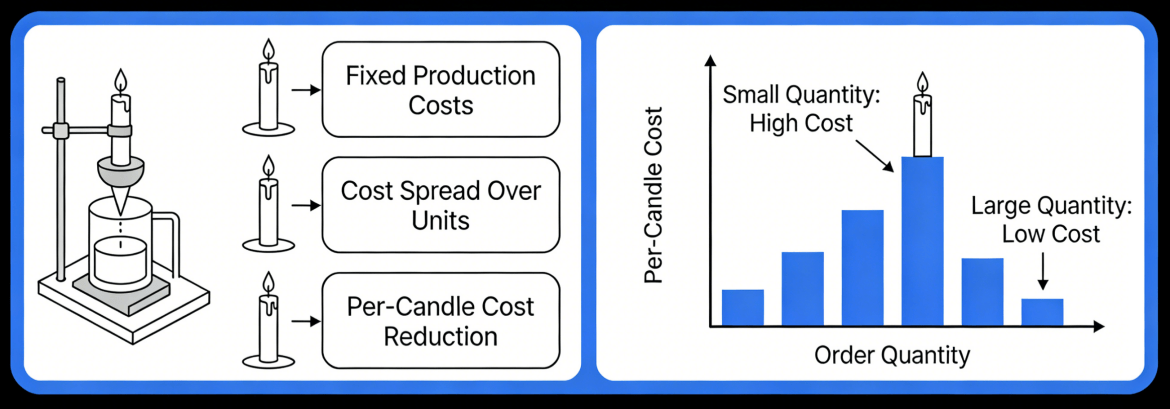
Why Larger Orders Cost Less
Imagine a factory needs to spend 500tocleanequipment,setupmolds,andprepareaproductionline.That500 is a fixed cost.
- For a 100-unit order, that setup adds $5.00 to each candle.
- For a 1,000-unit order, that same setup adds only $0.50 to each candle.
The savings from bulk material purchases and more efficient labor on larger runs add even more to the price reduction.
A Realistic Price Comparison
| Order Quantity | Approximate Cost Per Candle | Why the Price Drops |
|---|---|---|
| 100 units (Low MOQ) | 4.50−5.50 | High setup cost per unit, small material discounts. |
| 500 units (Medium MOQ) | 3.00−4.00 | Setup cost spreads out, better material pricing. |
| 2,000+ units (High MOQ) | 2.00−3.00 | Maximum production efficiency, best bulk material rates. |
Strategic Tip: Start with a manageable MOQ to test your market. Once you confirm your best sellers, consolidate and increase your reorder quantities to capture these lower unit costs and boost your margins.
3. The Cost of Standing Out: Customization & Packaging
Custom branding transforms a generic candle into yourbrand. However, every layer of personalization, from the label to the gift box, adds to your cost.
Customization is an investment in your brand identity. The key is to invest in elements that add real value for your customer and justify a higher retail price.
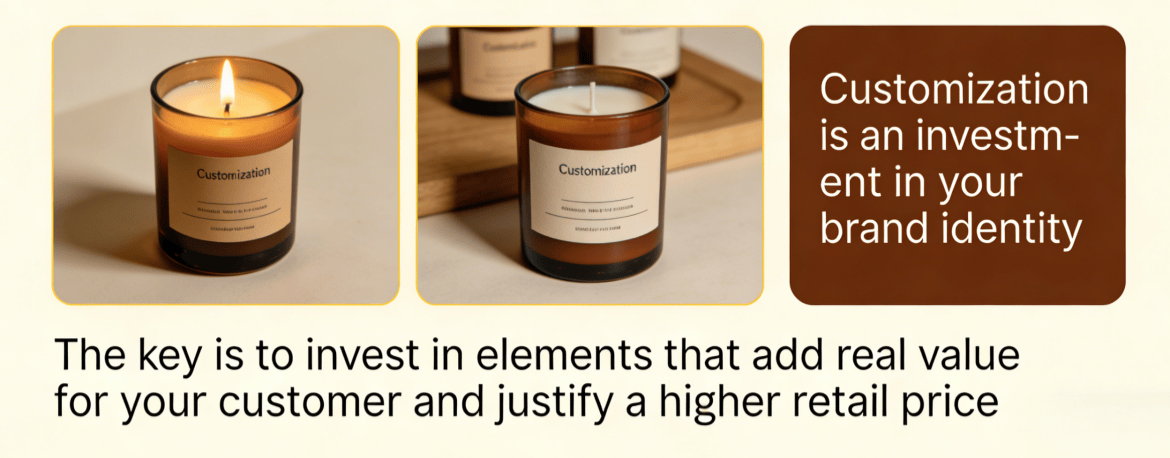
Breaking Down Customization Costs
- Label & Branding:
- Basic: A simple printed sticker is low-cost.
- Premium: Embossing, foil stamping, or textured paper adds significant cost but also perceived luxury.
- Container Customization:
- Using a standard jar with your custom label is the most cost-effective.
- Custom jar colors, frosting, or logo engraving require special processes and higher minimums, increasing cost.
- Packaging:
- Shipping Carton: A plain brown box for bulk delivery is cheap.
- Retail Box: A nice cardboard box with inserts protects the candle and looks good on a shelf.
- Luxury Gift Box: A rigid box with foil printing, satin lining, and a ribbon can double your packaging cost but creates a premium unboxing experience.
Smart Spending: Not every candle in your line needs a gold-foiled, rigid gift box. Consider using premium packaging only for your best-selling or gift-oriented products, and simpler packaging for the rest.
4. How to Optimize Costs Without Sacrificing Quality
Lowering your cost doesn’t have to mean choosing cheaper, inferior materials. Smart strategies focus on efficiency, planning, and building strong supplier relationships.
Cost optimization is about working smarter, not just cutting corners. It’s finding efficiencies in the process and making strategic choices.

Practical Strategies for Better Margins
- Leverage Supplier Standards: Choose from their library of in-stock jars and best-selling fragrances. This avoids custom mold and scent development fees, speeding up your launch and reducing cost.
- Plan for Growth: Start with a test batch at a low MOQ. Use the sales data to confidently place larger reorders, securing better pricing for your top sellers.
- Simplify Wisely: Use elegant but standard packaging. A beautiful, standard jar with a great custom label can look just as premium as a fully custom vessel.
- Consolidate and Plan: Group new product launches with restock orders. Fewer, larger production runs are more efficient for the factory and cheaper for you.
- Build a Partnership: View your supplier as a long-term partner, not just a vendor. Loyal, reliable customers who pay on time and communicate well often receive priority service, flexibility on MOQs, and better pricing over time.
Conclusion
The wholesale cost of a scented candle is a direct reflection of your choices. It starts with the raw materials that define quality, is heavily influenced by your order volume (MOQ), and is increased by the level of custom branding and packaging you choose.
By understanding the Scented Candle Pricing Breakdown, you can make informed decisions. Invest in quality where it truly matters. Use order volume to your advantage. Customize with clear intention. And build efficient, streamlined processes. This strategic approach helps you control costs, protect your profit margins, and build a candle brand that delivers both genuine value and consistent quality to your customers.