Private Label Scented Candle Manufacturer in China | IGNITION



4 Ways You’re Burning Scented Candles All Wrong?
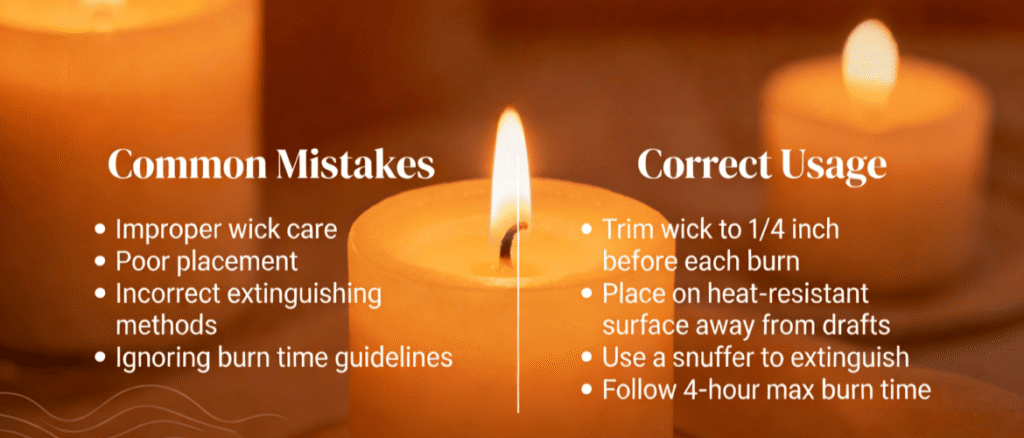
Many candle lovers don’t realize that improper burning habits are reducing their candle’s performance and lifespan. Learning how to use scented candles correctly can transform your experience and protect your investment.
Common candle mistakes include improper wick care, poor placement, incorrect extinguishing methods, and ignoring burn time guidelines. Understanding how to use scented candles correctly prevents these issues and enhances fragrance performance.
Small adjustments to your candle care routine can significantly improve scent throw, safety, and candle longevity. Let’s examine the key areas where most people go wrong.
Trimming Wicks Incorrectly Before Lighting?
Proper wick maintenance is the foundation of learning how to use scented candles correctly. Many people overlook this simple but crucial step.
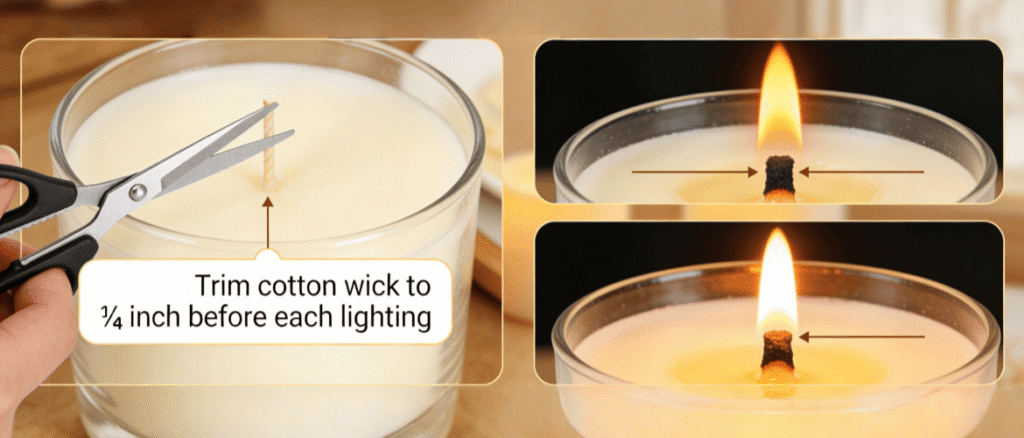
Proper wick trimming involves cutting cotton wicks to ¼ inch before each lighting. This prevents oversized flames, soot production, and uneven burning that wastes wax and fragrance.
Why wick length affects performance
A too-long wick creates an excessively large flame that overheats the wax pool. This burns off fragrance oils before they can properly vaporize, reducing scent throw and shortening candle life. Learning how to use scented candles correctly starts with understanding this basic principle.
The science of proper trimming
When a wick is correctly trimmed to ¼ inch, it creates a steady, controlled flame that melts wax evenly at the ideal temperature (130-150°F for soy wax). This allows fragrance oils to vaporize completely, releasing their full aroma potential.
Common trimming errors and corrections
Most people make one of these mistakes when learning how to use scented candles correctly:
| Mistake | Consequence | Correction |
|---|---|---|
| Not trimming at all | Soot, tunneling, weak scent | Trim before every lighting |
| Trimming too short | Weak flame, small melt pool | Maintain ¼ inch length |
| Using wrong tools | Wick damage, debris in wax | Use dedicated wick trimmers |
| Trimming after burning | Ineffective, messy | Always trim when cool |
Special wick considerations
Different wax types and wick materials have unique requirements. Soy wax typically needs slightly shorter wicks than paraffin, while wooden wicks require different care than cotton ones. Part of knowing how to use scented candles correctly involves following the candle maker’s specific instructions.
Business implications
For hotels, spas, and retailers, proper wick maintenance ensures consistent customer experiences. A properly trimmed wick means every guest enjoys the same quality scent throw, maintaining brand standards and reducing complaints.
Burning Candles in Drafty or Unsafe Spaces?
Where you place your candle significantly affects both safety and performance. Proper placement is essential when learning how to use scented candles correctly.
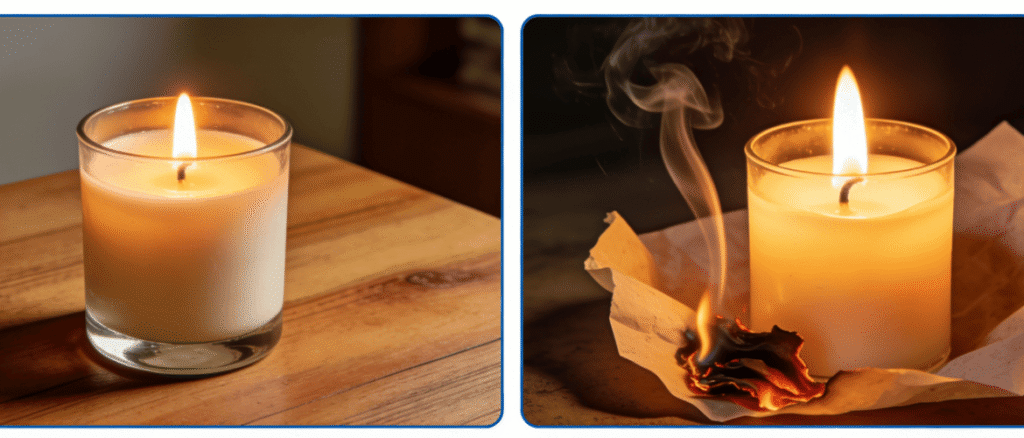
Candles should burn in still, draft-free areas away from flammable materials. Drafts cause uneven burning, sooting, and safety hazards that compromise candle performance.
How drafts damage candle performance
Air currents make flames flicker and dance, creating uneven burn patterns. One side of the candle may melt while the other remains solid, leading to “tunneling” that wastes wax and reduces burn time. Understanding how to use scented candles correctly means recognizing these invisible threats.
Ideal placement guidelines
Proper placement maximizes both safety and fragrance distribution. Learning how to use scented candles correctly involves strategic positioning:
| Location | Placement Tips | Avoid |
|---|---|---|
| Living Rooms | Central locations, stable surfaces | Under shelves, near vents |
| Bedrooms | Nightstands, dressers | Near curtains, bedding |
| Bathrooms | Countertops away from showers | Small enclosed spaces |
| Dining Areas | Centerpieces, heat-resistant surfaces | Directly under flammable decor |
Safety considerations
Placement affects more than just burn quality. Keep candles at least 12 inches from anything flammable, and never burn them unattended. For businesses, this is both a safety issue and a liability concern. Knowing how to use scented candles correctly includes recognizing these safety fundamentals.
Fragrance distribution factors
Candle placement affects how scent travels through a space. Central locations allow even fragrance dispersion, while corners or enclosed areas may concentrate scent unevenly. For hotels and spas, strategic placement ensures guests experience the intended ambiance throughout the space.
Business implications
For B2B settings, proper candle placement affects customer experience, safety compliance, and overall ambiance. A well-placed candle enhances the environment, while a poorly placed one creates hazards and inconsistent fragrance delivery.
Extinguishing Flames Improperly After Use?
How you extinguish a candle seems trivial but significantly affects wick health, wax quality, and future burns. Proper extinguishing is a key part of learning how to use scented candles correctly.
Proper flame extinguishing involves using a snuffer or dipping the wick into wax. Blowing out candles spreads soot, damages wicks, and creates unpleasant odors that affect future use.

Why blowing causes problems
Blowing force disperses smoke and soot particles throughout the wax and into the air. This creates black residue on container walls and can make your next light-up smell smoky rather than fragrant. Learning how to use scented candles correctly means breaking this common habit.
Comparison of extinguishing methods
Different methods yield dramatically different results for candle longevity and air quality:
| Method | How To | Result |
|---|---|---|
| Candle Snuffer | Place over flame until oxygen depleted | Clean, soot-free, preserves wick |
| Wick Dipping | Use tool to push wick into wax pool | Instant stop, pre-primes next use |
| Lid Smothering | Place lid on container (if designed for it) | Oxygen deprivation, convenient |
| Blowing | Quick breath of air | Soot dispersal, wick damage |
Wick damage prevention
Blowing out candles can misalign wicks or create mushrooming (carbon buildup on wick tips). This affects future burns and requires more frequent trimming. Proper extinguishing maintains wick integrity, which is crucial when learning how to use scented candles correctly.
Business setting considerations
In hospitality settings, proper extinguishing methods maintain candle quality between uses. Housekeeping staff should be trained in correct techniques to ensure consistent guest experiences. This attention to detail separates premium establishments from average ones.
Health and air quality
Improper extinguishing releases more particulates into the air. For spas, wellness centers, and hotels focused on air quality, proper candle care is part of maintaining a healthy environment. Knowing how to use scented candles correctly includes understanding these health impacts.
Overlooking Burn Time and Wax Memory Care?
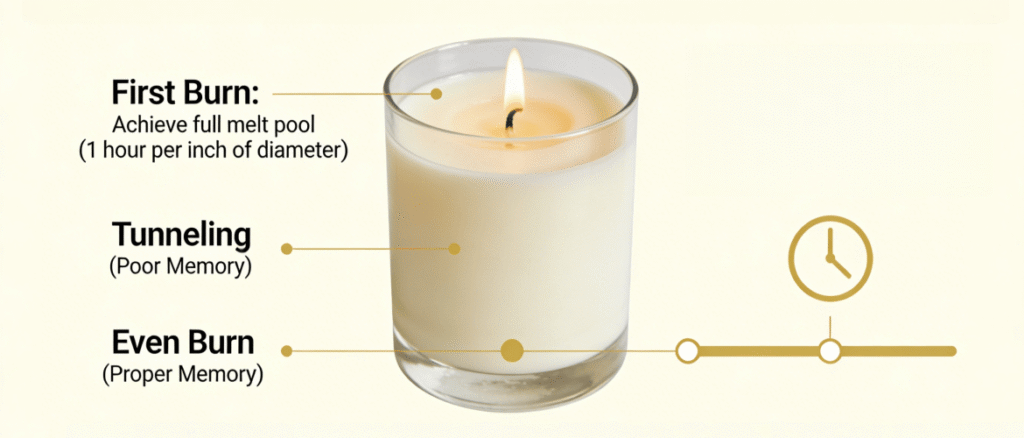
Wax has “memory” – how it burns the first time affects all future uses. Understanding burn time principles is essential for learning how to use scented candles correctly.
Proper wax memory care means achieving a full melt pool on the first burn (usually 1 hour per inch of diameter) and maintaining 4-hour maximum burn sessions. This prevents tunneling and ensures even future burns.
Understanding wax memory
On the first burn, wax remembers how far it melted. If you don’t let the wax melt completely to the edges initially, it will only melt to that same diameter on subsequent burns, creating a “tunnel” down the center that wastes wax. This concept is fundamental to learning how to use scented candles correctly.
Ideal burn time guidelines
Follow these guidelines for optimal candle performance and longevity:
| Candle Diameter | First Burn Time | Subsequent Burns | Maximum Session |
|---|---|---|---|
| 2-3 inches | 2-3 hours | 2 hours | 4 hours |
| 3-4 inches | 3-4 hours | 2-3 hours | 4 hours |
| 4+ inches | 4+ hours | 3 hours | 4 hours |
The tunneling problem
Tunneling occurs when a candle burns straight down the center, leaving unmelted wax along the sides. This wastes up to 50% of your candle’s wax and fragrance. The fix is always achieving a full melt pool on the first burn – a key lesson in how to use scented candles correctly.
Why time limits matter
Burning candles longer than 4 hours causes wicks to drift, carbon buildup, and overheating of fragrance oils. This degrades scent quality and creates safety hazards. For businesses, following time guidelines ensures consistent performance.
Business implications
For B2B buyers, proper burn protocols mean consistent scent throw across all units, longer candle lifespan, better customer experiences, and reduced fire hazards. Training staff on these guidelines ensures your candle investment performs optimally.
Cost of improper care
A tunneled candle represents wasted money. For businesses using candles regularly, proper burn care can reduce costs by 30-50% while maintaining better fragrance performance. Learning how to use scented candles correctly has direct financial benefits.
Conclusion
Learning how to use scented candles correctly involves simple but crucial steps: proper wick trimming, strategic placement, correct extinguishing methods, and respecting burn time guidelines. These practices maximize scent performance, safety, and candle lifespan while reducing waste and costs. Whether for personal enjoyment or business use, proper candle care ensures optimal results from your scented candle investments.