Private Label Scented Candle Manufacturer in China | IGNITION



Why Should Scented Candles Not Burn for More Than 4 Hours?
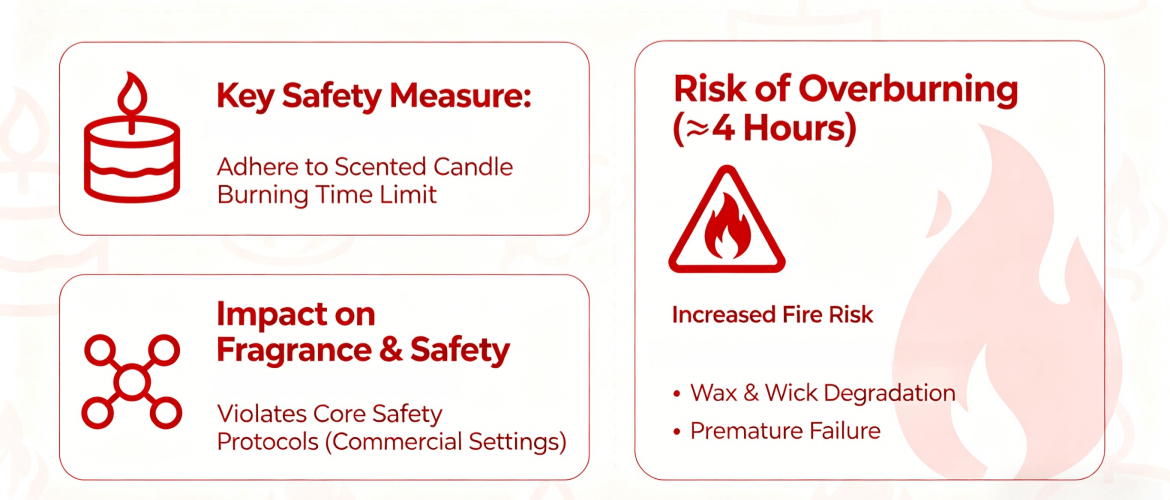
Safe Candle Burn Time is a crucial safety measure, and adhering to the Scented candle burning time limit is essential. Burning candles for over four hours significantly increases fire risks and can degrade both wax and wick integrity, leading to premature failure. Extended burning also disrupts consistent fragrance release and violates core safety protocols, especially in commercial settings.
Understanding this limit is non-negotiable for professional use. Let’s examine the specific risks across safety, product longevity, and performance, and establish actionable best practices.
Concerned About Safety and Overheating Risks?
The Physics of Thermal Accumulation and Material Stress
Candle combustion is a continuous exothermic reaction. A flame can reach 1400°C, heating the liquid wax pool to 60-80°C. This heat must dissipate through the container into the environment—a balance that fails over time.
The Critical Four-Hour Thermal Equilibrium
During a controlled burn, heat generation and dissipation reach a temporary balance:
- Hours 1-2: The container reaches its stable operating temperature.
- Hours 3-4: Heat distribution equalizes; the system is at its safe operational peak.
- Hour 4+: Thermal accumulation exceeds dissipation. The container and wax pool temperature begin a dangerous, uncontrolled rise.
Beyond this point, several failure modes become probable:
- Glass Fatigue and Fracture: Continuous thermal stress weakens the molecular structure of glass, increasing the risk of sudden cracking or shattering.
- Wax Overheating: The wax temperature may approach or exceed the flash point of fragrance oils, potentially causing a flare-up.
- Heat Radiation: Surrounding surfaces (wood, fabrics, plastics) absorb dangerous levels of heat, potentially reaching ignition temperatures.
Safety Standards and Actionable Protocol
Industry guidelines universally endorse the 4-hour maximum based on extensive testing. The risk escalation is clear:
| Safety Parameter | Within 4-Hour Burn | Beyond 4-Hour Burn | Risk Increase |
|---|---|---|---|
| Container Surface Temp | 60-80°C (Safe to touch briefly) | 90-120°C+ (Burn hazard) | 50-100% |
| Wax/Oil Flash Point Risk | Minimal | Significant | High |
| Heat Transfer to Surface | Within safe range | Enters hazard range | 200-300% |
| Probability of Container Failure | < 1% | 5-15% | 5-15x |
Implement This Safety Protocol:
- Mandatory Timers: Use simple kitchen timers or smart plugs with auto-off functions for every candle.
- Surface & Clearance Audit: Ensure all candles are on non-combustible surfaces (stone, metal, ceramic) with a minimum 30cm (12-inch) clearance from any flammable material.
- Staff Training: Train staff to recognize danger signs: a container too hot to touch, a flickering flame larger than 2.5cm, or black soot emissions.
- Emergency Readiness: Keep appropriate fire extinguishers (Class A for wax/fabric) accessible in areas using candles.
The four-hour rule is a conservative, non-negotiable buffer that accounts for unpredictable variables like drafts, wax composition, and container quality in a commercial setting.
Seeking to Preserve Candle Longevity and Performance?
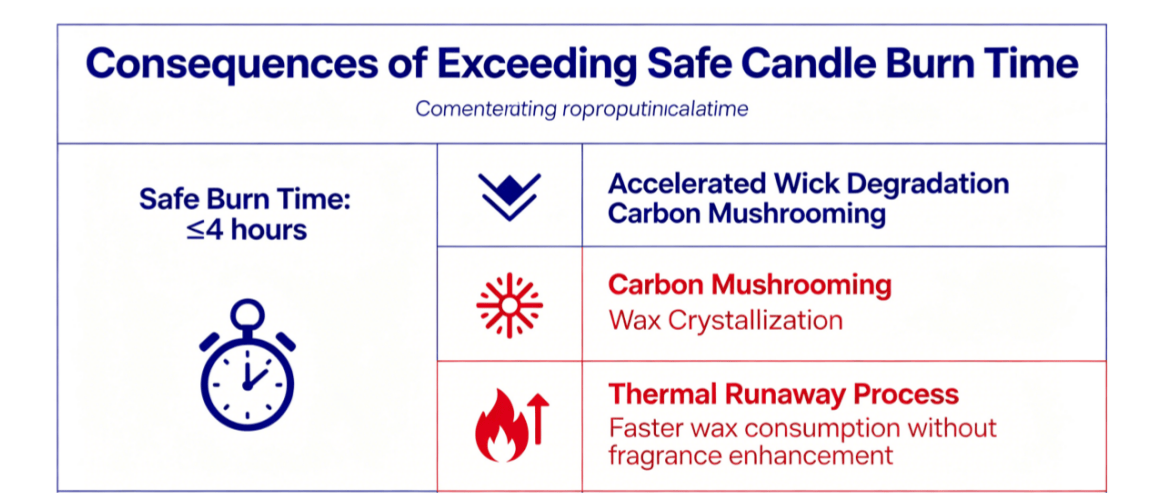
Exceeding the Safe Candle Burn Time—typically four hours—leads to accelerated wick degradation, carbon mushrooming, and wax crystallization. This process, often described as “thermal runaway,” consumes wax faster without enhancing fragrance output. As a result, total candle lifespan is significantly reduced, compromising both performance and return on investment.
Material Degradation and the Economics of Proper Burn Cycles
The four-hour limit is engineered around the stress tolerances of candle components. Exceeding it triggers a cascade of failures that shorten usable life.
The Mechanics of Component Failure
Wick Degradation Timeline:
- 0-2 Hours: Normal carbonization begins at the tip.
- 2-4 Hours: A controlled carbon “mushroom” forms; this is the optimal burn period.
- 4-6 Hours: Excessive mushrooming occurs, distorting the flame sideways, creating soot, and reducing capillary action.
- 6+ Hours: The wick can bend, drown in the wax pool, or become unstable, ending the candle’s functional life.
Wax Integrity Breakdown:
A proper burn cycle includes a complete cooling period. The 4-hour burn allows the wax to fully melt, release fragrance evenly, and then resolidify with its “memory” reset. Continuous burning:
- Prevents this reset, causing the wax to “remember” a smaller melt pool.
- Allows fragrance oils to separate from the wax matrix.
- Leads to wax crystallisation and degradation, making it burn inefficiently thereafter.
heat accelerates wax consumption without improving scent throw. You burn more wax, faster, for less benefit.
A System for Value Preservation
For businesses, this isn’t just about a single candle—it’s about inventory management and cost control.
1. Establish a Monitoring & Maintenance System:
- Log Burn Times: Track usage per candle/location.
- Schedule Replacements: Predict inventory needs based on actual 4-hour cycle life, not theoretical burn time.
- Follow FIFO Inventory: Use oldest stock first to maintain fragrance freshness.
2. Enforce Performance Optimization:
- Mandatory Cooling: Allow at least 2-3 hours between burns for complete wax resolidification.
- Pre-Light Wick Trim: This is non-negotiable for clean, efficient burns.
- Strategic Scheduling: Deploy candles during peak customer hours for maximum olfactory impact.
This disciplined approach can extend candle life by 40-60% compared to unregulated use, directly improving your bottom line while delivering consistent quality.
Want Consistent Scent Throw Without Wax Pool Issues?
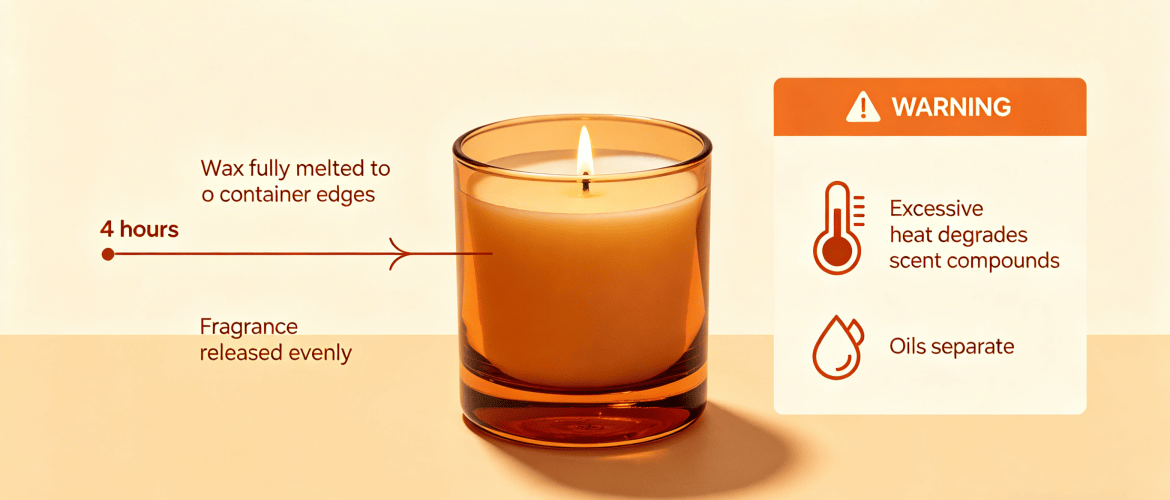
The four-hour duration allows enough time for the wax to melt fully to the container’s edges, releasing fragrance evenly, but not so long that heat degrades scent compounds or causes oils to separate. This balance is critical for reliable scent delivery.
The Chemistry of Scent Release and the Consequences of Overheating
Fragrance performance hinges on controlled thermal management. Each burn session “teaches” the wax how to melt next time.
The Ideal Fragrance Release Cycle
During a proper 4-hour burn:
- Hour 1: The wax pool forms, beginning to vaporize fragrance oils (top notes become noticeable).
- Hours 2-3: A full melt pool is achieved, providing maximum surface area for consistent, balanced fragrance release (heart notes dominate).
- Hour 4: The fragrance continues to emanate efficiently from the stable, hot liquid wax.
- Cooling Period: As the wax solidifies, it resets with an even distribution of fragrance oil for the next burn.
How Extended Burns Destroy Scent Performance
Burning beyond 4 hours disrupts this cycle:
- Fragrance Depletion & Imbalance: The more volatile top and middle notes burn off first, leaving a dull, flat, or unbalanced base-note-heavy scent.
- Fragrance Oil Separation: Prolonged heat can cause the fragrance oils to “sweat out” or separate from the wax binder.
- Tunnel Formation: If the wax doesn’t melt fully to the edges, it creates a “memory ring.” Subsequent burns will follow this tunnel, leaving up to 50% of the wax (and its fragrance) unused on the sides.
Commercial Scent Management Protocol
For businesses, scent inconsistency translates to a broken brand promise. Implement this structured approach:
1. Session Timing by Space Type:
- Retail Stores: 4-hour morning (10-2) and afternoon (2-6) sessions.
- Hotel Lobbies: 3-4 hour rotations aligned with check-in/out peaks (e.g., 8-12, 12-4, 4-8).
- Restaurants: Align with meal services: unscented or very light scent during lunch (11-3) and dinner (5-9).
2. Performance Monitoring & Staff Training:
- Train staff to identify “fragrance fade.”
- Conduct simple scent checks at set intervals (e.g., every 2 hours) from key room positions.
- Maintain logs for each candle location to identify underperforming products or placements.
By respecting the 4-hour guideline, you ensure every candle delivers its intended fragrance profile consistently from the first light to the last, protecting your brand’s sensory signature.
Need Professional Maintenance Tips for Client Safety?
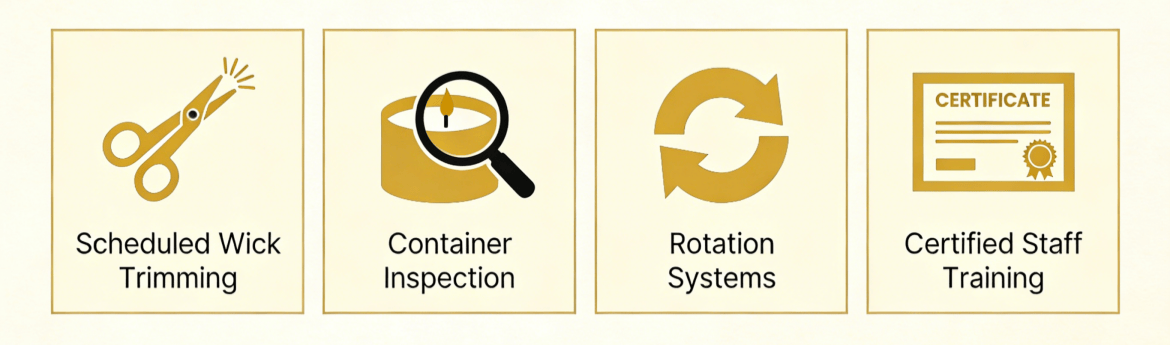
Professional candle upkeep requires scheduled wick trimming, container inspection, rotation systems, and certified staff training. These protocols prevent safety incidents, ensure consistent ambiance, and protect your business from operational failures and liability.
Building a Comprehensive Candle Care Operation
Move from reactive fixes to a proactive system. This framework turns candle maintenance from a chore into a quality assurance checkpoint.
The Daily Maintenance Protocol
Pre-Lighting Checklist (Staff Duty):
- Wick Trim: Always trim to 6mm (1/4 inch). Remove any carbon “mushroom.”
- Container Inspection: Check for cracks, chips, or heavy soot buildup. Discard if damaged.
- Placement Check: Ensure candle is on a stable, heat-proof surface with >30cm clearance from flammables.
- Timer Set: Always set a 4-hour timer (phone, kitchen timer, smart plug).
During-Burn Monitoring:
- Visual Check (Hourly): Ensure flame is steady, not flickering wildly or smoking.
- Heat Check: If the container is too hot to touch comfortably, extinguish immediately.
- Soot Check: Minimal grey haze is normal; black smoke indicates a problem (draft or bad wick).
Post-Burn Procedure:
- Extinguish Safely: Use a snuffer or dip the wick into wax. Never blow out.
- Wick Centering: Gently center the wick before the wax hardens.
- Clean Rim: Wipe the jar rim to remove soot, preventing it from falling into the wax later.
Weekly & Monthly Deep Maintenance Schedule
| Task | Frequency | Procedure | Tools Needed |
|---|---|---|---|
| Wick Trimming | Before every lighting | Trim to 6mm, remove carbon ball. | Wick trimmer or scissors. |
| Container Deep Clean | Weekly | Wipe with glass cleaner; inspect for stress cracks. | Microfiber cloth, cleaner. |
| Wax Pool Debris Removal | As needed | Remove wick trimmings, match debris. | Wax dipper, tweezers. |
| Inventory & Storage Check | Monthly | Check backup stock for damage, fragrance freshness. | Inventory checklist. |
Implementation Framework for Multi-Location Businesses
Consistency is key. Standardize these elements:
- Staff Training & Certification: Mandatory 1-hour training for any employee handling candles. Cover physics, safety, and the “why” behind each rule.
- Documentation & Logs: A simple log sheet at each candle station to record lighting time, extinguishing time, and any issues (soot, flicker).
- Quarterly Safety Audits: A manager reviews logs, inspects candle stations, and retrains staff as needed.
- Emergency Preparedness:
- Fire Safety: Ensure Class A fire extinguishers are accessible and staff know their location.
- Spill Procedure: Have a protocol for hot wax spills (let solidify, then scrape).
- First Aid: Keep burn gel and bandages in first aid kits.
The Business Case for Maintenance:
- Cost Savings: Proper care extends candle life by 30-40%, reducing inventory costs.
- Risk Reduction: Prevents property damage and liability claims from fire or soot.
- Brand Protection: Ensures a consistently clean, safe, and pleasant ambiance for customers.
By systemizing maintenance around the 4-hour rule, you transform candles from a potential liability into a reliable, high-quality component of your customer experience.
Conclusion
Adhering to a Safe Candle Burn Time—specifically the four-hour limit—is a non-negotiable standard in professional candle use. This practice is essential for preventing safety hazards, preserving your investment by maximizing candle lifespan, ensuring consistent and high-quality scent performance, and enabling effective, standardized maintenance. By adopting this disciplined approach, you actively protect your customers, your property, and the reputation of your brand.