Scented Candle Manufacturer & Supplier



What is the Best Way to Use Scented Candles?
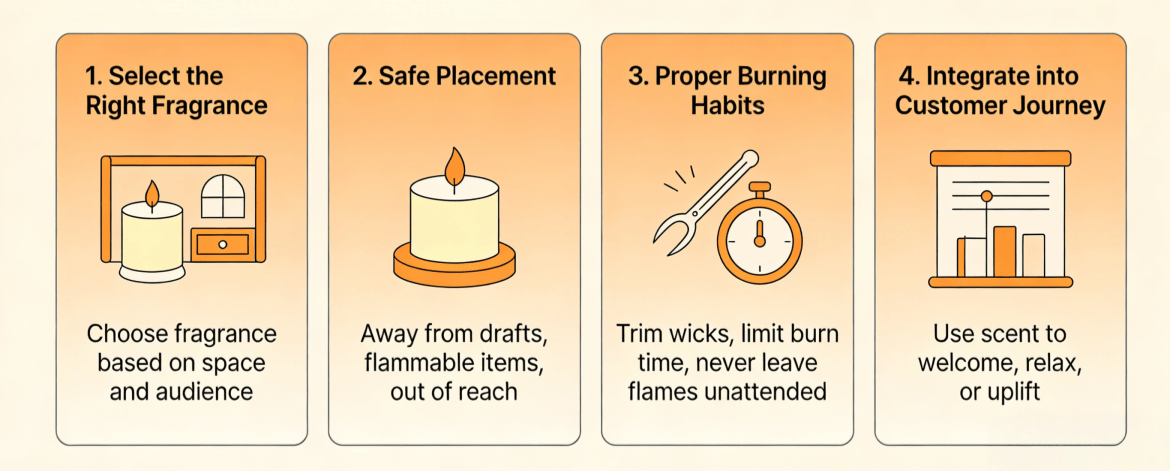
Using scented candles effectively requires a thoughtful strategy. Following a comprehensive Scented Candle Safety Guide, start by selecting the right fragrance for your space and audience. Place candles in safe, optimal locations—away from drafts, flammable items, and out of reach. Always practice proper burning habits: trim wicks, limit burn time, and never leave flames unattended. Finally, integrate candles intentionally into the customer journey—using scent to welcome, relax, or uplift—to create a memorable and elevated brand experience.
Let’s break down this process into actionable steps that ensure you get maximum value and impact from every candle.
How Do You Choose the Right Scent and Intensity?
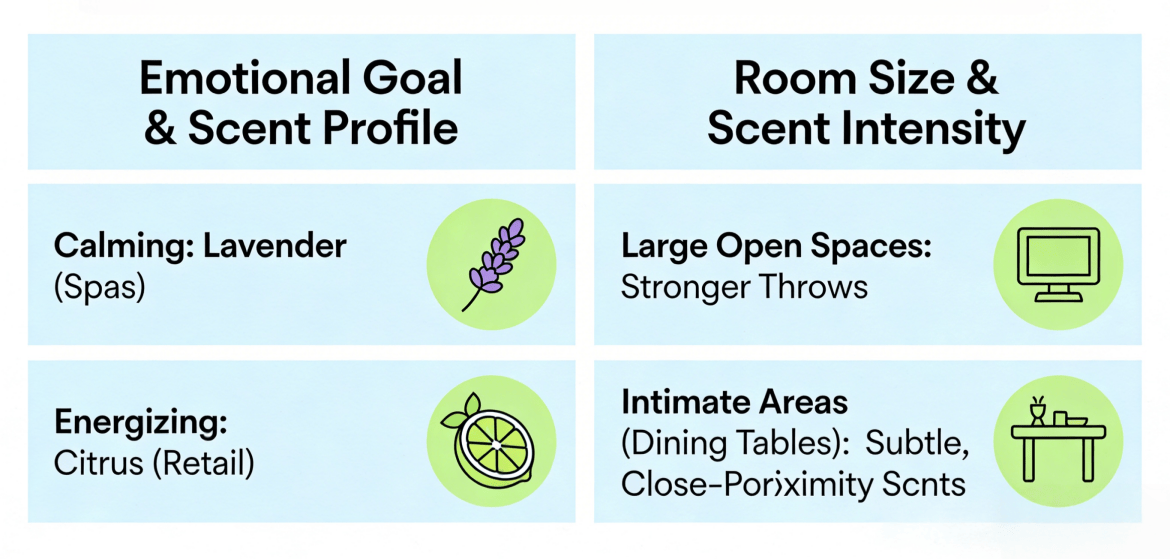
Choose scent profiles that align with your brand’s emotional goal (e.g., calming lavender for spas, energizing citrus for retail). Match intensity to room size: stronger throws for large, open spaces and subtle, close-proximity scents for intimate areas like dining tables.
The Strategic Science of Scent Selection and Testing
Scent is a direct line to emotion and memory. Choosing the right one requires understanding environmental psychology, technical specifications, and implementing a rigorous testing protocol to ensure success.
Step 1: Align Scent with Brand Identity and Space Function
Your scent should be an extension of your brand’s personality and the specific experience you want to create. Start with broad scent families and define their purpose.
| Business / Zone | Desired Customer Feeling | Recommended Scent Families | Commercial Intensity & Reasoning |
|---|---|---|---|
| Hotel Lobby / Reception | Welcoming, Luxurious, Clean | White Tea, Fresh Linen, Sandalwood, Ocean Breeze | Medium-Strong. Needs to permeate a large volume of air and make a memorable first impression. |
| Spa / Wellness Treatment Room | Calming, Grounding, Serene | Lavender, Chamomile, Frankincense | Light-Medium. Should be subtly detectable to promote relaxation without being intrusive. |
| Restaurant Dining Area | Comforting, Appetizing, Unobtrusive | Vanilla, Warm Citrus, Herbal Notes (Thyme, Basil) | Very Light / Undertone. Must never compete with the aroma of food. Aim for a barely-there background note. |
| Office / Co-working Space | Focused, Uplifting, Clean | Peppermint, Rosemary, Lemon, Green Tea | Light. Designed to improve alertness and mood without causing distraction. |
| Retail Store (Boutique) | Sophisticated, Exclusive, Inviting | Fig, Amber, Oud, Custom Branded Blend | Medium. Should enhance the shopping experience and encourage linger time, becoming part of the brand identity. |
Step 2: Understand Technical Specifications and Requirements
As a buyer, you must discuss key technical details with your supplier to ensure consistency and safety.
| Supplier Checkpoint | Why It Matters for Your Business |
|---|---|
| Fragrance Load (%) | The percentage of fragrance oil in the wax. For commercial spaces, a load of 8-12% is typically required for a lasting, noticeable scent. |
| Fragrance Description | Know the exact scent notes (top, middle, base) to ensure they align with your brand story and desired customer emotion. |
| IFRA Certificate | Confirms the fragrance complies with international safety standards and allergen limits, crucial for public spaces. |
| Safety Data Sheet (SDS) | Provides essential handling, safety, and storage information for your staff. |
| Sample & Testing Policy | Allows you to evaluate scent performance, burn quality, and compatibility with your space before committing to a bulk order. |
Step 3: Implement a Rigorous Testing Protocol
Before a full rollout, conduct a controlled pilot test.
- Obtain Samples: Get samples of your top 2-3 scent choices.
- Define Test Metrics: Evaluate scent strength, longevity, and guest/staff feedback.
- Controlled Burn Test: Burn in the target space for typical daily durations (e.g., 4-hour sessions). Assess scent throw at 15, 30, and 60-minute intervals.
- Gather Feedback: Use simple surveys or observe guest reactions. Note any comments about the scent being too strong, weak, or unpleasant.
- Document & Decide: Record all results. Choose the winning scent based on performance data and feedback, not just personal preference.
Pro Tip for Multi-Space Businesses: Create a “scent journey” where the fragrance profile subtly shifts from one zone to another. For example, a hotel might use an energizing citrus in the gym, a clean linen scent in hallways, and a calming lavender in the spa, enhancing the overall guest narrative.
Where Should Candles Be Placed for Optimal Scent Distribution?
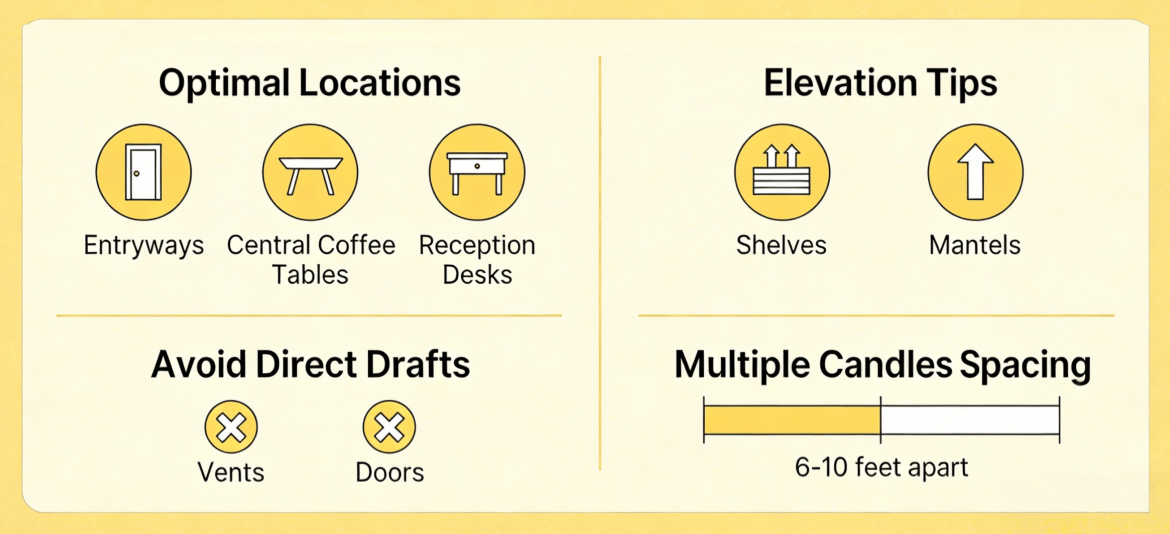
Place candles in areas with gentle air circulation—like entryways, central coffee tables, or reception desks—but away from direct drafts from vents or doors. Elevate them (on shelves, mantels) as heat rises, and space multiple candles 6-10 feet apart for even diffusion in large rooms.
Mastering Airflow, Safety, and Strategic Layouts for Scent Diffusion
Scent travels via convection currents. Understanding and directing this natural flow is key to effective placement, while adhering to strict safety protocols is non-negotiable in commercial settings.
The Do’s and Don’ts of Candle Placement for Optimal Diffusion and Safety
| Do’s for Effective Placement | Don’ts to Avoid Common Pitfalls |
|---|---|
| Do use multiple smaller candles instead of one large one in a big room for even, layered coverage. | Don’t place directly under an AC vent, ceiling fan, or near an open door. The draft will cause uneven burning, excessive soot, and blow the scent away. |
| Do place near seating areas or natural pathways where customers linger or walk through the scent field. | Don’t cluster candles too closely. This creates an overpowering “scent wall” rather than a gentle, ambient fragrance. |
| Do consider elevation. Warm, scented air rises. Placing a candle on a shelf, mantle, or raised surface helps distribute scent at nose level as it circulates. | Don’t hide candles in corners, enclosed bookshelves, or behind decor. This traps scent, creates a fire hazard, and prevents proper air circulation. |
| Do use in well-ventilated areas to allow scent to circulate naturally throughout the room. | Don’t place on unstable surfaces, near flammable materials (curtains, papers), or in high-traffic areas where they can be knocked over. |
Scented Candle Safety Guide:Always place candles on stable, non‑flammable surfaces such as stone, metal, or ceramic. Maintain a minimum 1‑foot clearance from any flammable materials—including curtains, decor, or paperwork. Never leave a burning candle unattended, and ensure all staff are trained in basic fire safety as well as your venue’s specific candle policies.
What Burn Practices Maximize Fragrance and Candle Lifespan?
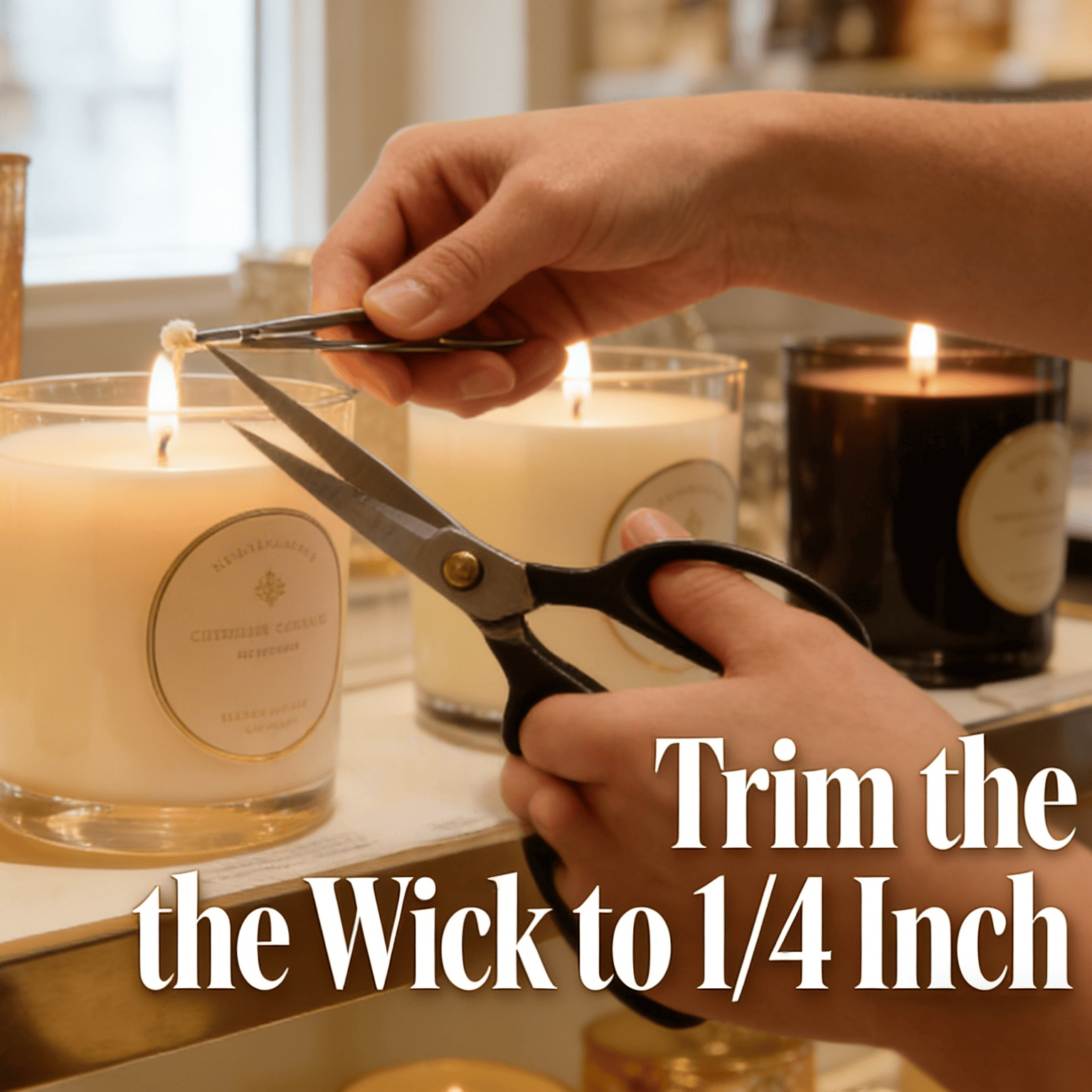
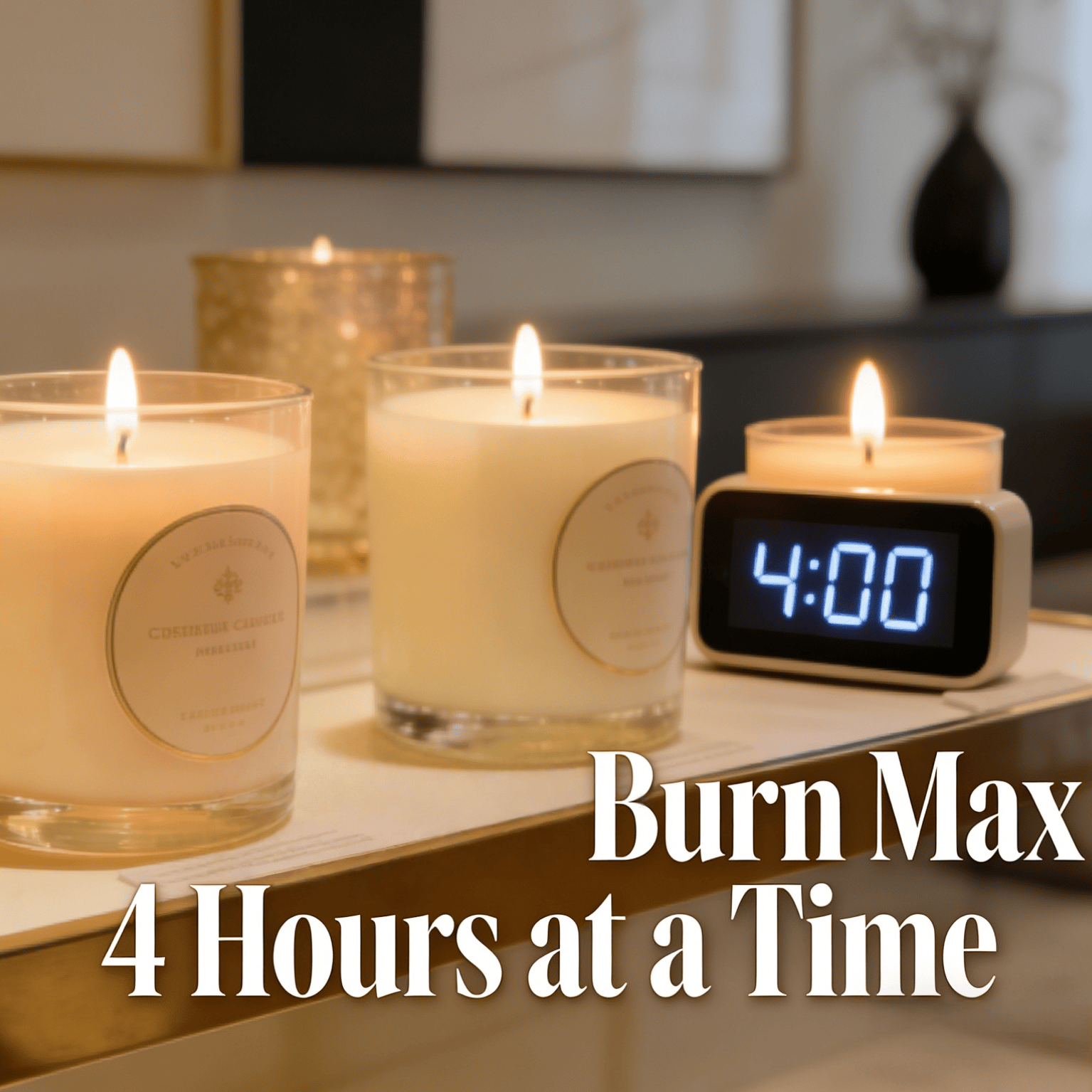
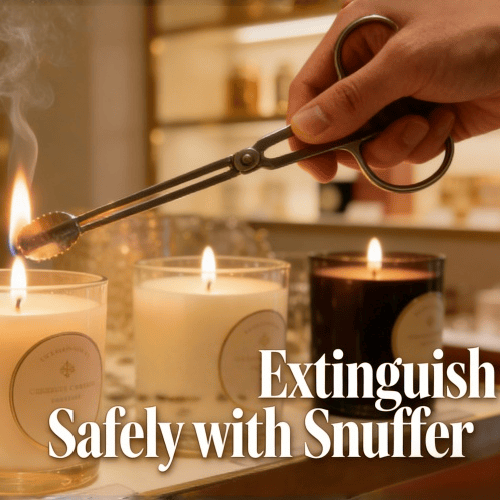
Maximize fragrance and lifespan by always allowing the wax to melt fully to the container’s edges on the first burn (to prevent tunneling), trimming the wick to 1/4 inch before each use, and never burning for more than 4 hours at a time.
The Essential Burn Protocol for Commercial Performance and Safety
A candle is a simple machine that needs correct operation. A consistent, disciplined routine is the difference between a product that performs for 40 hours and one that delivers 80 hours of perfect ambiance.
The Non-Negotiable “First Burn” Rule
The first burn sets the candle’s “memory.” If the wax does not melt evenly across the entire surface to the container’s edges, it will create a “tunnel” on subsequent burns, trapping unused wax and fragrance on the sides.
- Rule: Burn for 1 hour per inch of the container’s diameter on the first lighting.
- Example: A 3-inch diameter candle must burn for at least 3 hours the first time.
Daily Commercial Candle Care & Maintenance Checklist
For staff responsible for candle upkeep, implement this clear protocol:
| Practice | Procedure | Commercial Rationale |
|---|---|---|
| 1. Pre-Light Wick Trim | Before each lighting, trim wick to 1/4 inch using a proper wick trimmer for a clean cut. | A short wick produces a steady, medium flame. A long wick creates a large, flickering, sooty flame that wastes wax, produces smoke, and can overheat the container. |
| 2. Burn Time Management | Extinguish the candle after a maximum of 4 hours. Allow it to cool completely (at least 2 hours) before relighting. | Prevents the wick from “drowning” in a deep wax pool and the container from overheating, which can lead to cracking or breakage. |
| 3. Draft Elimination | Ensure the candle is placed away from direct air currents from vents, open windows, or doorways. | Drafts cause the flame to flicker violently, leading to incomplete combustion, excessive soot (black smoke marks on the jar), and uneven, rapid wax consumption. |
| 4. Melt Pool Maintenance | Allow the wax to melt evenly across the entire surface (a full melt pool) before extinguishing. | Prevents tunneling and ensures all the fragrance-loaded wax is used, providing consistent scent strength throughout the candle’s life. |
| 5. Jar Clean-Up & Inspection | Once cool, gently wipe the inside rim of the jar with a dry paper towel to remove soot buildup. Regularly check the container for cracks or excessive heat stress. | Keeps the candle looking professional and prevents old soot from falling into the new melt pool, which can affect scent and burn quality. Identifies potential safety hazards. |
Consistent, correct care protects your investment and ensures a perfect guest experience every time.
How Can Businesses Use Candles to Enhance Customer Experience?
Businesses can use candles to create a signature “scent logo,” reduce perceived wait times by calming patrons, increase dwell time in retail spaces, and directly link a positive sensory experience to their brand identity, fostering loyalty and recall.
Strategic Scent Marketing and Experience Design
This is about moving beyond ambiance to architecture—using scent to build a more memorable and profitable customer experience.
Pillar 1: Create a Signature “Scent Logo”
Just as you have a visual logo and brand colors, develop a signature scent that is uniquely yours. Work with a supplier to create a custom fragrance blend that embodies your brand’s essence. For example, a cozy, rustic hotel might choose cedarwood and vanilla, while a modern boutique might opt for white orchid and amber. This scent becomes an unforgettable sensory identifier that customers associate exclusively with your brand.
Pillar 2: Map Scent to the Customer Journey
Don’t use the same scent everywhere. Use different fragrances strategically to guide emotions and behaviors at various touchpoints.
| Journey Stage | Scent Goal | Tactical Application & Scent Examples |
|---|---|---|
| Arrival / First Impression | Welcome, impress, and define brand atmosphere. | Use your signature scent boldly at entrances, reception, and lobbies. |
| Transition / Waiting | Reduce anxiety, manage perceived wait time, and calm. | Use calming scents (lavender, chamomile) in waiting areas, holding spaces, or checkout lines. |
| Core Experience | Enhance the primary activity without intrusion. | Use complementary, subtle scents: clean linen in a restaurant, focusing rosemary in a co-working space, soothing eucalyptus in a spa corridor. |
| Point of Decision / Sale | Encourage relaxation, trust, and positive decision-making. | Use comforting, inviting scents (warm vanilla, sandalwood) near retail checkouts, consultation desks, or booking areas. |
| Departure / Memory Anchoring | Solidify the positive memory and encourage return. | Re-introduce a hint of your signature scent near exits, in gift bags, or on packaged purchases. |
Pillar 3: Enhance Perceived Value and Commercial Outcomes
Pleasant, intentional scenting directly impacts business metrics.
- Increase Perceived Value: Studies show a pleasant ambient scent can increase the perceived value of products and services, allowing for premium positioning.
- Increase Dwell Time: In retail, a welcoming scent makes customers linger longer, browse more, and view merchandise more favorably.
- Improve Customer Satisfaction: In hospitality, scent directly contributes to perceptions of cleanliness, luxury, and comfort, leading to better reviews and ratings.
Pillar 4: Drive Direct Revenue and Loyalty
The candles you use decoratively can become a direct revenue stream and loyalty tool.
- Sell the Experience: Offer the exact candles you burn for sale at your front desk, in your shop, or online. Customers can literally “take the memory home.”
- Loyalty and Gifting: Use custom-branded candles as VIP welcome gifts, loyalty program rewards, or corporate presents. Every time a customer burns it, they are reminded of your brand.
- Limited Editions & Partnerships: Create special scent editions for holidays, anniversaries, or collaborations with other brands. This generates buzz, exclusivity, and collectibility.
Track qualitative feedback (mentions of “amazing smell” in reviews) and quantitative metrics (dwell time studies, sales of candle merchandise, repeat visit rates) to demonstrate the ROI of your scent strategy.
Conclusion
The most effective use of scented candles is strategic. It begins with following a clear Scented Candle Safety Guide to ensure every placement and practice is secure. Choose scents that intentionally align with your brand, place them wisely using airflow principles, and maintain them meticulously to maximize value and longevity. When used safely and thoughtfully, scented candles become a powerful tool—shaping customer experience, building lasting brand identity, and driving tangible business results.